Nature Treasure Hunts For Toddlers:
A Simple Outdoor Activity That Builds Observation Skills Naturally
Many toddler activities focus on keeping children busy.
A nature treasure hunt does something different.
It slows children down enough to notice the world around them.
And that simple act of noticing may be one of the most important foundations for future learning.
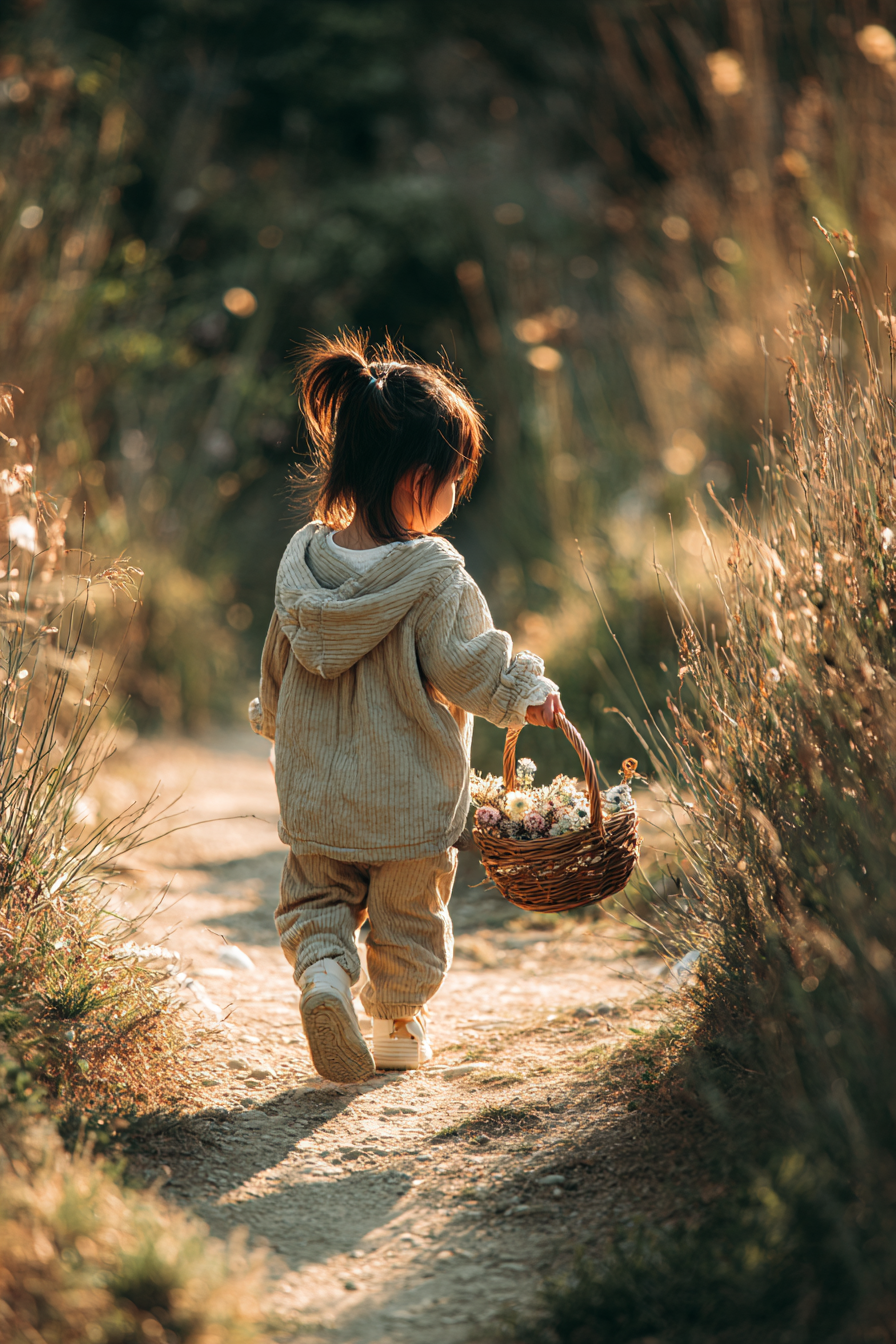
A toddler examining nature things closely outdoors.
Why Observation Matters More Than Most Parents Realise
Before a toddler can name something, they notice it. Before they can explain it, they study it. Before any word or category exists for them, their eyes are already moving carefully across a surface, their fingers already testing what rough or soft or cold means in practice.
Observation is not a passive skill. It is the foundation from which nearly everything else grows.
Language begins when a child notices something worth naming. Classification begins when they see that two stones are different from each other. The early roots of scientific thinking — prediction, comparison, curiosity about cause and effect — begin in moments when a toddler watches an ant carry something three times its size across a patch of pavement, not moving, just watching, genuinely absorbed.
Reading readiness, too, has roots in observation. The ability to notice small differences between shapes, to track a moving object, to hold attention on one thing — these capacities start developing long before a child ever sees a letter.
The CCBR belief that sits at the centre of this is simple: learning begins with attention. Not worksheets. Not flashcards. Not structured programmes. Attention — freely given, unhurried, following where genuine curiosity leads.
A nature treasure hunt is one of the most natural ways to give a toddler an invitation to do exactly that.
Watch your child on your next walk. Notice what they stop for — the texture on a wall, a beetle crossing the path, a leaf that has changed colour at only one edge. That stopping is not distraction. It is the whole point.
What A Nature Treasure Hunt Actually Looks Like
No preparation required. No craft supplies. No laminated cards or special baskets, though a small bag or container they can carry does make things feel more intentional.
Just a walk, and a few descriptive prompts offered gently along the way.
The prompts are not object-specific — “find a ladybird” or “find a pinecone” — because the point is not to tick items off a list. The prompts are sensory and descriptive: find something rough, find something round, find something that surprises you. This small difference matters. Descriptive prompts open attention rather than directing it toward a single target. They give children something to apply across everything they encounter, which means the whole walk becomes the activity rather than just the moments when they happen to spot the right object.
A few prompts that work well across most environments:
Can you find something — smooth, rough, tiny, round, green, brown, soft, interesting to touch, that smells like something, that makes a sound when you move it?
Offer one or two at a time. Let them search at their own pace. When they find something, stay with it for a moment rather than moving immediately to the next prompt. The treasure is never really the object. It is the noticing.

A nature collection — leaves, stones, seed pods — gathered during a walk.
What Children Are Really Learning During The Hunt
It looks like a simple walk. What is happening developmentally is considerably more layered than that.
Across the CCBR learning domains — the ten interconnected areas through which toddlers grow in the early years — a nature treasure hunt touches nearly all of them simultaneously.
Children handle real objects with genuine sensory properties — weight, temperature, texture, smell. This is not simulated. It is the actual world.
A child who stops to examine something closely is practising sustained attention — a capacity that supports focus in every context later.
Texture words, size words, colour words, comparative language — all of it grows in meaningful context, not from lists.
Which is heavier? Which has more texture? Is this one the same shape as that one? Sorting thinking starts the moment they begin choosing.
A leaf that matches the tree nearby. A stone that resembles another stone. Connections between things are made naturally when children handle real objects.
The moment they hold something up and show you — “look at this” — is an act of communication, shared attention, and early narrative thinking.
These domains align closely with the toddler learning goals framework that CCBR uses across all developmental content. A walk that touches multiple domains at once is not an accident — it is what real-world, unhurried exploration naturally produces.
How Observation Becomes Learning
Parents sometimes wonder whether these small outdoor moments are actually doing anything developmentally — whether watching an ant or collecting stones is learning in any real sense, or whether it is simply pleasant time outdoors.
The answer, drawn from what we understand about early childhood development, is that these moments are doing something quite specific. And the trajectories they set in motion reach further than most parents realise.
Reading readiness is not simply about letter recognition. Before letters mean anything, children need to be able to notice small differences between shapes, track objects with their eyes, and hold their attention steady on something. A toddler who routinely stops to study the edge of a leaf or the pattern on a beetle’s back is practising exactly those capacities — not in a structured way, but in the way that actual development tends to happen: through repeated real-world encounters with things that interest them.
Classification — the ability to group objects by shared properties, to understand that two different things can belong to the same category — has its roots in exactly the kind of comparing that happens during a nature walk. Heavier or lighter. Smoother or rougher. Same shape or different. These early comparisons are the very beginnings of mathematical and scientific reasoning, and they arise naturally from handling real objects with varied properties.
Vocabulary, too, grows differently in real-world contexts than it does from word lists. When a child hears “rough” in the moment they are already touching something rough, the word attaches to a sensory experience rather than a definition. That kind of grounded language acquisition is more durable, more generalisable, and more likely to be used spontaneously in new contexts. See language-rich outdoor moments for more on building vocabulary during walks.
And sustained attention — the capacity to stay with one thing rather than constantly moving to the next — is something that develops through practice, not instruction. A child who is regularly allowed to stop and linger, who is not rushed away from the thing they have found interesting, is developing attentional muscle. That capacity will serve them across every domain of learning, formal and informal, for years.
None of this requires special instruction or a developmental programme. It simply requires a walk, a few open-ended prompts, and a parent willing to slow down.
The Language Hidden Inside A Nature Walk
One of the most valuable things a parent can do during a nature treasure hunt is almost nothing. Follow the child. Stay quiet most of the time. And then, in the moments when they pick something up or pause to look, offer language for what they are noticing.
Not teaching. Noticing alongside them.
The difference is not dramatic. It does not require expert knowledge or prepared language scripts. It simply means describing what is real and present — texture, size, weight, comparison — in the moment the child is already paying attention to the object.
Children do not learn vocabulary from repetition drills. They learn it from hearing real words attached to real experiences, in contexts where the connection between word and thing is immediate and meaningful. A nature walk is one of the most natural environments that kind of learning can happen in.
The words that grow from outdoor exploration — rough, smooth, tiny, enormous, heavier, lighter, darker, crumbling, hollow, scratchy, silky — are not on any flashcard. They come from noticing the world and having someone nearby who notices it too.
“Children do not learn language from word lists. They learn language from noticing real things in the real world.”
Want simple observation prompts to keep in your pocket on your next walk? The free Nature Treasure Hunt Starter Pack includes language prompts for every age.
Nature Treasure Hunt Ideas By Age
The activity works across a wide toddler age range, with the prompts shifting as children develop. The same walk becomes a different experience at different ages — not because the environment changes, but because the child does.
At this age the hunt is mostly sensory. They will pick things up, put them down, return to the same object several times. That repetition is not a sign they are not ready — it is exactly how learning feels at 18 months. Follow their lead. Offer texture words when they handle things. Let them drop things, collect things, carry one stone for the entire walk if that is what they choose.
At this age children can begin to compare. Two stones side by side — which feels rougher? A long stick and a short one — which is longer? These comparisons are early mathematical thinking, and they happen naturally when the prompts invite comparison rather than just identification. You might also start hearing them describe things unprompted: “this one is more scratchy” or “that leaf is broken.” That is language and observation developing together.
Three and four year olds can begin to reason about what they find. A leaf with holes in it — what made those holes? Two stones that look almost the same — what is different about them? A flower that is wilting — what is happening to it? These questions do not need answers from you. Ask them, then listen. The thinking that happens in the pause before they respond is the point. See also: what three year olds are learning and what two year olds are practising for more on developmental expectations at these ages.

A child sharing their discoveries.
What If My Child Doesn’t Want To Follow The List?
The prompts are a guide. They are not the goal.
A toddler who spends fifteen minutes watching ants carry fragments of food along a crack in the pavement is not doing the activity wrong. They are doing it exactly right. The activity is observation. The list is simply one way to invite it.
If your child wanders off the path to investigate something you had not planned, follow them. If they want to carry the same stick for the entire walk and ignore every prompt, let them. If they sit down on the ground and simply watch something for longer than feels comfortable to you, try staying with them rather than redirecting. What a toddler chooses to attend to is almost always worth attending to.
The CCBR philosophy here is consistent: curiosity matters more than completion. An unfinished list that produced ten minutes of genuine wondering is more valuable than a completed list that moved too quickly to land on any one thing.
The most valuable discovery may not be the object your child finds. It may be the moment they stop — and truly notice something. That moment of stopping is the whole activity.
The Day I Stopped Rushing The Walk
There was a period when I thought walks were for getting somewhere.
We had a destination. A park a few blocks away, or the shops, or just the loop around the neighbourhood that we did most afternoons. And I would walk at a pace that made sense to me — steady, purposeful, covering ground — while my daughter moved at a completely different pace beside me.
She stopped for everything. A crack in the pavement. A cluster of stones near a garden wall. A snail that had left a trail across the path that she wanted to examine, and then follow back along its length, and then crouch over and simply watch for what felt, to me, like an unreasonably long time.
I remember the particular quality of my impatience then. It was not frustration exactly — more a kind of restlessness, a sense that we were supposed to be getting on with the walk, that stopping this many times meant the walk was somehow failing. I would say things like “come on, let’s keep going” or “we’ll be late” when there was nowhere we needed to be.
What I did not understand yet was that the stopping was not an interruption to the walk. The stopping was the walk. Every time she crouched down beside something — the snail, the crack, the small pile of grit that had gathered against the kerb — she was doing something I could not see but that was real: she was practising the capacity to notice. To look carefully. To stay with a thing long enough for it to become interesting rather than just registered and moved past.
I did not have a developmental framework for this at the time. I just gradually learned, through weeks and months of walking together, to slow down. To follow her attention rather than redirecting it. To stop treating her pace as a problem and start treating it as information about what was worth looking at.
The walks got shorter in distance and longer in duration. We saw less of the neighbourhood and more of the pavement immediately outside our front door. We brought home pockets full of stones that I later found in the washing machine.
Four Mistakes That Turn Observation Into A Test
None of these are serious mistakes. They are the ordinary things that happen when a well-meaning parent brings too much intentionality to something that works precisely because it is unintentional. Naming them gently is useful.
The single most common way to inadvertently close down observation is to move too quickly. A toddler cannot observe something they are being pulled past. Slowing the physical pace of the walk is not optional — it is the whole mechanism. If you leave the house with a time goal, the observation goal will lose.
Questions are useful, but they can also interrupt thinking rather than deepen it. When a toddler is studying something closely, a question pulls them out of observation and into performance — now they must produce an answer for you rather than simply attend to the thing. One quiet question, or none at all, is usually better than a rapid sequence. Wait. Let the looking happen first.
If a child calls a stick a “branch” or describes a rough stone as “spiky,” the instinct to correct is understandable. But in the context of outdoor observation, approximate language is entirely appropriate — it is language being reached for in real time, attached to real things. Gently modelling the accurate word is fine. Making correction the pattern of the walk teaches children that their observations are likely to be wrong, which over time makes observation feel risky rather than safe.
The printable exists as an invitation, not a checklist. If the walk ends and your child has found one thing and spent twenty minutes with it, the walk was a success. A completed list that moved too quickly to land on any one thing is a less useful walk than an incomplete list that produced one moment of genuine, unhurried wondering. Let the curiosity lead. The list can wait.
A Few Questions Parents Often Ask
Is this a Montessori activity? It fits naturally within a Montessori approach — the emphasis on observation, real-world materials, and self-directed discovery are all central to that perspective. But you do not need any specific framework to do it. It is simply a walk with a particular quality of attention brought to it. If you want to explore how this connects to broader Montessori practice, Montessori activities for toddlers at home covers many of the same principles across everyday moments.
What if we live in an apartment or don’t have access to a garden? Nature treasure hunts work anywhere outdoor life happens — a pavement walk, a small courtyard, a park, a strip of garden beside a building, a planter box. Even a city block contains enough texture, colour, and small life to sustain fifteen minutes of real observation for a toddler. The scale of the environment matters less than the quality of attention brought to it.
What if my child only collects sticks, every single time? Repetition signals interest, and interest signals learning. A child who returns to sticks again and again is developing something — a feel for weight, length, flexibility, the way they scrape across surfaces. That is still observation. That is still the activity.
How often should we do this? Once a week is enough to create a meaningful pattern of outdoor observation in a toddler’s life. More is welcome. Less still counts. The goal is not frequency — it is the quality of presence you bring to the time that exists. If you want to extend the outdoor learning time, nature counting for toddlers pairs well with this activity and uses many of the same prompts in a slightly different direction.
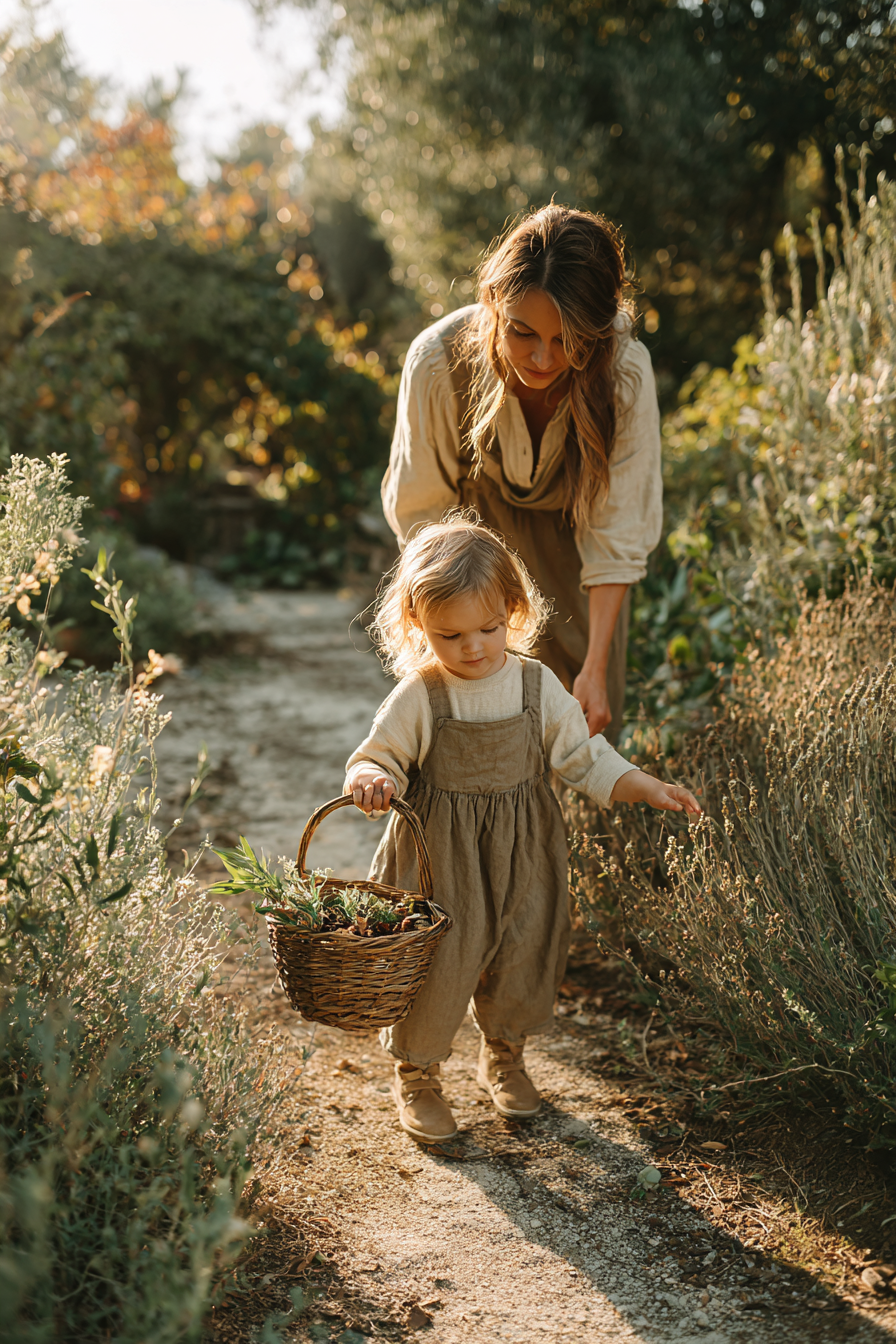
Moving slowly is the whole practice.
Free Nature Treasure Hunt Starter Pack
A complete observation toolkit for toddlers — made to keep nearby, not to complete perfectly. Three age-matched versions so it grows with your child.
Nature treasure hunts look almost too simple to matter.
A walk. A few leaves. A handful of stones.
But many of the foundations of learning begin exactly this way — in the moment a child crouches down beside something small and gives it their full attention.
They learn to observe. To compare. To describe. To wonder.
And those small moments of noticing eventually become everything else.