
Toddler Language · Early Development
Why Toddlers Repeat Words — And What It Really Means
When a child says the same word again and again, it can look like nothing is changing. This is what is actually happening.
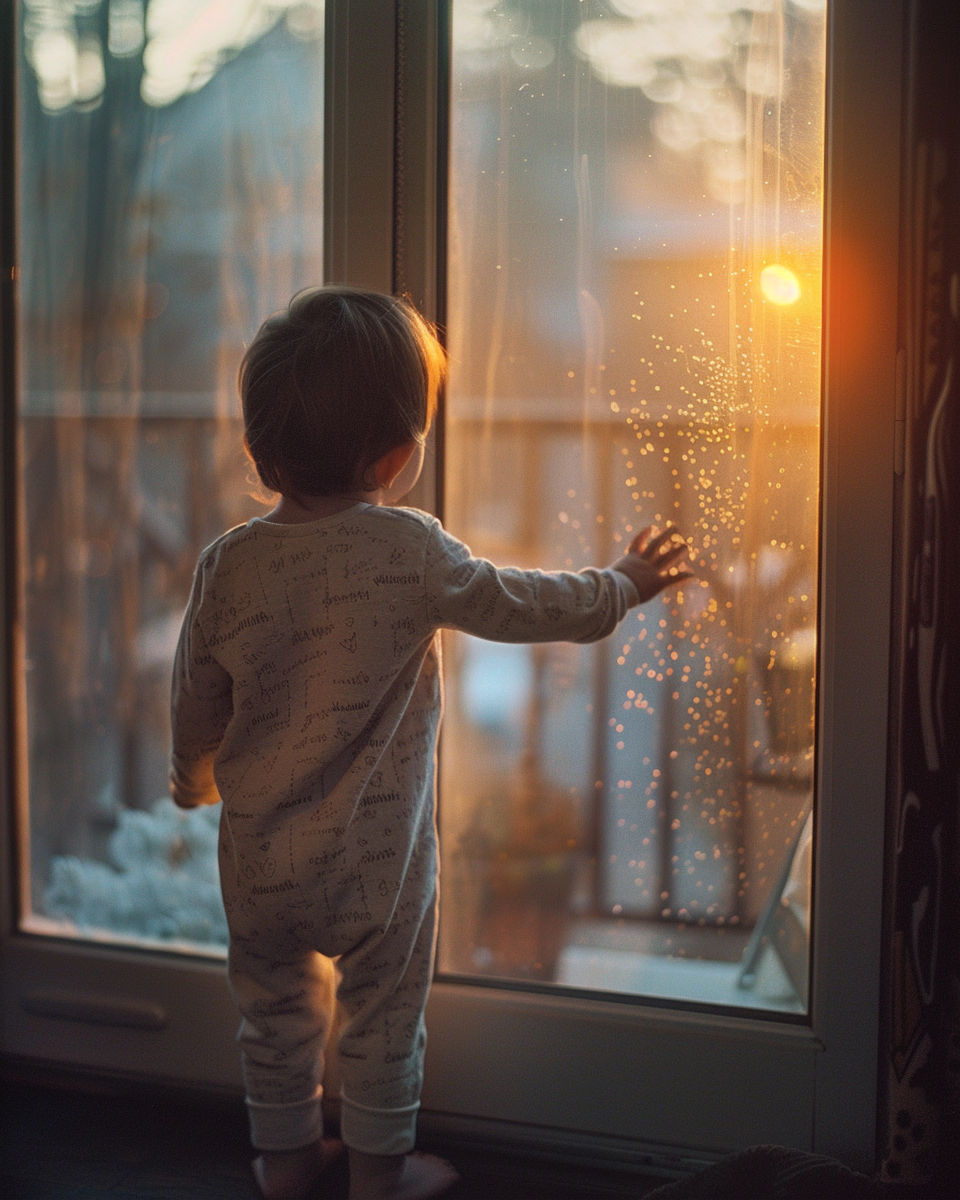
He has been saying it for twenty minutes.
“Bus. Bus. Bus.”
Each time the yellow vehicle rolls past the window, the same word. The same pointing finger. The same expression of complete absorption. You have confirmed that yes, it is indeed a bus, approximately seventeen times now. You have tried “big bus” and “yellow bus” and “the bus is going.” Still: “Bus. Bus. Bus.”
It is easy, in this moment, to wonder. Does he know any other words? Has he been practising language at all? Is something supposed to be happening that is not?
But the question worth sitting with is not whether your child is repeating. It is what the repetition is for.
Why Repetition Looks Strange To Adults
We are wired to associate learning with novelty. A new word feels like progress. A new sentence feels like growth. When a toddler adds “truck” to “bus” to “car,” something in us relaxes. That is movement. That is development happening.
But this is the adult model of learning, not the child’s.
Adults move through information quickly. We skim, absorb the outline, and move on. What we call “learning” often means acquiring a new piece of information and filing it away. For a toddler, this model is almost entirely backwards.
Young children learn by returning to things, not by leaving them behind. The repeated experiment. The same book read thirty nights in a row. The block tower built and knocked down and built again. Repetition is not the sign that learning has stalled. It is very often the shape that learning takes.
The word “bus” on the fifteenth saying is not the same as the word “bus” on the first. Something is accumulating. The parent just cannot see it yet.
What Is Actually Happening When A Toddler Repeats A Word
One repeated word is doing several things at once. This is worth understanding, because it changes how the moment feels.
First, there is the sound itself. Young children are learning to produce the physical shapes that words require — the placement of the tongue, the movement of the lips, the breath behind a consonant. Saying “bus” once is not enough to make it reliable. A toddler who says “bus” fifteen times is, among other things, rehearsing an action. Like a pianist running the same scale. Like a child who has just learned to balance on one foot and keeps trying it, again, on every available surface.
Second, there is memory. Language does not arrive fully formed. It has to be laid down, recalled, and laid down again before it stays reliably accessible. Repetition strengthens that pathway. The word that gets said again and again becomes easier to retrieve later, in different contexts, with less effort.
Third, there is meaning. A word like “bus” is not just a label. It is attached to motion, to size, to sound, to the fact that the bus comes and goes and comes back. Every time a toddler says “bus” while watching a bus, they are building that web of association a little further. The word gets richer with each repetition, even when it looks exactly the same from the outside.
And then there is something harder to name but equally real: connection. When a toddler looks at you and says “bus,” they are not only practising language. They are sharing something. Pointing at the world and asking you to look with them. The repeated word is also a repeated invitation.
What This Moment Is Really About
One word, said many times over, may be practising sound, building memory, deepening meaning, and seeking connection — all at the same time. These are not small things. They are the architecture of early language.
Repetition Is Not A Language Skill. It Is A Learning Skill.
Here is something that changes the picture entirely.
Repetition in language is not a language-specific behaviour. It is a learning behaviour. And it appears across nearly every domain of early childhood development — often at exactly the same time, often in the same child, often in the same hour.
The toddler who says “bus” fifteen times at the window is the same child who climbs the same step at the playground forty times in an afternoon — not because he cannot find a more interesting step, but because that particular step is still teaching him something. The same child who fills the same cup with water and pours it out and fills it again, not bored, not stuck, but in deep concentration with a physical problem that is not yet fully solved. The same child who drops a spoon from the high chair, watches it fall, watches your face, drops it again — running an experiment that is genuinely about gravity and response and cause and effect.
These are not separate behaviours. They are expressions of the same underlying mechanism.
Young children repeat across every domain they are developing:
In movement, they repeat because the body needs many attempts to build reliable coordination. The step that felt uncertain on the thirty-ninth climb feels different on the fortieth.
In practical life, they repeat because competence is not a switch. Pouring, folding, scooping — these require the hands and the mind to negotiate, over and over, until the action begins to flow.
In social learning, they repeat because connection and turn-taking are skills built through use. The same peekaboo game, the same chase around the sofa, the same request for “again” — each repetition is practising the rhythm of relationship.
In exploration, they repeat because children are small scientists with a hypothesis to test. The dropped object falls every time. This is not obvious until you have dropped it enough times to be certain.
Language sits inside all of this. When a toddler repeats a word, they are doing the same thing they do when they climb the step, fill the cup, drop the spoon. They are using what is available to them to understand something more fully.
This is why repetition sits underneath nearly every early learning goal. A child who is learning to observe needs to look at the same thing many times before they truly see it. A child who is building confidence needs to succeed at the same task repeatedly before the confidence becomes real rather than accidental. A child learning to communicate needs to use the same word in the same context again and again before that word becomes a reliable tool. A child developing practical life skills needs to fold, pour, carry, and wipe many more times than an adult would expect — not because they are slow, but because mastery in early childhood is always built through return, not shortcut. Repetition is not one developmental goal among many. It is what sits underneath all of them.
Repetition is not a limitation of early childhood. It is the method. Across movement, language, practical life, and exploration — it is how young children make things their own.
Repetition Is Often A Sign Of Learning
Think about how children learn to walk. The first unassisted steps are not the end of the lesson. A toddler who can walk will walk the same hallway back and forth, crouch and stand, test the same threshold between carpet and tile, practise the same small staircase until it is no longer uncertain. No one watching this thinks the child is failing to learn. The repetition is clearly the learning.
Language follows the same logic.
A child who has discovered the word “dog” will say it for every dog they see — and sometimes for cats, and sometimes for horses, and sometimes for a dark shape moving in the shadows. They are not making errors. They are testing the edges of a concept. The word “dog” is being calibrated, definition by definition, through repeated use.
“More.” “Up.” “Again.” These words get used dozens of times a day in early language, not because a toddler is limited, but because these words are tools they have found that work. A hammer is not used less because you already know how to use it.
The words that get repeated the most are often the ones doing the most work. They are not the ceiling of a child’s language. They are the foundation being laid beneath everything that will come next.
If You Remember One Thing
Adults measure progress by what is new. Young children often measure it by what they can return to.
A toddler who keeps coming back to the same word, the same step, the same game is not circling in place. They are spiralling deeper — building something that will eventually hold their weight.
What Repetition Does Not Need
It is worth saying this plainly, because the impulse to help can sometimes work against the very thing it is trying to support.
Repetition in early childhood does not need more flashcards. It does not need quizzing, prompting, or testing. It does not need an adult hovering nearby to redirect it toward something more productive. It does not need to be hurried along or replaced with something new.
What it needs, mostly, is space. Time. A parent who can be present without turning the moment into a lesson. The richest language environments are rarely the ones with the most materials or the most structured activity — they are the ones where ordinary life is allowed to be interesting.
The toddler filling and pouring at the water table does not need to be told about volume. The child climbing the same step does not need to be challenged to try a bigger one. The child saying “bus” does not need a vocabulary quiz. They are already learning. The learning is already happening.
The parent’s job in these moments is not to accelerate. It is to stay. To notice. To occasionally add one small thing — a word, a response, a look of shared interest — and then let the child return to the work they were already doing.
What Parents Usually Worry About
It is worth naming the worry directly, because it is a real one.
“Shouldn’t he be saying more words by now?” is a question most parents of toddlers carry somewhere in the back of their minds. And “why does she keep saying the same thing?” can easily feel like it belongs in the same conversation — as if repetition and delay are the same thing.
They are not.
Healthy toddler language often looks repetitive. A child who says a small number of words with clear intent and genuine communication is doing something quite different from a child who does not seem to be developing language at all. Repetition within a context of engagement — pointing, watching, responding, initiating — is generally a sign that language is working as it should.
Gentle Reminder
This article is not a developmental checklist, and nothing here is intended as medical guidance. If you have broader concerns about your child’s language development — if words that were present have disappeared, if your child seems unresponsive to their name, or if communication in general feels absent rather than simply quiet — it is worth speaking with your paediatrician or a speech-language professional. There is no harm in asking, and there is often a great deal of reassurance waiting there.
What Helps More Than Correcting
When a toddler repeats a word, the most natural adult impulse is to test or to redirect. “Can you say something else? What else can you see?” But testing language rarely helps it grow. Connection does.
The most useful thing a parent can do when a toddler repeats a word is simply to respond to it — and add something small.
Try Today
When your toddler says a word, respond to what they seem to mean, then add one word more. Not a test. Not a correction. Just a small, warm expansion.
- Toddler: “Bus.”
- You: “Yes, a big bus.”
- Toddler: “Bus.”
- You: “The bus is stopping.”
- Toddler: “Bus.”
- You: “The bus is going away now.”
You are not teaching. You are talking with your child inside a moment they have already found interesting. That is where language grows.
This approach works because it meets a child inside their own attention rather than redirecting it. The toddler does not need to perform a new word to earn the interaction. The interaction itself is the point. If there is one small shift worth building into ordinary days, this is it.
Over time, these small additions accumulate. A word said once beside “bus” becomes part of what “bus” means. The language builds the way everything builds in early childhood — through repetition, through connection, through ordinary moments that do not feel like much from the outside.
Most parents understand this in principle. Expand, don’t quiz. Follow the child’s attention. Add one word more.
The harder question is usually the practical one: what do I actually say in the moment? Not in theory, not with a prompt ready, but standing at the window at 8am with a child pointing at a bus and nothing particular coming to mind.
That is the gap the Language Prompt Cards are designed for.
The next time your toddler says the same word for the twentieth time, imagine a scientist running the same experiment again and again — not because nothing is happening, but because something important is.
Children rarely repeat because they are stuck. They repeat because they have found something worth staying with.
Chichiberry ParentingThere is something worth sitting with in that image. The scientist running the same experiment is not failing to learn. She is verifying. Strengthening. Building a result that will hold.
Your toddler pointing at the bus, saying “bus,” watching the bus, saying “bus” again — she is not wasting time. She is doing the particular kind of work that only repetition can accomplish. She is making the word hers.
Free Resource
CCBR Everyday Language Prompt Cards
Simple conversation starters for ordinary moments — meals, walks, bath time, the car. Nothing to memorise. Nothing to perform. Just small prompts to keep nearby when the moment is already there.
Get the free prompt cards →The most important developmental changes in early childhood are rarely visible while they are happening. They do not announce themselves. There is no moment when a toddler looks up and says: that word is mine now. The step is no longer uncertain. The cup obeys my hands.
It happens in the repetitions, quietly, without ceremony. And then one day — not the day you were watching for — the word appears in a new place, with new ease, as if it had always been there. Because in a way, it had. You just could not see it being built.
Repetition does its work in the dark. The parent who can sit beside it — without rushing it, without redirecting it, without measuring it against something else — is already giving their child one of the most useful things early childhood requires.
That is already enough. That has always been enough.
— Chichiberry ParentingSimilar Posts
The Day I Stopped Doing Everything For Him
Practical Life · Montessori at Home The Day I Stopped Doing Everything For Him A quiet shift that changed more than I expected — and five simple practical life activities that helped my toddler build confidence one small responsibility at a time. He wanted to pour his own water. I said no. Not because it…
40 Ways To Build Toddler Independence At Home
Toddler Independence 40 Ways To Build Toddler Independence At Home Toddler independence does not have to look like a perfect routine or a child who does everything alone. Often, it begins with one small chance to try — pouring water, carrying socks, wiping a spill, choosing between two shirts, or helping in a way that…
Why Toddler Walks Are So Slow — And Why That’s a Good Thing
TODDLER DEVELOPMENT / OUTDOOR PLAY Why Toddler Walks Are So Slow — And Why That’s a Good Thing Your toddler isn’t stalling on the way to the car. They’re noticing, testing, touching, listening, and balancing their way through the real world — and a walk that takes forty-five minutes is doing more than it looks…
Practical Life Activities For 2 Year Olds At Home
Practical Life Activities For 2 Year Olds At Home | Chichiberry Parenting Practical Life · Toddler Development Practical Life Activities For 2 Year Olds At Home Simple real-life tasks that build independence, focus, coordination, language, and confidence — using what you already have at home. Toddler · 2 Years 12 min read Screen-Free In this…
Learning Goals For 18–24 Months: What Learning Really Looks Like In Everyday Life
Learning Goals For 18–24 Months: What Learning Really Looks Like In Everyday Life Toddler Learning · Ages 18–24 Months Learning Goals For 18–24 Months: What Learning Really Looks Like In Everyday Life A calm, observation-based guide for parents who want to understand what is already happening inside ordinary moments. Chichiberry Parenting Montessori-Inspired Ages 18–24 Months…
Motor Activities Hidden Inside Everyday Chores
Motor Activities Hidden Inside Everyday Chores | Chichiberry Parenting Practical Life · Motor Development Motor Activities Hidden Inside Everyday Chores What parents often miss when toddlers help around the house Most parents think of chores as something that happens alongside childhood. Something children grow into eventually. Something you manage around their learning. Developmental science suggests…