
For the days you don't have the energy to set anything up, but you still don't want to reach for a screen.
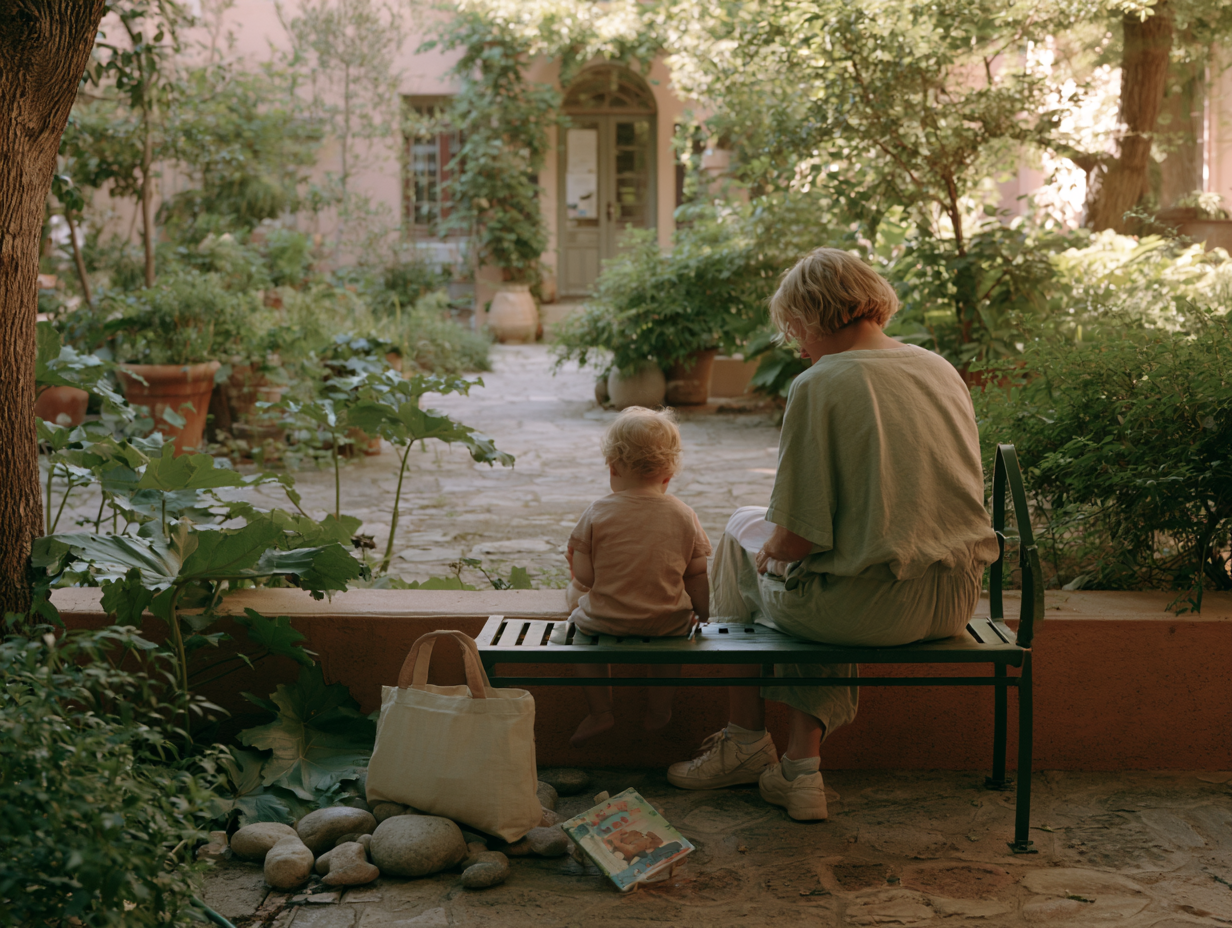
Some days, play doesn't need a plan. It just needs you close by.
What's Inside
When You're Too Tired To Play
Some days you don't have it in you to build a sensory bin, set out a tray, or think of something "educational." You may not want to hand over a screen either, even though it would be easier. Your toddler still wants to be near you, still wants something to do with their hands, and you still want the day to feel okay.
This is one of those quiet parts of toddlerhood that nobody prepares you for. You are allowed to be tired and still want screen-free play. Both things can be true at once.
Some days, screen-free play does not need to look like an activity. It can simply look like your toddler doing something small nearby while you stay close.
This list is built for exactly that kind of day. Nothing here requires a trip to the craft store, a Pinterest-worthy setup, or energy you don't have. Just small, real ideas using things you already own.
What Counts As Screen-Free Play?
Screen-free play is wider than it sounds. It isn't only puzzles and flashcards. It includes touching, moving, pretending, carrying, pouring, sorting, noticing, listening, and returning to connection with you.
It can look like:
- rolling socks into a laundry basket
- pouring water between two bowls
- lining up toy animals along the couch
- wiping a tray with a small cloth
- watching shadows move on the wall
- pretending to feed a teddy bear
- sitting beside you while you rest
If your toddler is touching, moving, pretending, noticing, carrying, pouring, sorting, listening, or returning to you for connection — play is happening. It doesn't need to look impressive to count.
The Tired Parent Rule
Over time, one rule has made the biggest difference on low-energy days. We call it the Tired Parent Rule.
On tired days, choose play ideas that need:
- less than two minutes to start
- no special materials
- no perfect setup
- no adult performance
- no finished product
- no pressure to last long
If an idea can't meet that bar on a hard day, it isn't the right idea for today — even if it's a good idea in general. Save it for a day when you have more to give.
You are allowed to offer a beginning and then sit nearby. You don't have to run the whole thing.
Stop before play starts to feel like pressure.
Need simple play ideas for the days you're tired?
Download the free Toddler Play Idea Generator — a simple printable guide for choosing low-effort, screen-free play using what you already have at home.
One download. No extra shopping required.
40 Screen-Free Play Ideas For Toddlers When You're Tired
These are grouped by where your body already is — because on tired days, the easiest play is the play that doesn't ask you to move first.
Quiet Floor Play
For when you want to sit down and stay down.
- Build a pillow path across the floor
- Stack soft blocks as high as they'll go
- Roll a ball slowly back and forth
- Line up toy animals in a row
- Make a blanket nest to sit inside
Kitchen Play
For when you're already standing at the counter.
- Stir water in a bowl
- Match plastic lids to containers
- Wipe a tray with a small cloth
- Scoop with a big spoon
- Carry napkins to the table
Couch Play
For when you have very little energy left.
- Read one tiny book, start to finish
- Play "where is it?" with a familiar object
- Name body parts together, slowly
- Hide a toy under a blanket and find it
- Copy silly sounds back and forth
You do not need to turn play into a performance. Sometimes your toddler only needs a small invitation and the feeling that you are still nearby.
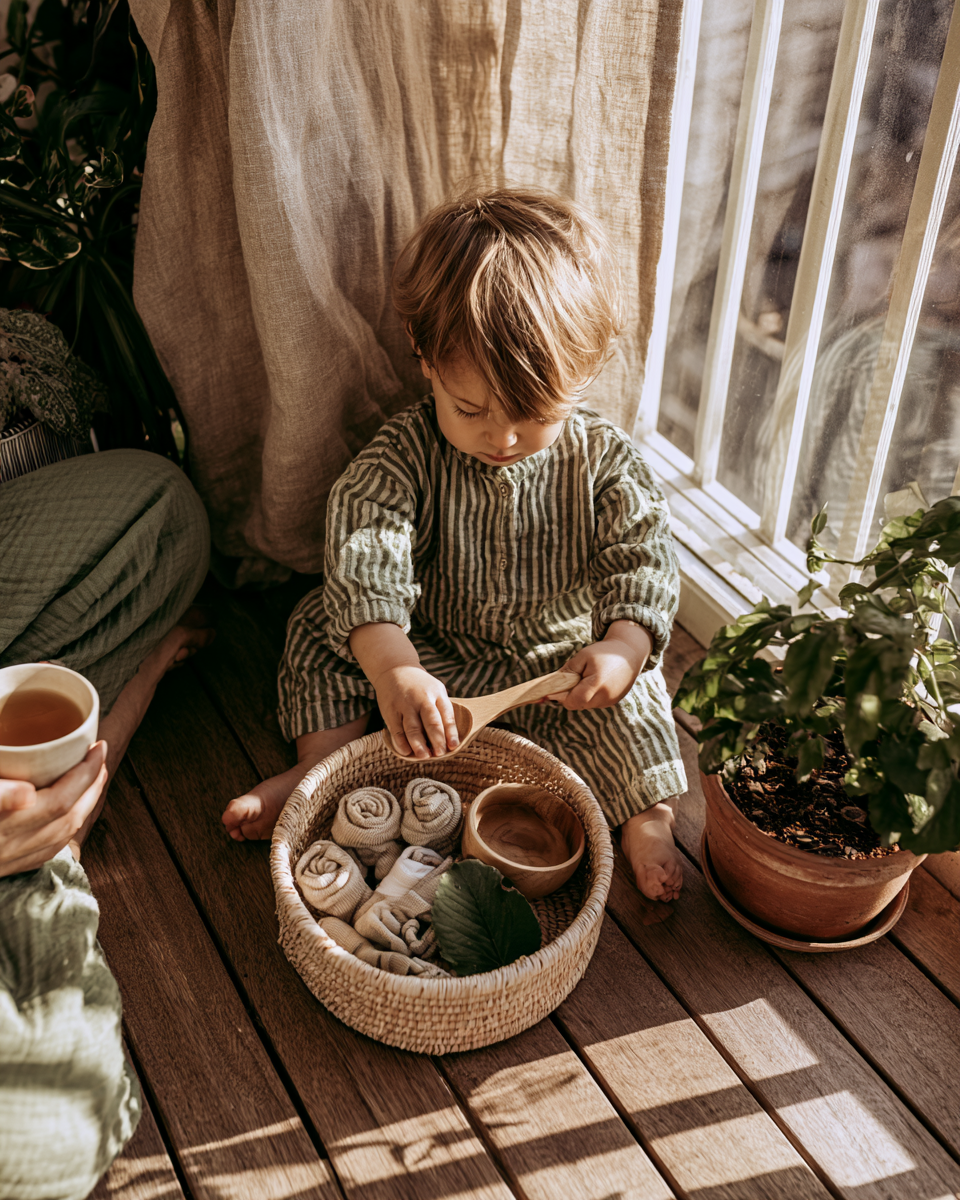
Couch play still counts. You do not have to perform the whole activity.
Movement Play
For toddlers who need to move, even when you can't run around.
- Walk like different animals across the room
- Crawl under a chair or table
- Toss rolled-up socks into a basket
- Step over a folded towel, back and forth
- Dance to one song, then stop
Pretend Play
For toddlers beginning to use their imagination.
- Feed a teddy bear a pretend meal
- Make pretend tea and serve it
- Put dolls or stuffed animals to sleep
- Drive toy cars slowly along the floor
- Pack a tiny bag to "go somewhere"
Water Play
For simple, supervised play near a sink or basin.
- Wash toy cups in a bowl of water
- Pour water between two containers
- Paint the porch or tile with plain water
- Wipe the table with a damp cloth
- Float bath toys in a shallow basin
Observing Play
This one asks for almost nothing from you — just noticing together.
- Watch shadows move on the wall
- Look out the window and narrate what you see
- Name passing cars or people
- Find one color together in the room
- Listen for household sounds and name them
Connection Play
The quietest group on this list, and often the one that matters most.
- Sit nearby while they play on their own
- Describe what they're doing, without correcting
- Smile when they look up to check on you
- Answer one sound or gesture they make
- Let them lead without redirecting
On tired days, connection may not look playful. It may simply look like staying close enough to be found.
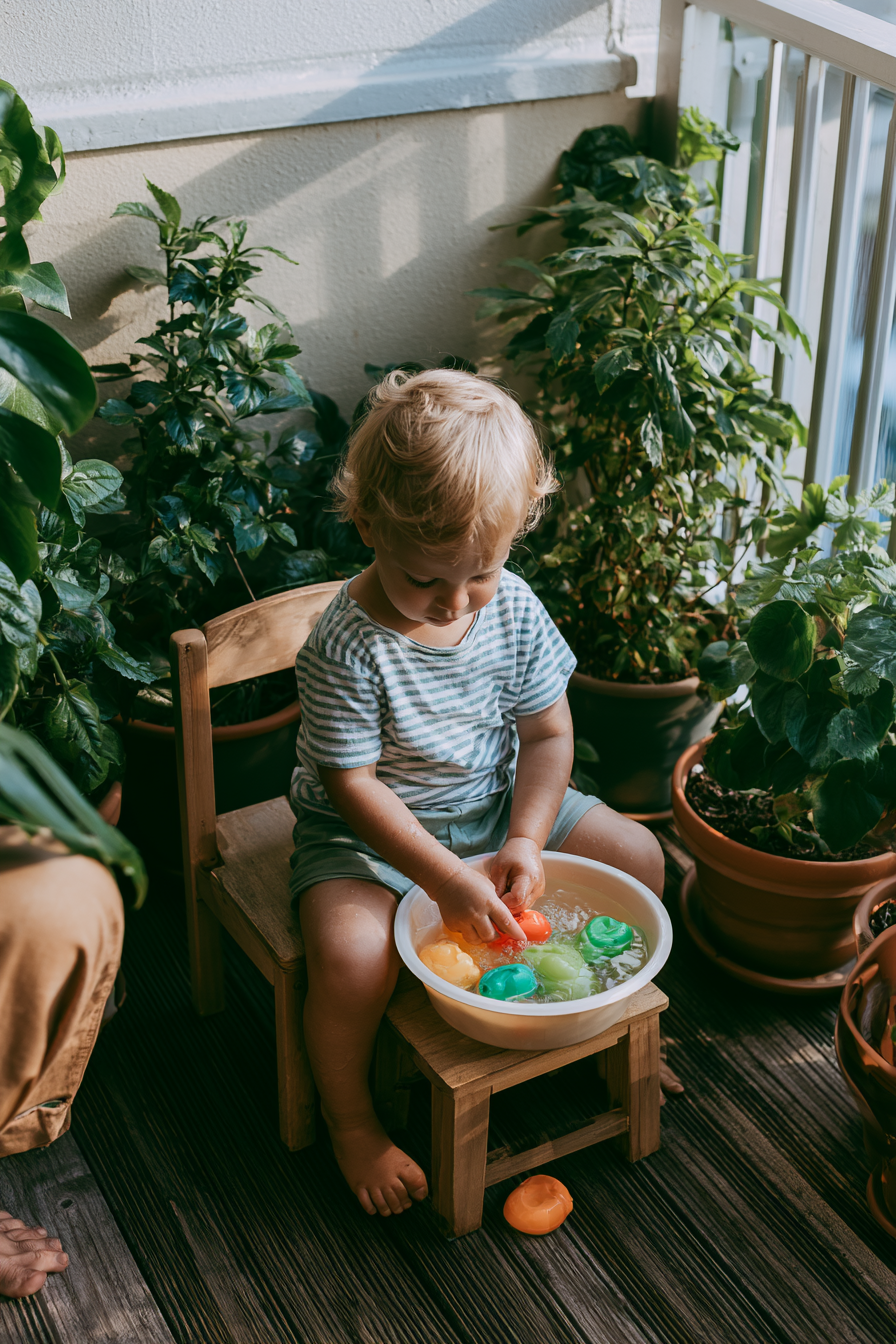
Water play doesn't need a big setup — just a small basin, close supervision, and something simple to wash.
How To Use These Ideas Without Overthinking
You don't need to read this whole list every time. On a tired day, three quick decisions are enough.
Use what is already nearby.
Choose where your body already is
- floor
- couch
- kitchen
- bath
- doorway
- table
Choose one object
- towel
- bowl
- spoon
- socks
- ball
- book
- soft toy
Start small and stop performing
- offer one sentence
- show once
- let your toddler repeat it their way
- sit nearby
"I'm going to sit here. You can roll the socks into the basket."
You can offer one sentence and sit nearby.
What If My Toddler Only Plays For Two Minutes?
That's normal. Toddlers often play in short bursts, not long stretches, and short play still counts. Repetition matters more than duration, and switching activities every few minutes is developmentally typical, not a sign that something isn't working.
Short play is still play.
A two-minute play moment can still give your toddler practice, connection, and a little bit of regulation. The goal was never to keep them busy for a long time.
Do I need to play with my toddler all day?
No. A parent can start the play, stay nearby, describe it once in a while, let the toddler return to independent play, and stop when needed. You are not failing because you cannot entertain your toddler all day — nobody can, and nobody should have to.
Is screen-free play still valuable if it looks boring?
Yes. Boring-looking play can include repeating, testing, noticing, practicing, regulating, imagining, and experimenting. A toddler pouring, wiping, lining up, carrying, or pretending may look quiet from the outside — but a lot is happening inside.

Quiet play is still play. A lot can be happening inside a still moment.
A Gentle Safety Note
A few reminders to keep every idea on this list safe for your child's age and stage:
- Always supervise toddler play, especially near water or small objects.
- Avoid small loose parts for children under three.
- Watch for choking hazards with any small or breakable item.
- Use water play only with close, constant adult supervision.
- Choose soft, large, safe objects if your child is still mouthing toys.
- Adjust every idea to your own child's age, stage, and temperament.
Save your energy. Keep play simple.
Get the free Toddler Play Idea Generator and keep a small list of easy screen-free play ideas ready for tired days.
One download. No extra shopping required.
Frequently Asked Questions
What are easy screen-free activities for toddlers?
Easy screen-free activities are ones that use items already in your home — socks, bowls, spoons, towels, soft toys — and don't require special setup. Pouring, sorting, carrying, and simple pretend play are all easy, low-effort options.
How do I entertain my toddler when I'm tired?
Choose an activity that needs less than two minutes to start and no special materials, then sit nearby instead of actively running the play. Offering a beginning and staying close is often enough.
How long should a toddler play independently?
This varies widely by age and temperament, but short bursts of a few minutes are completely normal for toddlers. Independent play tends to lengthen gradually over time rather than happening all at once.
Are simple household activities good for toddler development?
Yes. Everyday actions like pouring, wiping, carrying, and sorting support coordination, focus, and early independence, and they often engage a toddler just as fully as a more elaborate activity would.
What can I do instead of giving my toddler a screen?
Try a low-effort option from wherever you already are — the floor, the couch, or the kitchen. A pillow path, a bowl of water, or a simple pretend-play prompt can work just as well as a screen on a tired day.
Why does my toddler only play for a few minutes?
Short attention spans and quick shifts between activities are typical for toddlers. This isn't a sign that an activity failed — repetition and brief bursts of play are part of how toddlers explore.
Are these play ideas suitable for 1 year olds?
Many of them are, especially in the Quiet Floor Play, Couch Play, and Connection Play groups. Always supervise closely, avoid small parts, and choose soft, large objects for a child who is still mouthing toys.
Are these play ideas suitable for 2 and 3 year olds?
Yes. Older toddlers can usually take on more of the Kitchen Play, Pretend Play, and Water Play ideas independently, with supervision still recommended for anything involving water or small objects.
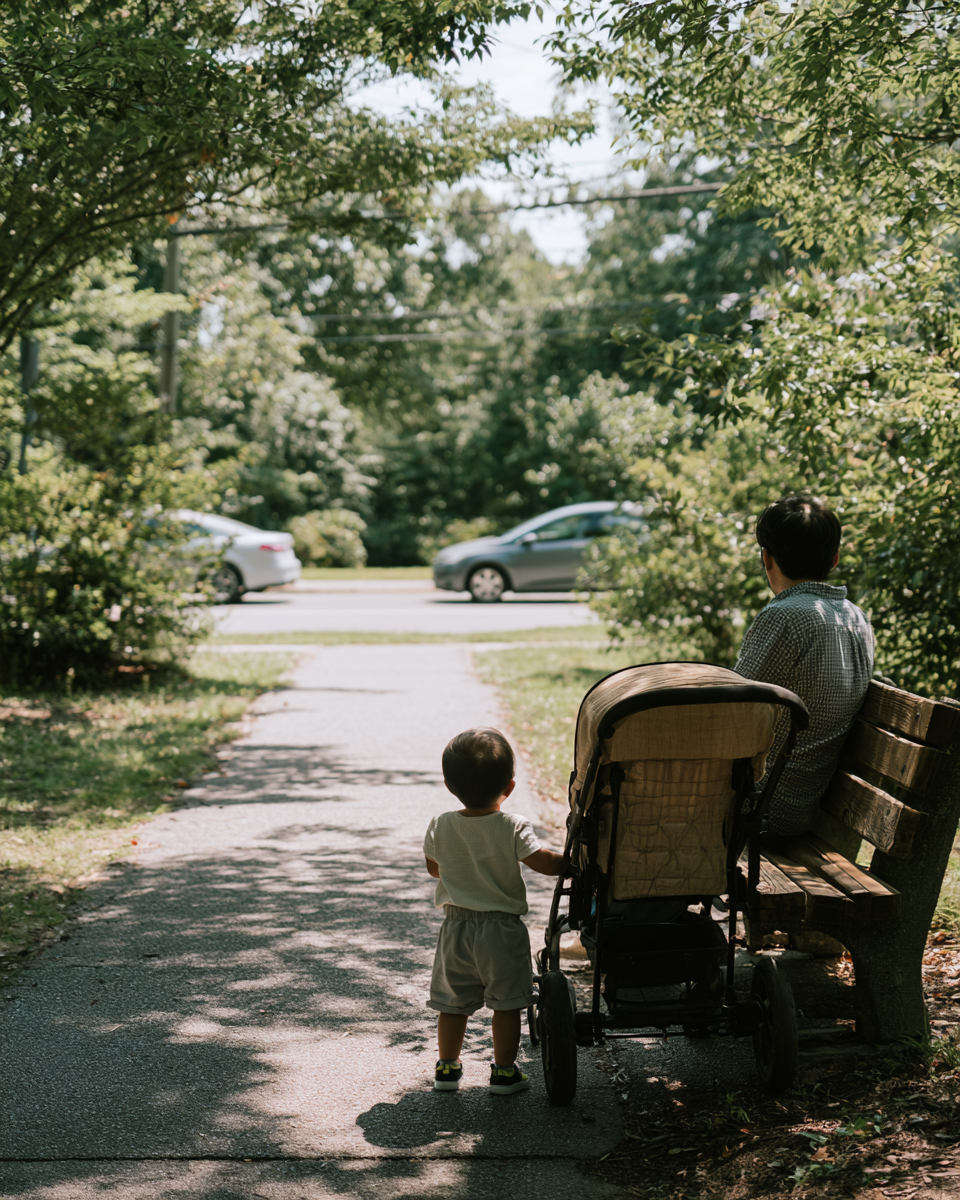
Some days play will be small. Some days you'll forget this whole list, and your toddler might ignore the idea you offered anyway. That's okay. The goal was never perfect play — it was a few small moments of connection, movement, noticing, and practice.
Simple play still counts. Especially on the days when simple is all you have.