
Toddler Early Math · Chichiberry Parenting
What Math Really Looks Like Before Preschool
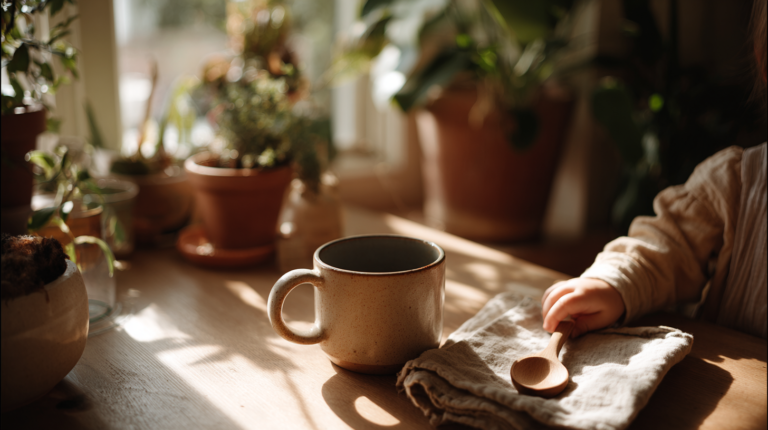
It is rarely a worksheet. It is a spoon beside a bowl, a cup that just went empty, and a toddler noticing the order of things.

Should my toddler be counting to ten? Should they recognize numbers before preschool? Do I need math activities at home? These are some of the most common questions parents ask us at Chichiberry, usually with a quiet worry underneath them: am I already behind?
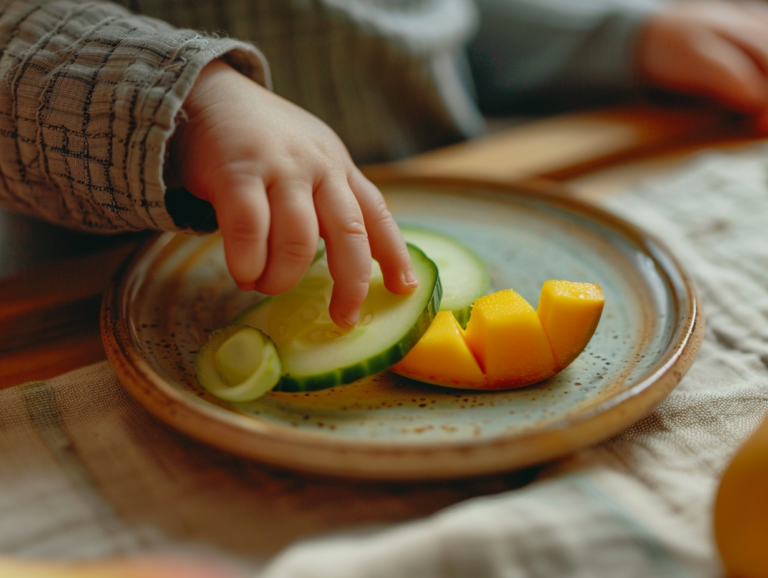
You are not behind, and neither is your child. Before preschool, math often does not look like a lesson at all. It looks like a toddler asking for one more banana slice. It looks like a small hand placing one spoon beside each bowl on the table. It looks like toy cars lined up in a row on the living room floor, a child noticing the big cup and the small cup, or a determined toddler trying, and failing, and trying again, to fit a lid onto a container.
A toddler does not first meet math on paper. They meet it in a bowl that is empty, a tower that is too tall, and a sock that has no pair.
Many parents are looking for math in the wrong place. We look for number recognition. We look for counting performance. We reach for worksheets because they feel measurable, like proof that learning is happening. But early math usually begins somewhere much quieter, long before numerals or number lines. Early math begins when a child notices that the world has relationships. It begins in the way a child notices quantity, order, shape, pattern, space, and relationship. It begins in ordinary life, and it is already happening in yours.
Gentle Reminder
Before preschool, math is not a subject. It is a way your child begins to notice order in the world.
In this article
- What early math really means before preschool
- What math does not need to look like yet
- The most common mistake: looking for math only in numbers
- The 8 early math domains parents can notice
- A few more math ideas parents may notice
- A day in the life: math before preschool
- What parents can do at home
- What to say during everyday math moments
- When not to worry
- When to observe more closely
- The Everyday Early Math Spotter
- Frequently asked questions
What Early Math Really Means Before Preschool
When we say “early math,” most parents picture numbers: counting aloud, reciting one through ten, maybe recognizing a numeral on a page. But number recognition is only one small piece of a much larger picture, and it is usually one of the later pieces to develop, not the first.
Before preschool, early math is built from foundations that are broader, older, and far more physical than numerals. These include quantity, the difference between more, less, one, another, and enough. They include one-to-one correspondence, the idea that one spoon belongs with one bowl. They include sorting, matching, comparing, noticing pattern, understanding spatial words like in, on, under, and between, following simple sequences, measuring in rough physical terms like long, short, full, and empty, and solving small everyday problems.
Each of these is mathematical thinking. None of them require a worksheet. All of them are already woven into your child’s ordinary day, whether or not anyone names them as “math.”
| Ordinary moment | Hidden math |
|---|---|
| Toddler puts one spoon beside each bowl | One-to-one correspondence |
| Toddler lines up toy cars | Order, sequence, spatial thinking |
| Toddler says “more banana” | Quantity |
| Toddler matches socks | Classification and matching |
| Toddler pours water and says “too much” | Volume and comparison |
| Toddler puts blocks by color | Sorting and grouping |
Once you start noticing this table in your own home, it is difficult to stop. The math was probably there yesterday too. It just did not look like math because nobody wrote it on a worksheet.
This is an important shift for parents to make, not because worksheets are harmful, but because they often measure the wrong stage of learning. A worksheet asks a child to recognize a symbol. Ordinary life asks a child to understand a relationship, and understanding almost always comes first. A toddler who can point to the numeral three on a page has memorized a shape. A toddler who hands you two crackers when you ask for two has understood something about quantity itself. The second skill is the one that everything else eventually builds on.
Researchers and Montessori educators alike describe this early period as the foundation for number sense, the intuitive feel for quantity and relationship that makes later arithmetic make sense rather than simply being memorized. You do not need to know the research to support it. You only need to keep offering real objects, real language, and real time.
The worksheet can wait. The noticing is already here.
What Math Does Not Need to Look Like Yet
It can be a relief to hear what is not required right now. Before preschool, math does not need to look like worksheet tracing, flashcard drills, formal lessons, pressure to count perfectly, correcting every small mistake, turning every moment into a quiz, or asking “what number is this” throughout the day.
If you already use workbooks or number toys at home sometimes, that is fine. They are not harmful in small doses, and some children genuinely enjoy them. But they are not the foundation of early math, and they are not a requirement for preschool readiness. The goal at this age is not to make a toddler perform math earlier. The goal is to help them stay curious enough to keep noticing.
There is a particular kind of pressure that creeps into early learning once a parent starts comparing. A cousin who can count to twenty. A classmate who already knows their numbers. A worksheet packet that promises school readiness by a certain birthday. None of this reflects how early math actually develops, and none of it should set the pace in your home. A toddler who is curious, who keeps trying to fit the lid, who keeps asking for one more, who keeps noticing that the tower fell down again, is doing exactly what this stage of development asks of them.
Instead of quizzing, try noticing together
Instead of
“What number is this?”
Try
“We need two cups. Can you help me find them?”
Instead of
“Count to ten for Grandma.”
Try
“You put one cracker on each plate.”
Instead of
“No, that’s wrong.”
Try
“Let’s check together. Is there one for each person?”
Curiosity is the foundation. Performance can come later.
The Most Common Mistake: Looking for Math Only in Numbers
Parents often ask us the same three questions. Can my child count? Can they recognize numbers? Can they say one to ten? These are reasonable questions, but they are not the most useful ones to ask right now.
The deeper questions, the ones that actually reflect where early math lives before preschool, sound different. Can they notice one more? Can they see when something is missing? Can they match two things that belong together? Can they notice when a cup is full or empty? Can they follow first, next, and after in a routine? Can they tell when something does not fit? Can they group things that feel the same?
Numbers matter, and they will matter more with each passing year. But they are not the whole of early math, and they are rarely where it begins. Before a number means anything to a child, they need a felt sense of the world underneath it, a world where more and less, order and space, sameness and change are already familiar.
Before a number means anything, a child needs a world where quantity, order, space, and change can be felt.
Math before preschool is not a performance to pull out of a child. It is a pattern they are slowly learning to see. A child who is still learning to count may already be thinking mathematically, every time they notice that one cup is fuller than another, or that the tower needs one more block to stand.
The 8 Early Math Domains Parents Can Notice
This is the heart of the article. Each of the eight domains below is something you can begin noticing in your child’s ordinary day, starting today, with nothing to buy and nothing to prepare.

Domain 1
Counting That Belongs to Real Life
A toddler climbs the stairs one at a time, calling out a number, sometimes correctly, sometimes not, at every step. Later, the same child lines four blueberries along the edge of a plate before eating them one by one. It may look like play, or like stalling before a meal. It is also counting, in its most honest form.
Counting is strongest when it belongs to something a child can touch, move, eat, carry, or use. Stairs, blueberries, shoes, spoons, blocks in a tower, scoops of oats or rice, bath toys, and steps to the door are all far more meaningful than counting in the abstract.
This matters because reciting numbers and understanding quantity are two different skills. A child can say “one, two, three, four, five” perfectly and still not understand that five actually means five things. Counting real, touchable objects is what slowly connects the number word to the amount it represents. That connection, more than the recitation itself, is the beginning of number sense.
Nature walks are one of the easiest places to make this real, because stones, leaves, sticks, and seed pods can be touched, moved, grouped, and counted without any preparation at all. If you are looking for a low-effort way to bring counting outdoors, Nature Counting for Toddlers walks through exactly how that looks.
What to say
“One spoon for you, one spoon for me.”
“We need two shoes. Here is one. Where is the other one?”
“You climbed three steps.”
“There are four berries on your plate.”
What not to overdo: Do not worry if your child skips numbers or recites numbers without accuracy. Rote counting, saying numbers in order, and object counting, matching a number to a real item, develop on separate timelines.
Domain 2
Sorting and Grouping
On the floor, it may look like a child making little piles for no reason. Socks here. Blocks there. Stones in one corner. Leaves in another. But this is often the beginning of classification.
Sorting is one of the clearest early math foundations because children begin noticing sameness, difference, category, and rule. Socks by color, spoons and forks, big leaves and small leaves, red blocks and blue blocks, toy animals and toy cars, laundry into family piles, and stones and sticks after a walk are all sorting in disguise.
Sorting matters because it is the earliest form of logical grouping, the same thinking that later supports categorizing, graphing, and even basic arithmetic. Before a child can add two groups together, they need to understand that a group is a thing at all, a collection that shares something in common. Every sorted pile of blocks or socks is quiet practice for that idea.
What to say
“These ones are the same color.”
“You put all the spoons together.”
“This pile has leaves. This pile has stones.”
A toddler who lines things up or groups objects is not “just being repetitive.” They may be exploring category, order, sameness, difference, and sequence, all at once.
Domain 3
Matching and Same or Different
A child holds up one sock, then digs through the basket until a second one appears. Two lids get tried against the same container, one after another, until one finally clicks into place. This searching is not fumbling. It is comparison in motion.
Matching builds visual discrimination, memory, category thinking, and early logical comparison. Matching shoes, matching socks, matching lids to containers, matching cups to plates, finding the same animal in two books, and pairing puzzle pieces all build this skill.
Matching matters because it asks a child to hold two things in mind at once and compare them, a small but important cognitive step. It is also one of the gentlest ways to introduce the idea of “equal,” long before that word appears in a math class. A matched pair is, quietly, a child’s first experience of equivalence.
What to say
“These two match.”
“This lid fits this box.”
“That one is different.”
What not to overdo: Do not force perfect matching. Let your child experiment with almost, not quite, and try another.
Domain 4
Comparing Size, Amount, and Weight
Two pieces of fruit sit on the counter. Without being asked, a toddler reaches for the bigger one. A cup gets filled, then filled a little more, until water spills over the edge and a small voice announces “too much.” Comparison rarely waits to be taught.
Children build math when they compare relationships: more, less, bigger, smaller, heavier, lighter, full, empty. A big spoon next to a small spoon, a heavy bag next to a light one, a full cup next to an empty one, are all comparisons your child is quietly absorbing.
Comparison matters because math is, at its core, a study of relationships between quantities, not the quantities themselves. Long before a child understands that seven is more than five, they understand that this pile is more than that pile, and that this cup is fuller than that one. The abstract version of comparison, numbers, is simply a shorthand for what your child is already feeling in their hands.
What to say
“This cup is full.”
“That stone feels heavier.”
“You chose the bigger piece.”
Comparison words are early math vocabulary, even when they never mention a number.
Domain 5
Pattern and Rhythm
The same three songs on repeat in the car. The same three books every night. A child clapping, then stomping, then clapping again, laughing harder each time it repeats. What looks like a preference for repetition is often a child rehearsing something they are only beginning to name: pattern.
Pattern is not only red block, blue block, red block, blue block. It is repetition, predictability, rhythm, and sequence. Clap-stomp-clap-stomp, sock-shoe, sock-shoe, bath-pajamas-story-bed, and songs with repeated lines are all patterns your child is already living inside.
Pattern recognition matters because it is the beginning of predicting what comes next, a skill that later underlies everything from multiplication tables to reading comprehension. A child who notices “it goes leaf, stone, leaf, stone” is doing the same mental work, at a much smaller scale, as a child who later notices that multiples of five always end in zero or five.
What to say
“It goes leaf, stone, leaf, stone.”
“We did bath, pajamas, story. Next is sleep.”
“You noticed it happens again.”
What not to overdo: Do not turn every pattern into a lesson. Sometimes noticing out loud is enough.
Domain 6
Spatial Thinking
A toddler crawling under the table, climbing into a box, and hiding a car behind a cushion may look like simple movement. But the child is also learning position, direction, and how objects relate in space.
Spatial language is math. It helps children understand position, movement, shape, direction, and how objects relate in space. Under the table, inside the basket, beside the chair, behind the door, between two cushions, and through the tunnel are all spatial ideas your toddler is testing constantly through movement and play.
Spatial thinking matters because it underlies geometry, measurement, and even the mental structure children later use to organize numbers along a number line. A toddler climbing into, under, and behind furniture is not just playing. They are building the same spatial reasoning that later helps them understand shapes, maps, and graphs.
What to say
“The ball rolled under the sofa.”
“You put the spoon inside the cup.”
“You crawled through the tunnel.”
Many parents do not realize spatial words are part of early math readiness, but they are.
Domain 7
Sequence, Order, and Time
Every evening, the same four steps: bath, pajamas, story, bed. A toddler who protests when a step is skipped is not simply being difficult. They are noticing that the order has broken.
Math also lives in order: first, next, before, after, last. Toddlers learn sequence through routines like putting on socks before shoes, washing hands before eating, one more page before bed, and packing a bag before leaving the house.
Sequence matters because it is the scaffolding for later concepts like ordinal numbers, steps in a process, and even reading left to right. A toddler who knows that bath comes before pajamas, which comes before story, is quietly rehearsing the mental skill of holding a sequence in mind, remembering what already happened, and predicting what is still to come.
What to say
“First we wash hands, then we eat.”
“After this, we go outside.”
“You put the small one first and the big one next.”
Routines help children predict what comes next. Predicting order is early mathematical thinking, even when it is disguised as bedtime.
Domain 8
Problem Solving
A block tower topples for the third time. A lid will not close over a too-full basket. Two children reach for one truck at the same moment. None of this is a bad afternoon. Each one is a small, real math problem, waiting to be worked through rather than rescued.
Problem solving is the heart of early math. Children notice when something does not fit, when one is missing, when there is too much, or when something needs to be shared. A missing cup, a lid that will not close, a fallen tower, two children and one truck, are all small daily problems worth letting your child sit with.
Problem solving matters because it is the reason any of the other seven domains exist. Counting, sorting, comparing, and sequencing are not skills for their own sake. They are tools a child reaches for when something in real life needs to be figured out. A toddler working out how to make a basket close, or how to share one truck between two children, is doing real mathematical thinking, even without a single number involved.
What to say
“We need one more bowl.”
“This lid does not fit. Let’s try another.”
“There are two children and one truck. What can we do?”
What not to overdo: Do not solve too quickly. Give your child time to try, even if it takes longer than you would like.
A Few More Math Ideas Parents May Notice
The eight domains above are the main map, and they are enough on their own. But a few quieter ideas sit alongside them, supporting lenses rather than a ninth or tenth domain to track. You do not need to teach these intentionally. They are simply worth recognizing when they appear.

A. Shape and Geometry
Shape and geometry begin when toddlers turn objects in their hands and realize shape matters.
- Rotating a puzzle piece again and again until it fits
- Trying a lid against several containers until one finally clicks into place
- Turning a block tower into a bridge, then a house
- Noticing round, flat, corner, and edge
- Discovering which objects roll and which stand still
Geometry begins when a child turns something in their hands and realizes shape matters.
B. Part–Whole Thinking
This idea quietly supports later fractions, composition, and sharing, though it begins very simply.
- One banana cut into pieces, still somehow the same banana
- Puzzle pieces scattered across the floor slowly becoming one picture
- A tower made from many separate blocks
- A whole outfit built from a shirt, pants, and socks
- A cookie broken in half, becoming two smaller pieces
Part–whole thinking begins when a child sees that one thing can be made of many things.
C. Estimation and “About”
Toddlers do not need accurate estimation yet, but they can begin to understand almost, enough, too many, and a little more.
- A basket almost full, judged at a glance
- Enough cups for everyone at the table
- Too many blocks for the lid to close
- A little more water, a few more steps to the car
Estimation is the quiet math of almost, enough, and too much.
D. Conservation and Transformation
Toddlers are still learning that changing the shape, position, or container of something does not always change how much there is.
- Water poured from a short, wide cup into a tall, narrow one
- Playdough rolled into a ball, then stretched into a long rope
- Crackers spread across a plate instead of stacked in a pile
- “It is the same playdough, just longer now.”
Changing the shape of something does not always change how much there is, and toddlers are still learning that.
E. Data, Representation, and Recording
Early data is not a chart yet. It is a child making sense of what belongs together.
- Sorting red leaves from yellow leaves after a walk
- Making a mark or a small pile for every stone found
- A weather calendar or sticker chart on the fridge
- Noticing out loud which pile has more
These small acts of organizing are the earliest form of data literacy, long before a graph ever appears on paper.
Free Printable
Want a gentle way to spot early math in your toddler’s ordinary day? The Everyday Early Math Spotter helps you notice counting, sorting, patterns, size, space, and problem solving without turning the day into a lesson.
Get the free math spotter ↓A Day in the Life: Math Before Preschool

Here is what one ordinary toddler day might hold, if you looked closely.
Child asks for “one more” banana slice.
Hidden math: quantity
Child puts one spoon by each bowl.
Hidden math: one-to-one correspondence
Child counts stairs on the way out.
Hidden math: counting with movement
Child lines up cars by size.
Hidden math: order and comparison
Child notices the cup is empty.
Hidden math: volume
Child sorts stones and leaves after a walk.
Hidden math: classification
Child helps set the table.
Hidden math: matching, counting, sequence
Child follows bath, pajamas, story, bed.
Hidden math: sequence and prediction
This is what math before preschool often looks like. Not a worksheet. A day with relationships inside it. It connects to a broader CCBR idea too: toddlers learn across routines, not only in planned activities, a theme explored further in What Toddlers Learn in an Ordinary Day.
What Parents Can Do at Home
You do not need to add a separate math lesson to your day. You can simply make the math that is already happening a little more visible, in much the same spirit as the Montessori-inspired practical life work described in 7 Montessori Activities for Toddlers at Home, where real household materials do most of the teaching on their own.
1. Use math language naturally
Narrate quantity, comparison, and position as they come up throughout the day, without turning it into a lesson.
- “You have more grapes than me.”
- “That box is heavier than this one.”
- “The dog is behind the fence.”
2. Count real things
Count stairs, snacks, buttons, and steps rather than reciting numbers in the abstract. Real objects give the number word something to attach to.
- “Two more steps and we’re home.”
- “You have three crackers left.”
- “Let’s count how many socks are in this basket.”
3. Let children sort household objects
Laundry, cutlery, and toy bins are all sorting opportunities that need no preparation at all.
- “Can you find all the socks?”
- “Let’s put the big blocks in this basket.”
- “Can you find the spoons and put them here?”
4. Ask fewer quiz questions
Replace “how many is this” with shared observation, which keeps the moment collaborative rather than evaluative.
- “I wonder how many are left.”
- “Let’s check together.”
- “What do you notice about these two?”
5. Notice instead of testing
Say what you see rather than asking your child to prove it. Description builds confidence in a way that quizzing rarely does.
- “You made two piles.”
- “You found the smaller one first.”
- “You lined those up from short to tall.”
6. Use routines as sequencing practice
Name the order of everyday routines out loud so your child can begin predicting what comes next.
- “First socks, then shoes.”
- “After lunch, we rest.”
- “We wash hands, then we sit down to eat.”
7. Let mistakes become information
If a lid does not fit or a count is off, treat it as useful information rather than something to correct immediately.
- “Let’s try another one.”
- “Let’s check together.”
- “Hmm, that one didn’t work. What else could we try?”
8. Give children time to solve small problems
Resist stepping in immediately when something does not fit or a tower falls. A short pause gives your child room to think it through.
- Wait a few seconds before offering help with a stuck lid.
- Ask “what do you think we could try?” before solving it yourself.
- Let a fallen block tower become a chance to rebuild, not a moment to fix quickly.
Gentle Reminder
You are not behind on early math. You are already living inside it. The work now is simply noticing it out loud.
What to Say During Everyday Math Moments

You do not need to sound like a teacher. You only need a few words that make the math visible.
Counting
- “We need two shoes.”
- “One for you, one for me.”
- “You have three berries.”
- “Let’s count the stairs as we climb.”
- “There is one left.”
- “You gave everyone one spoon.”
Sorting
- “These all go together.”
- “You found the small ones.”
- “This pile is for spoons.”
- “These are the same color.”
- “The socks are in one pile.”
- “The leaves are here, and the stones are there.”
Comparing
- “This one is heavier.”
- “That cup is almost full.”
- “This stick is longer.”
- “You chose the bigger piece.”
- “There is less water now.”
- “This basket has too many blocks.”
Spatial
- “The block is under the chair.”
- “You put it inside.”
- “The car is beside the book.”
- “The teddy is behind the pillow.”
- “You crawled through the tunnel.”
- “The spoon is between the bowls.”
Sequence
- “First socks, then shoes.”
- “After lunch, we rest.”
- “What comes next?”
- “One more page, then bed.”
- “Before we eat, we wash hands.”
- “You put the small one first.”
Problem Solving
- “It does not fit yet.”
- “What could we try?”
- “We are missing one.”
- “This lid is too small.”
- “The basket is too full.”
- “How can we make space?”
- “Let’s check together.”
When Not to Worry
It is common, and expected, if your toddler skips numbers while counting, counts objects inaccurately, recites numbers without understanding quantity, prefers sorting or lining up over naming numbers, repeats the same kind of play again and again, does not enjoy worksheets, calls every group “two” for a while, or mixes up big and small sometimes.
Early math develops unevenly. A child may understand “more” long before they can count accurately. A child may sort beautifully before ever recognizing a numeral. A child may love spatial play, tunnels, boxes, stacking, long before showing any interest in numbers at all. None of this means anything is wrong. It means development is doing what development does.
If you would like broader developmental context alongside this, Learning Goals for 2 Year Olds and Learning Goals for 3 Year Olds lay out what tends to unfold across the wider toddler and preschool years, math included.
When to Observe More Closely
This article is not a diagnostic tool. If you have broader developmental concerns about your child, the right next step is always a conversation with your pediatrician, an early childhood educator, or a qualified specialist.
That said, it may be worth observing more closely if, over time, a child rarely notices differences in quantity, struggles with simple everyday directions, does not seem to understand basic position words in familiar routines, or shows broader developmental concerns alongside this. One quiet day is never a signal. A consistent pattern over time is worth a conversation.
The Everyday Early Math Spotter
Free Printable
The Everyday Early Math Spotter

Want to notice the math already happening in your toddler’s day? Download the free Everyday Early Math Spotter, a gentle printable guide to help you see counting, sorting, patterns, size, space, and problem solving inside ordinary family life.
No pressure. No worksheets. Just a quieter way to see what your child is already building.
Frequently Asked Questions
Should my toddler be counting before preschool?
Not in the way most parents imagine. Toddlers do not need to count fluently to ten before preschool. What matters more is whether they are beginning to notice quantity, one-to-one correspondence, and comparison in daily life, such as asking for more, matching one spoon to one bowl, or noticing a full cup versus an empty one. Rote counting usually comes later and develops separately from understanding quantity.
What math skills should toddlers learn first?
Before number recognition, toddlers typically build quantity awareness, sorting, matching, comparing size and amount, noticing pattern, understanding spatial words, and following simple sequences. These foundations tend to come before formal counting and numeral recognition, and they usually develop through ordinary play and routines rather than direct instruction.
Are worksheets necessary for preschool math readiness?
No. Worksheets are not required for early math development and are not the foundation of preschool readiness. Toddlers build stronger early math understanding through real objects, real routines, and real language than through tracing numerals or completing printed pages. Worksheets are not harmful in small doses, but they are not necessary.
How do I teach math without making it a lesson?
Instead of formal lessons, use math language naturally during everyday moments. Narrate quantity, comparison, sequence, and position as they happen. For example, say “we need two cups” instead of asking “what number is this.” Let your child sort laundry, count real snacks, and notice patterns in daily routines. This keeps math connected to real life rather than performance.
Is sorting really a math skill?
Yes. Sorting is one of the earliest and clearest math foundations. When a toddler groups objects by color, size, or type, they are practicing classification, comparison, and early logical thinking, all of which support later number sense and problem solving.
What if my toddler skips numbers when counting?
This is common and usually not a concern. Rote counting, saying numbers in order, and object counting, matching a number word to each item, develop on different timelines. Many toddlers recite numbers inconsistently for a while before counting accurately, and this unevenness is a typical part of early math development.
What is the best way to build early math at home?
The most effective approach is usually the simplest one: use real objects, narrate quantity and comparison naturally, let your child sort and match household items, keep routines predictable so they can practice sequence, and give them time to solve small everyday problems on their own before stepping in.
Your child does not need a perfect math setup to begin building mathematical thinking. They need real objects, real routines, real language, and time to notice. That is already available in your home, in the spoons and cups and shoes and stairs of an ordinary day.
The ordinary day is not a poor substitute for learning. For a toddler, it is often the place where learning becomes real.
Before preschool, math does not need to be taught harder. It often needs to be seen more gently.