40 Things Toddlers Learn Without Worksheets
Before worksheets, there is pouring water, helping cook, stacking blocks, waiting for a turn, listening to stories, tidying up, walking outside, and being loved through ordinary moments. Real learning is already happening.
Many parents quietly wonder the same thing at the end of a long day. If there were no worksheets, no flashcards, no tracing pages, no alphabet drills, and no planned activity with a name and a purpose — did anything actually happen? Did the day count?
It is an understandable worry, especially in a world that is loud about accelerating, optimizing, and getting a toddler ready for something. But toddlers are not built to learn mostly through paper first. They learn through their hands. Through their bodies. Through the people they trust, the objects they touch, and the small mistakes they make and try again.
A toddler’s brain is not waiting for a worksheet. It is already working inside ordinary life.
This counts. Learning does not always look like learning. Before a pencil, there is a hand reaching, pouring, carrying, waiting, trying again. Real life gives toddlers information that flat paper cannot always give yet — the weight of a cup, the sound of a spoon against a bowl, the texture of dirt between fingers, the rhythm of a story heard for the fortieth time.
This article walks through 40 of those ordinary moments — organized not by developmental chart, but by the parts of a normal day: pouring, cooking, playing outside, stacking, tidying, stories, waiting, and simply being together.
None of this is a hidden Montessori curriculum you have to decode, and none of it requires new materials or a special corner of the house. It is simply what happens when a toddler is allowed to participate in real life, at their own pace, with someone nearby who is not in a hurry to correct them. If you would like a fuller picture of what this looks like at a specific stage, our Learning Goals For 2 Year Olds guide walks through it in more detail.
Why Worksheets Are Not The Center Of Toddler Learning
There is nothing wrong with worksheets. Some toddlers enjoy them. Some parents like having something to point to at the end of the day. If a worksheet is short, playful, and something your child actually asks for, it can have a small place in your week.
But toddler learning usually begins somewhere else, long before a flat page enters the picture. Real objects come before symbols on paper. Movement comes before long sitting. Repetition comes before performance. Connection comes before correction.
Toddlers need to touch, carry, pour, sort, wait, hear words used in context, and try again — again, and again — before a worksheet could ever mean very much to them.
A picture of a cup on a page is a symbol. A real cup, filled by small hands and sometimes spilled, is an experience. Toddlers build their understanding of the world through the second kind first. The symbols come later, and they come more easily when there is already a real, lived experience underneath them to attach to.
Worksheets can show what a child recognizes. Real life helps build the understanding underneath.
Here are 40 real things your toddler may already be learning this week — not because you planned a lesson, but because ordinary life gave them the chance.
Learning does not always begin with a pencil. Sometimes it begins with water spilling, blocks falling, stories repeating, and a toddler trying again.
40 Things Toddlers Learn Without Worksheets
From Pouring
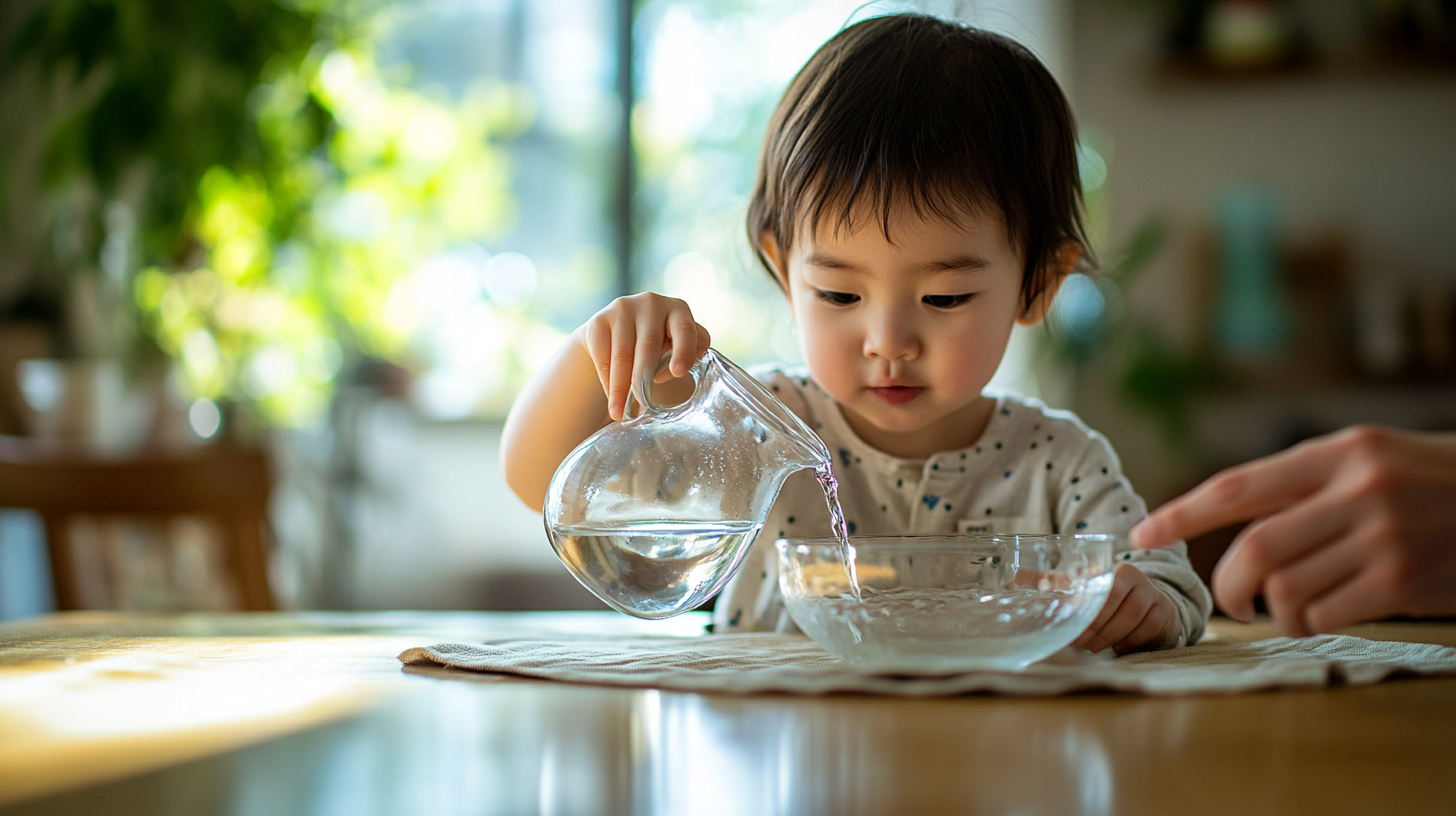
Pouring looks simple to an adult standing at the sink. To a toddler, it is full-body concentration — how water moves, how much force to use, how to stop in time, and how to adjust when something spills anyway.
- 1Gravity and cause and effect
When water tips one way and lands somewhere else, a toddler is quietly studying a rule of the physical world: things fall, they flow, they respond to the tilt of a hand.
- 2Full vs empty
Watching a cup fill and a pitcher empty gives a toddler an early, physical sense of two opposite states — one that no picture on paper can fully capture.
- 3Slow vs fast
Pouring quickly makes a splash. Pouring slowly makes a thin, steady stream. A toddler notices the difference and starts to choose on purpose.
- 4How much is just right
Too little leaves the cup dry. Too much makes it spill. Somewhere in between, a toddler is learning judgment through their own hands, not through being told the answer.
- 5Concentration and patience
Pouring without spilling takes real focus for small hands. That quiet, furrowed-brow moment is patience being built in real time.
What this is really building: Practical life · fine motor control · early math · attention · cause and effect
From Helping Cook
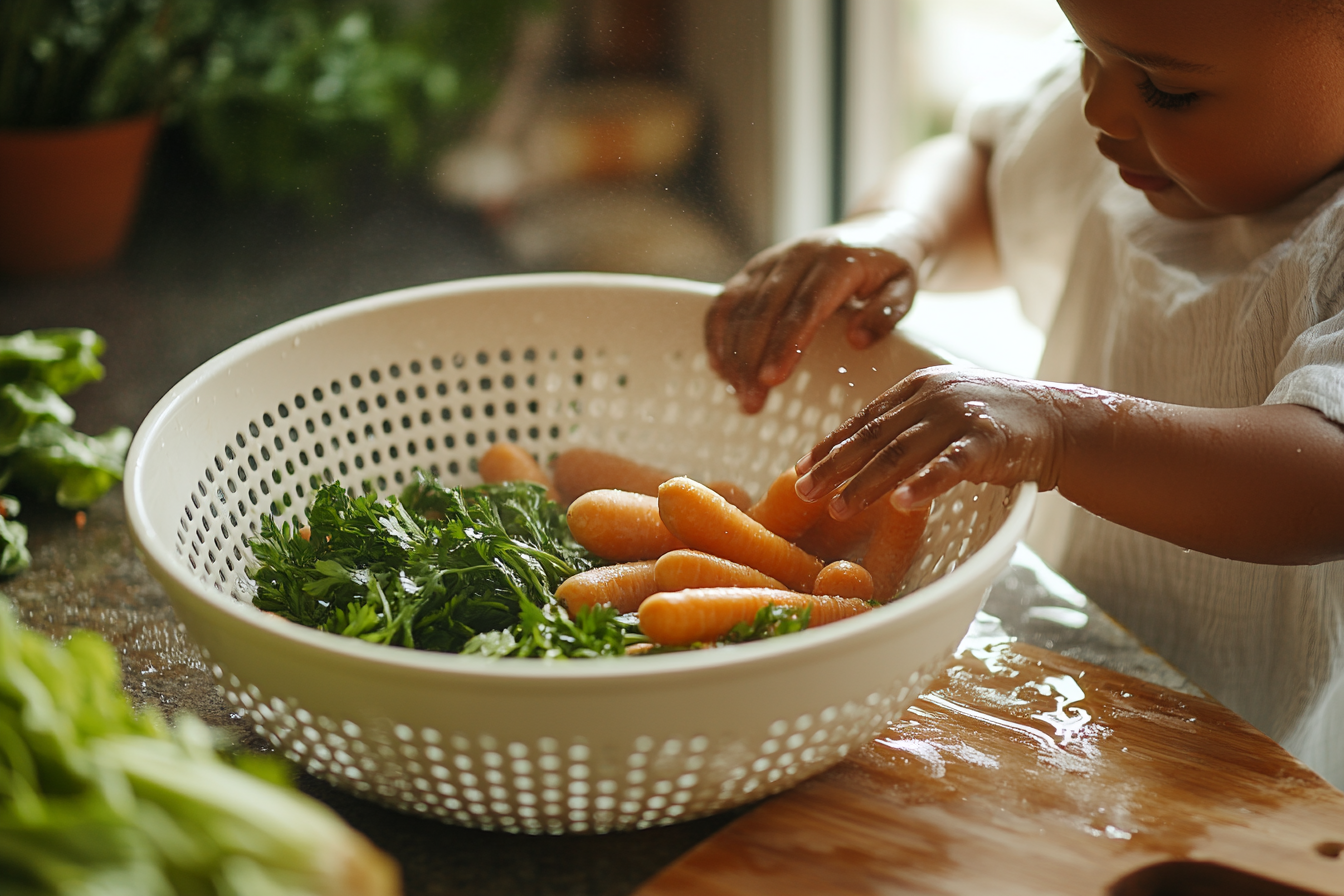
Cooking is full of language, sequence, sensory information, math, and waiting. A toddler helping with dinner is not just being kept busy — they are standing in the middle of a small, ordinary classroom, and often quietly practicing what math really looks like before preschool.
- 6Categories and sorting
Separating the carrots from the potatoes, or the spoons from the forks, is early classification — the same thinking that later supports reading and math.
- 7Sequence and order
First we wash, then we chop, then we cook. A toddler absorbing this order is quietly learning that steps happen in a sequence, and that sequence matters.
- 8Size comparison
Which piece is bigger. Which bowl is smaller. These comparisons, made with real food in real hands, build a sense of size long before any worksheet asks the same question.
- 9New vocabulary in context
Words like whisk, simmer, peel, and slice mean very little on a flashcard. Said while a toddler is actually doing the thing, they tend to stick.
- 10Waiting for results
Watching something bake, or wait to cool, teaches a toddler that some things take time — and that waiting can still be interesting.
What this is really building: Language · early math · sequencing · sensory learning · family participation
From Playing Outside
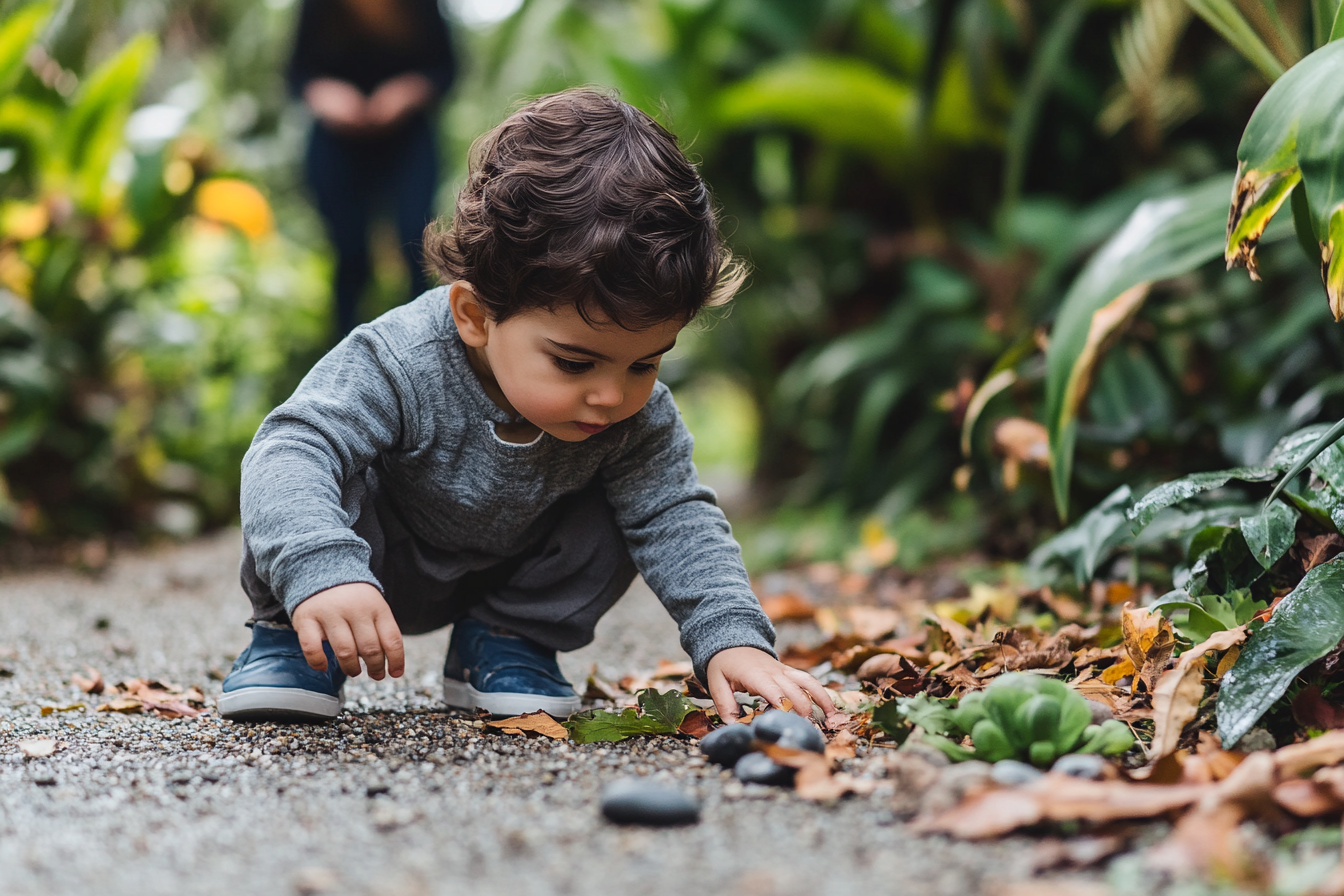
Outside, toddlers receive information that no worksheet can fully imitate — texture, weather, distance, sound, movement, and the quiet business of living things. It is part of why nature works so well as a toddler’s original classroom.
- 11How things feel different
Bark, gravel, grass, and mud each feel different under bare hands. That sensory range is data a toddler’s brain is actively collecting.
- 12What makes a sound and why
A stick cracking, leaves rustling, wind moving through branches — a toddler starts connecting cause to sound, without anyone explaining it.
- 13Living vs nonliving
Noticing that a bug moves on its own but a rock does not is an early, real form of scientific observation.
- 14Distance and near/far
Watching a bird fly far away, or a ball roll close by, gives a toddler a physical sense of space that a flat page cannot.
- 15Observation and stillness
Crouching to watch an ant for two full minutes is not wasted time. It is attention being practiced in its purest form.
What this is really building: Sensory learning · early science · nature connection · attention · body awareness
From Stacking Things
Stacking is not just play. It is prediction, testing, physics, frustration, and trying again — all inside a pile of blocks or cups.
- 16Balance and weight
A toddler quickly learns, through failure, that a heavier block on top makes a tower wobble. No one has to explain the physics.
- 17What happens when something falls
A crash is not the end of the activity. It is information: that arrangement did not work, so the next one might need to change.
- 18How to try differently
After a tower falls, a toddler often shifts strategy without being told — a wider base, a slower hand. That is early problem-solving.
- 19Tall vs short comparison
Comparing one tower to another builds an early, physical sense of measurement and comparison.
- 20Persistence after failure
Building it again after it falls, without giving up, is one of the earliest forms of resilience a toddler practices.
What this is really building: Problem solving · spatial reasoning · early engineering · resilience · comparison
From Tidying Up
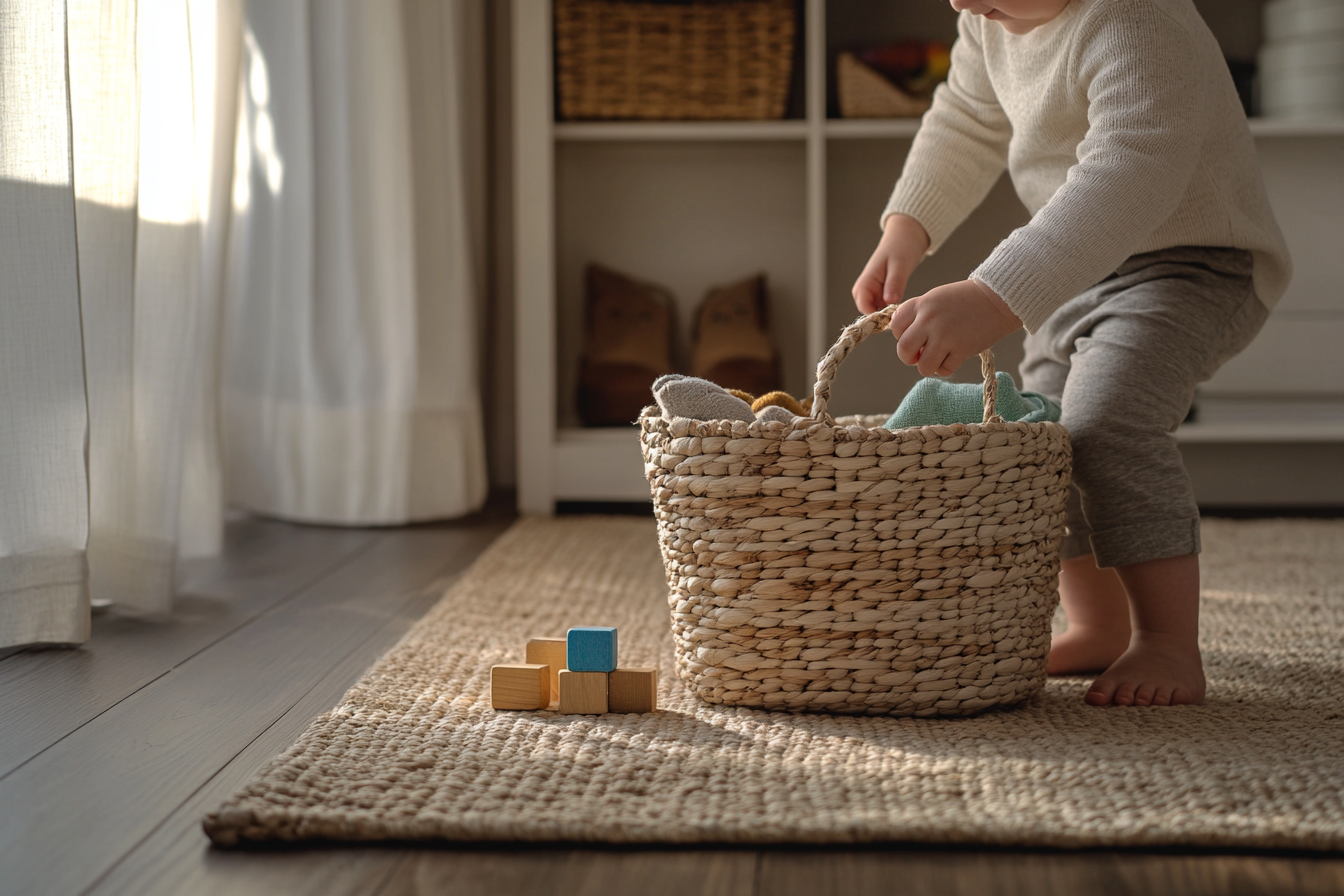
Tidying up teaches more than order. It teaches memory, matching, contribution, and the quiet feeling of belonging to a family that shares its work — one small piece of 40 ways to build toddler independence at home.
- 21Where things belong
Returning a toy to its basket teaches a toddler that objects have a place, and that the world can be organized in a way they understand.
- 22Matching and categories
Matching lids to containers, or socks to their pairs, is quiet, repeated classification practice.
- 23Finishing what they started
Putting away what was taken out helps a toddler experience a small beginning, middle, and end.
- 24Contributing to family life
Helping tidy up is one of the earliest ways a toddler feels genuinely useful, not just supervised.
- 25Before and after
Noticing a messy room become a tidy one gives a toddler an early, visible sense of change over time.
What this is really building: Executive function · independence · responsibility · classification · routine memory
From Stories
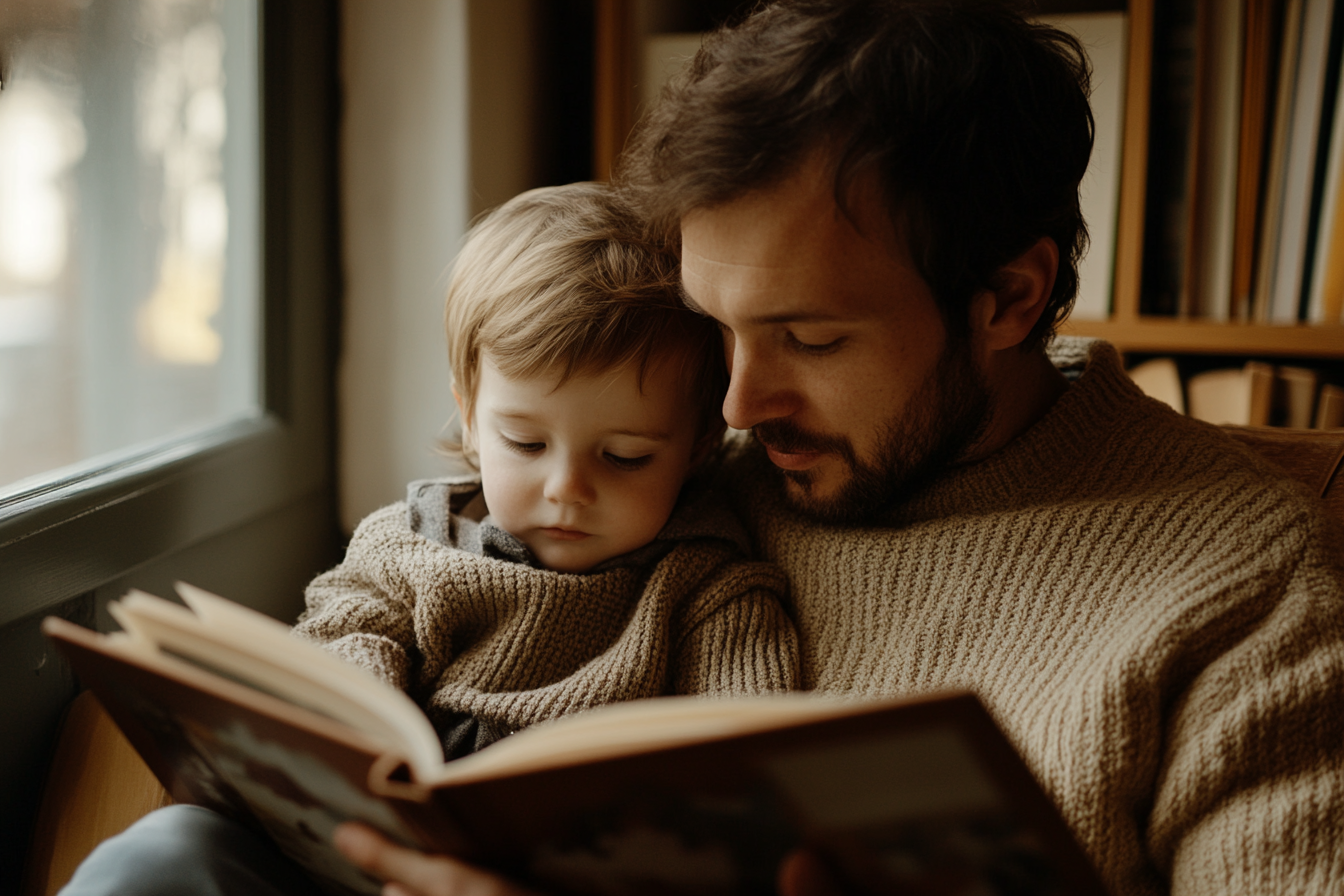
Stories build more than early literacy. They build emotional understanding, memory, prediction, and the ability to follow meaning across time — which connects closely to what actually helps toddler language development in everyday life.
- 26Sequence — first, then, next
Following a story’s order helps a toddler practice holding a sequence of events in mind, one of the quiet foundations of later reading.
- 27Characters and feelings
Noticing that a character is sad, scared, or relieved helps a toddler build an early emotional vocabulary of their own.
- 28New words in context
A story repeats words inside a meaningful moment, which is often how a toddler’s vocabulary grows fastest.
- 29Prediction and memory
Asking what happens next, and remembering the answer from last time, builds memory and anticipation together.
- 30Cause and effect
Stories are full of small cause-and-effect chains — a toddler absorbs that one thing leads to another, again and again.
What this is really building: Language · emotional literacy · memory · narrative thinking · early reading readiness
From Waiting
Waiting is genuinely hard for toddlers, and it should never be forced harshly. But practiced gently, inside safe and predictable routines, waiting is one of the earliest places emotional regulation begins.
- 31Time — soon vs not yet
Hearing “soon” and then experiencing that soon arrives helps a toddler build an early, felt sense of time.
- 32Trust that things come
Waiting for a turn, a meal, or a parent’s attention — and having it actually arrive — builds quiet trust in the world.
- 33Self-regulation muscles
The seconds a toddler manages to hold still, or hold a feeling, before it arrives are real regulation practice, even in small doses.
- 34Occupying themselves briefly
Finding something to do with their hands or attention while waiting is an early independence skill.
- 35That patience has a reward
When waiting is followed by something good, a toddler slowly learns that patience is often worth it.
What this is really building: Emotional regulation · impulse control · trust · executive function · patience
From Being With You
Some of the most important toddler learning does not come from an activity at all. It comes from relationship — from being with someone who talks, repairs, comforts, and stays.
- 36How to read facial expressions
A toddler studies your face constantly, learning what worry, delight, and calm actually look like.
- 37Conversational turn-taking
Back-and-forth babble, sounds, and words with you are early practice for real conversation, long before full sentences arrive.
- 38Repair after a hard moment
A short moment of frustration, followed by a hug or a calm voice, teaches a toddler that connection can survive hard feelings.
- 39That they are safe to try
A steady, unhurried adult nearby gives a toddler the confidence to attempt something new.
- 40That love is constant
Being picked up, spoken to gently, and returned to again and again teaches a toddler, without a single word, that they are loved reliably.
What this is really building: Attachment · social communication · emotional safety · confidence · resilience
What These Ordinary Moments Are Really Building
- Practical life
- Language
- Early math
- Problem solving
- Sensory learning
- Emotional regulation
- Social communication
- Independence
- Observation
- Resilience
What To Do Instead Of Worksheets
None of these need planning, printing, or a name. Most take less than a minute inside something you were already doing.
- Let your toddler pour water.
At the sink, in the bath, or at the table, pouring is one of the richest hands-on lessons already available to you. - Count stairs while walking.
Counting out loud while climbing turns an ordinary walk into an early math moment. - Sort spoons and forks.
Unloading cutlery together is real classification practice disguised as a chore. - Talk while preparing food.
Naming what you are doing gives a toddler vocabulary inside a moment that already makes sense to them. - Let them help wipe a spill.
Cleaning up together teaches responsibility and cause and effect at the same time. - Name what you see outside.
Simply saying what you notice together builds language and observation side by side. - Ask, “Where does this belong?”
This one question turns tidying up into a small, ongoing classification game. - Offer two choices.
Choosing between two real options builds decision-making and a felt sense of agency. - Pause before helping.
Giving a toddler a few extra seconds to try first protects the learning that struggle provides. - Read the same story again.
Repetition is not boredom to a toddler. It is how understanding actually deepens.
The goal is not to turn every moment into a lesson. The goal is to notice that many moments are already teaching.
When Worksheets Can Be Okay
Worksheets can be fine when:
- the child enjoys them
- they are brief
- they are playful
- they do not replace movement, play, outdoor time, language, sleep, connection, or real-life participation
- they are not used as the main proof that learning is happening
If your toddler genuinely loves tracing lines or pointing at letters for a few minutes, that enjoyment is real and worth honoring. This is not about removing something a child finds satisfying. It is about keeping worksheets in their proper, smaller place — a pleasant extra, not the main event.
For toddlers, worksheets should never become the main evidence that learning counts.
A Better Question Than “Did We Do Learning Today?”
Instead of asking:
“Did we do a learning activity today?”
try inviting a gentler, more accurate question:
“Did my child touch, carry, notice, choose, wait, help, move, listen, repeat, wonder, or try again today?”
If yes, learning happened.
Want to see the learning that is already happening?
Download the free No-Worksheet Toddler Learning Spotter — a gentle printable for noticing the real-life skills your toddler is building every day, across pouring, helping, stories, waiting, outdoor play, tidying, movement, and connection.
- Notice learning in ordinary routines
- See what pouring, waiting, tidying, and stories are really building
- Use it as a gentle weekly observation guide
One quiet download. No spam, no pressure — just something to keep nearby.
Common Questions About Toddler Learning Without Worksheets
Do toddlers need worksheets to learn?
No. Toddlers learn deeply through movement, play, language, repetition, sensory experience, practical life, and relationships.
Are worksheets bad for toddlers?
Not necessarily. They can be okay in small, playful amounts if the child enjoys them, but they should not replace real-life learning.
What is the best way toddlers learn?
Through hands-on, meaningful, repeated experiences in real life.
How can I teach my toddler without worksheets?
Include them in everyday routines: pouring, sorting, tidying, cooking, walking, reading, waiting, and talking.
What skills do toddlers learn through everyday life?
Language, early math, problem-solving, fine motor control, emotional regulation, independence, social communication, and observation.
Is learning through play enough for toddlers?
For most toddlers, play and real-life participation are the foundation of learning. Formal academics can come later, when the child is more developmentally ready.
Read Next
Toddlers do not need every moment to be optimized. They need real things to touch, real people to talk with, real routines to join, real problems to solve, and enough time to try again.
You do not need a printed page to know your day mattered. It mattered because your toddler poured, tried, waited, noticed, helped, and came back to you afterward. That is the real curriculum, and it has been running quietly all along.
That is already a meaningful childhood. Nothing more is required.
This counts. The ordinary day counts.