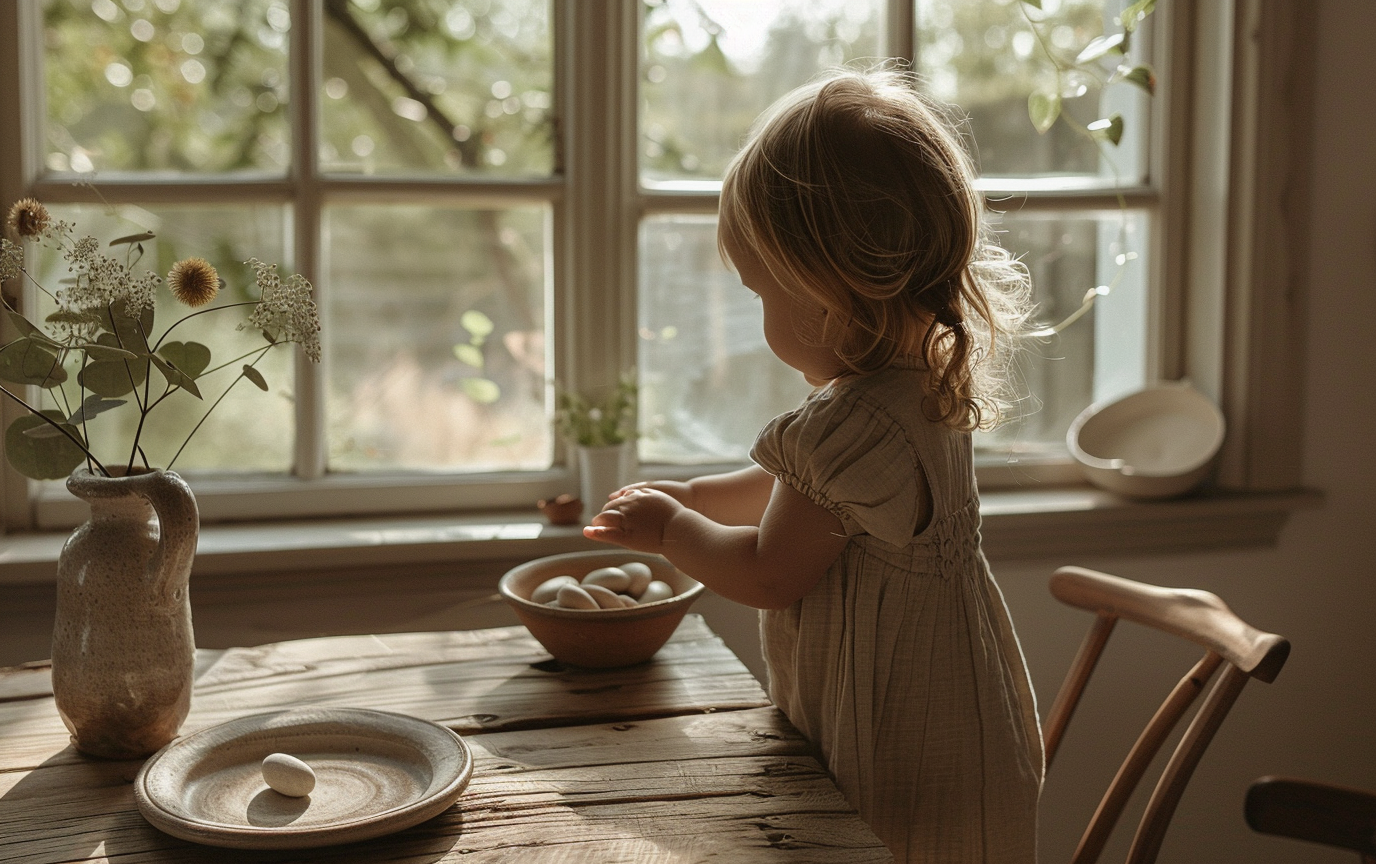
Play & Learning · Chichiberry Parenting
How To Play With A Toddler (Without Running Out Of Ideas)
A simple framework that turns ordinary everyday moments into hundreds of meaningful play opportunities—without buying more toys or planning complicated activities.

What’s inside this guide
In this guide you’ll discover:
The 7 Play Lenses that create hundreds of play ideas from any ordinary moment
The 4-Step Play Formula — and how to use it anywhere, any day
A Room-by-Room Play Map covering 14 locations in your everyday life
What to do when your toddler refuses every activity, copies you, or says “no” to everything
Age-by-age play guidance from 12 months through 4 years
A free printable Play Idea Generator Toolkit to keep close every day
It usually goes something like this.
You clear a space on the floor. You find the blocks. You sit down with real intention—you are going to play with your child. Properly. Without your phone.
You build a tower. They knock it down. You build it again. They look somewhere else.
You roll a ball. They roll it back once, then wander toward the kitchen. You read a book. Halfway through, they’re already pulling something off a shelf.
Five minutes have passed.
And somewhere in the quiet that follows, you wonder something you feel slightly guilty for wondering:
Am I supposed to entertain my child all day?
Most parents in this moment reach for their phone and search for “toddler activities.” They find a list of fifty things, screenshot three of them, and feel briefly better—until tomorrow, when they’re back on the floor with a child who seems impossible to satisfy.
This article is not that list.
What it offers instead is something more useful than activities: a different way of seeing what play already is, and what your home is already full of.
Why toddlers seem bored so quickly
Before anything else, it helps to understand what’s actually happening when your toddler moves on after two minutes.
They are not bored. Not in the way adults experience boredom. They are doing something quite different: they are exploring.
Toddlers are wired by nature to seek novelty. The brain at this stage is building neural pathways at a speed that will never happen again in a human life. Every new texture, sound, angle, and action is information being processed, categorised, and filed. When a toddler finishes with the blocks and moves toward the laundry basket, they are not abandoning the blocks. They are following the next signal their developing brain is sending.
Attention spans at this age are genuinely short—typically two to five minutes of focused engagement for a one-year-old, five to ten minutes for a two-year-old, and up to fifteen minutes for a focused three-year-old. This isn’t a problem to solve. It’s developmental design.
There’s also something important about repetition. A toddler who has poured water from one container to another twenty times in a row is not bored. They are practising. Repetition is how the toddler brain consolidates new motor sequences, spatial understanding, and cause-and-effect relationships. The activity that looks finished to you is still very much in progress for them.
Gentle reminder
Your toddler moving on quickly is not a sign that you haven’t done enough. It’s a sign that they are working exactly as they should be.
The parent’s job, then, is not to produce an endless stream of novel activities. It’s to understand the kind of play their toddler is hungry for at any given moment—and to recognise it in the ordinary materials already at hand.
That’s what the seven play lenses are for.
Save this thought
You don’t need to become more creative.
You only need to become more observant.
The seven play lenses
A play lens is not an activity category. It’s a way of looking at any ordinary moment and seeing the play inside it. Most parents are already using at least two or three of these lenses instinctively. What changes when you know all seven is that you stop being surprised when your child moves on quickly—because you start to see what they moved on to.
When you know these seven lenses, you stop seeing your home as something that needs more toys or better activities. You start seeing it as something that already contains everything your toddler needs to learn, grow, and feel genuinely occupied.
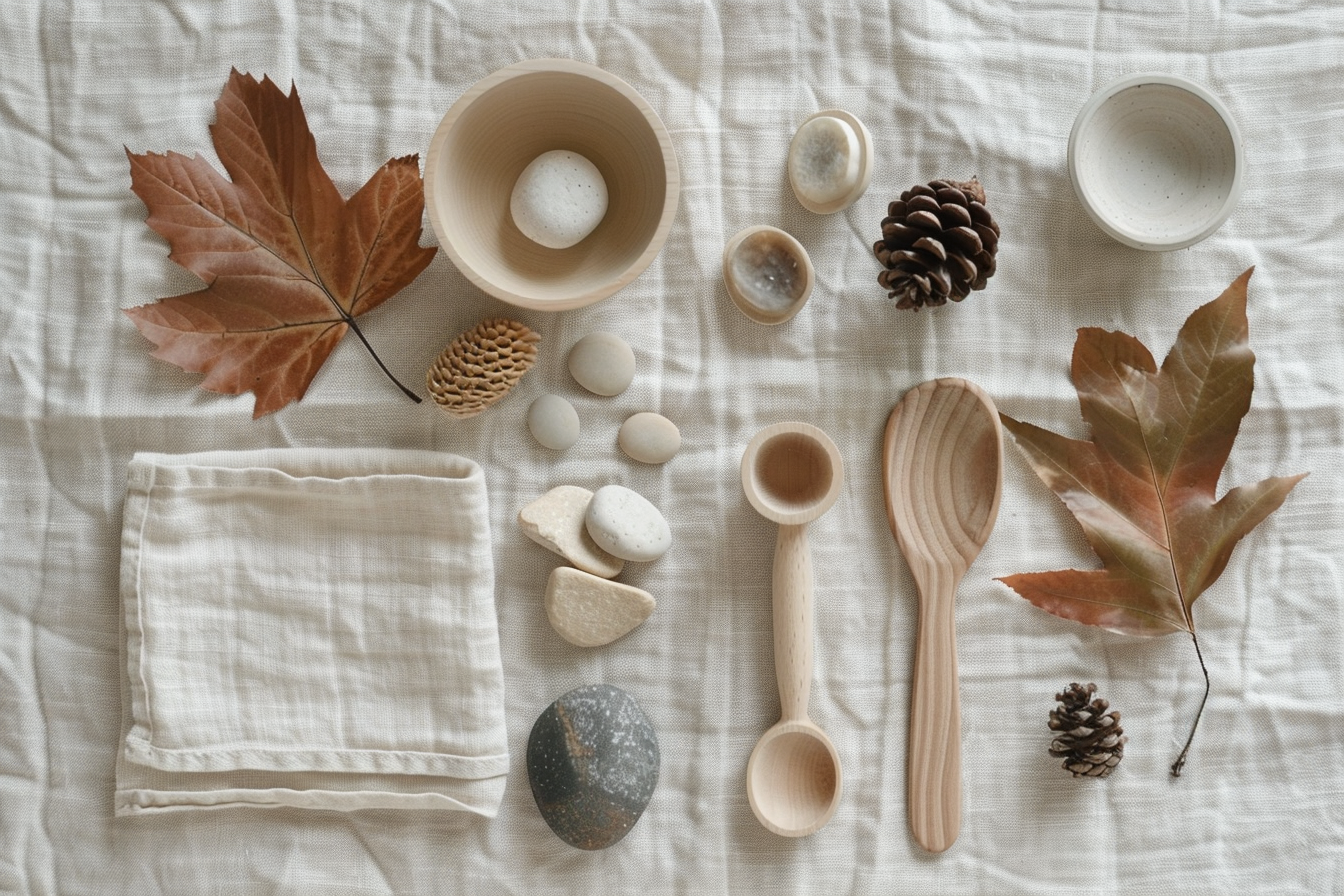
Lens 01
Movement Play
The body is the first tool. Before language, before imagination, before any concept of learning—there is movement. Toddlers think with their whole bodies, and they need to move not as a break from learning, but as learning.
Every time a toddler carries something heavy, their proprioceptive system is working. Every time they climb, their spatial understanding deepens. When they push a laundry basket across the floor, they’re building core strength, problem-solving, and directional awareness simultaneously.
What this can look like: carrying a full water bottle from one room to another · pushing a chair to the kitchen counter · climbing on and off the sofa · balancing along a line of tape on the floor · rolling and chasing a ball across the hallway · jumping off the bottom step
“The child who seems unable to sit still is not being difficult. They are learning through their body, which is the only way a toddler knows how.”
Lens 02
Language Play
Language doesn’t develop in formal teaching moments. It grows inside ordinary conversation—the kind that happens when you describe what you’re doing, wonder out loud, and give your child time to respond before filling the silence.
This lens asks you to use your voice differently. Not to instruct, not to quiz, but to accompany. Narrate what you see. Name what they’re touching. Ask questions you don’t already know the answer to. Pause. Let the quiet be part of the conversation.
What this can look like: describing the texture of fruit while you prepare it together · wondering aloud why the leaf is that colour · repeating their attempts at new words warmly · singing a simple song about whatever you’re doing · pausing after asking a question and waiting a full ten seconds
“Language is not a subject to teach. It’s an atmosphere to create.”
Lens 03
Sensory Play
The nervous system is still calibrating. Sensory play—contact with materials that are wet, dry, rough, soft, warm, cold, grainy, smooth—helps a toddler’s body and brain learn to process the world without being overwhelmed by it. It is also deeply regulating: when a toddler is unsettled, offering water or sand or dough often settles them more effectively than distraction or reasoning.
You do not need a special sensory bin or a craft table for this. Almost every household already contains everything a toddler needs.
What this can look like: a small bowl of water on the kitchen floor · dry pasta or lentils in a container with a spoon · running fingers through soil in a pot · squeezing citrus over a bowl · standing barefoot in the rain for three minutes · touching ice cubes and describing what happens
“The mess isn’t the problem. The mess is the learning.”
Lens 04
Practical Life Play
This is the lens that most clearly reflects a Montessori understanding of childhood, and it’s also the most misunderstood. Practical life is not a chore that you let your toddler help with. It is a core developmental need: the drive to participate in real life, to use real tools, and to contribute to the household they live in.
When a toddler washes a vegetable, they are developing hand-eye coordination, concentration, and sequential thinking. When they fold a piece of cloth, they are working fine motor muscles. When they sweep—however imperfectly—they are building a sense of competence and belonging that no toy can replicate.
The key is to slow down enough to let them participate, and to value the process over the result.
What this can look like: pouring their own water from a small jug · wiping the table with a damp cloth · transferring objects from one bowl to another with a spoon · watering a plant · scrubbing a vegetable under the tap · sorting the laundry into lights and darks · matching socks from the clean pile
“The child who helps in the kitchen is not in your way. They are doing some of the most important work of their life.”
Lens 05
Nature Play
Nature offers what no indoor toy can: genuine unpredictability. The wind changes direction. The puddle is deeper than expected. The ant goes somewhere the toddler didn’t anticipate. Every moment outside is a real encounter with a world that isn’t designed to please or protect, and that quality—authentic uncertainty—is profoundly developmental.
Nature play doesn’t require a park or a garden. A balcony with a plant, a walk around the block, standing in the rain in the carpark—these are enough. The outdoor world is available in every city, in every season, in every weather condition.
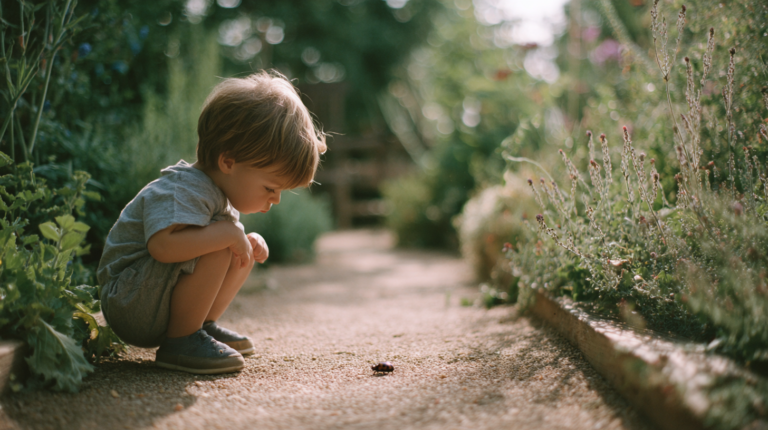
What this can look like: collecting sticks during a walk and ordering them by size · lying on a blanket and watching clouds · noticing which birds visit the same spot each morning · examining a puddle before and after it rains · picking up rocks and comparing their weight · following an ant for as long as attention holds
“Outside is not a reward for good behaviour. It is a necessary part of how a toddler learns to exist in the world.”
Lens 06
Pretend Play
Pretend play is where the toddler processes everything they’ve observed in the real world. When they feed a doll or arrange a pretend shop, they are not simply playing. They are rehearsing the social world—its roles, its language, its rules and exceptions. They are also building narrative thinking, which is the foundation of literacy and emotional reasoning.
The best props for pretend play are not elaborate toy kitchens or doctor sets. They are the real items: a bag, a notebook, a small cup, a piece of cloth. Real objects carry more meaning and invite more creative interpretation than their toy versions.
What this can look like: setting up a pretend restaurant with real cups and a cloth napkin · a small bag that becomes a bag for the market · a notebook for taking orders · a cardboard box that is first a bus, then a bed, then a cave · joining a pretend tea party without redirecting it
“Let the box stay a bus for as long as they need it to be a bus.”
Lens 07
Observation Play
This is a signature CCBR lens, and perhaps the most radical: the idea that watching, noticing, and wondering is play. Not a preparation for play. Not a pause between activities. Play itself.
When a toddler stands at the window and watches rain, they are building attention, developing vocabulary for what they see, and practising the capacity to be present with something uncontrolled. This is exactly the quality of mind we hope they’ll have at eight, at fifteen, at forty.
As a parent, your role in observation play is to resist the urge to explain, educate, or redirect. Instead, wonder alongside them. Ask questions that don’t have answers. Follow their gaze.
What this can look like: standing at the window together in silence · asking “what do you hear?” and waiting · noticing a shadow and watching it move · wondering where that truck is going · sitting with a jar of water in sunlight and watching the light change
“The child who stops on the walk home to watch a drain is not slowing you down. They are doing the work of becoming a person who notices things.”
Parent Reflection
Which of these seven lenses do you use most naturally? Which feels most foreign? The lens that feels hardest to access is often the one your child is asking for most—not through words, but through the moments that frustrate you most.
Save this thought
Play that looks like nothing from the outside
is often everything on the inside.
Save this thought
You don’t need more activities. You need more ways of seeing the ones you’re already living through.
The four-step play formula
Once you have the lenses, there’s one more tool that changes everything: a simple sequence for how to enter, sustain, and expand any play moment without forcing it.
This sequence works for any of the seven lenses, in any location, at any age between twelve months and four years.
The four-step play formula
-
1
Observe
Before you join or redirect, watch. Notice what your toddler is actually doing—not what you think they should be doing. What are they touching? Where is their attention? What has captured them? Give this at least thirty seconds before you act. Most of the time, what looks like nothing is something.
-
2
Invite
Offer a gentle extension of what they’re already doing. Not a redirect. Not a new activity. An extension. If they’re transferring blocks, you might bring a bowl. If they’re watching the window, you might say “I wonder where those birds are going.” The invitation stays inside the moment they’re already in.
-
3
Follow
Let them lead. Genuinely. This is harder than it sounds. When they take the bowl and put it somewhere unexpected, follow them there. When they abandon the bowl for a spoon, follow the spoon. Your job is not to keep the activity on track. Your job is to stay close to where their interest actually is.
-
4
Repeat
When attention shifts, return to step one. Observe what comes next. The sequence has no end. A morning with a toddler is not a series of activities. It’s a continuous flow of observation, invitation, and following—moving fluidly through all seven lenses without a plan.
Here is what this looks like in practice. Your toddler is at the kitchen sink, touching the tap. Instead of redirecting, you observe: they want water. You invite: you bring a small bowl and a cup. They pour water back and forth—sensory play. You narrate: “you’re pouring it slowly.” They fill the bowl and then tip it—movement and cause-and-effect. You follow: you bring a cloth and show them how to wipe the spilled water—practical life. The entire sequence took twenty minutes and happened entirely inside the kitchen, with no planned activity and no special materials.
What your child is practising
In the water play sequence above: sensory processing · cause-and-effect understanding · hand-eye coordination · volume and pouring concepts · practical life skills · parent-child connection language · attention regulation
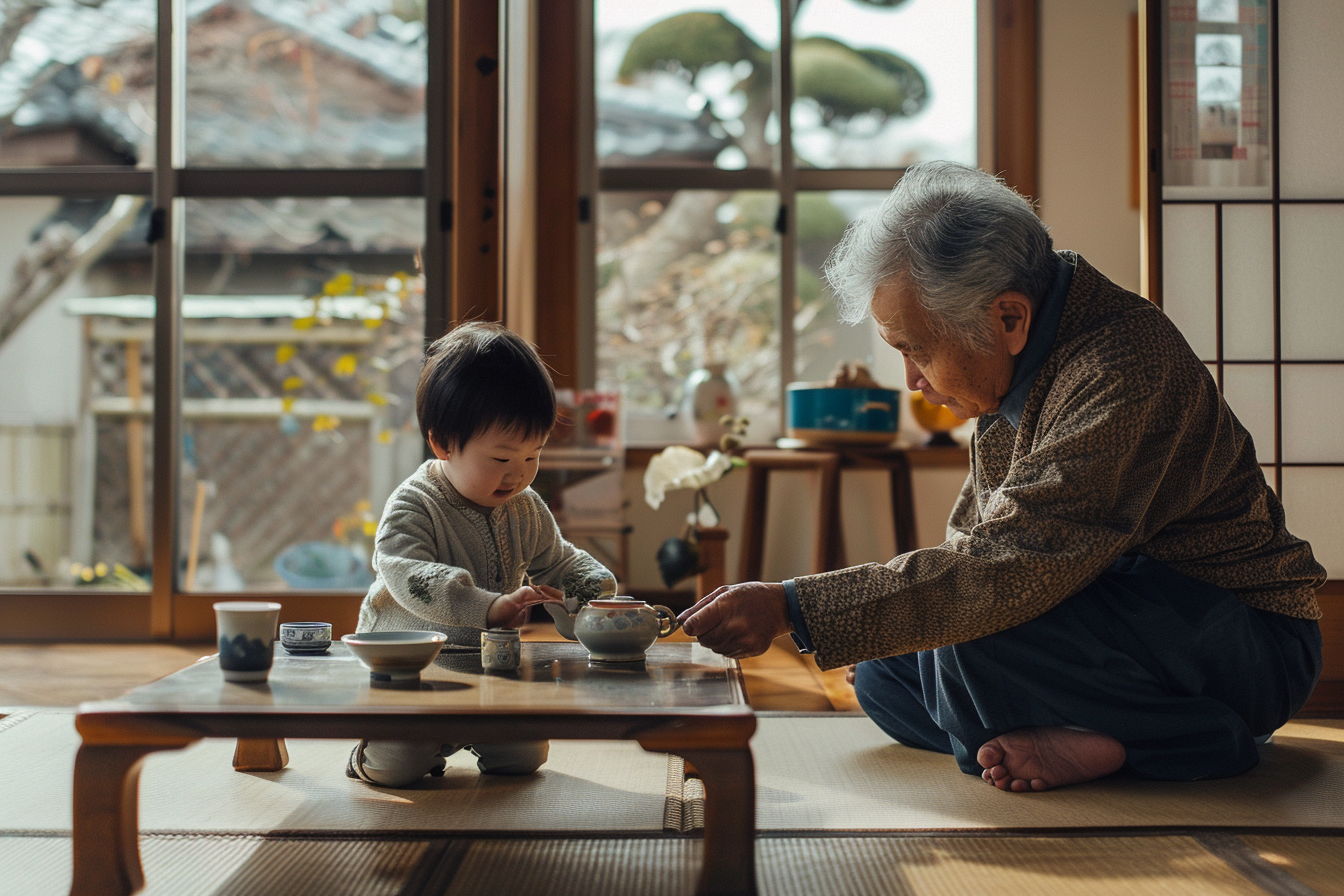
CCBR Signature Framework
The CCBR Play Cycle
Observe
Watch before joining. Notice what your child is actually doing—not what you expected them to do. Give it at least thirty seconds.
Follow
Enter the play they are already in. Not the play you planned. Follow their thread, their object, their question—wherever it leads.
Expand
Offer one gentle extension—a new material, a question, a small invitation. Not a redirect. Not a lesson. Just a widening of what’s already happening.
Narrate
Name what you see, calmly and without judgment. Not teaching—witnessing. “You poured it all the way to the top.” Language follows attention, not instruction.
Observe Again
When the moment shifts, return to the beginning. The cycle has no end—only a continuous return to watching what’s actually there.
This cycle works in any room, on any day, with any material. It requires no preparation, no equipment, and no expertise—only the willingness to look before acting.
Save this thought
The activity that looks finished to you
is still very much in progress for them.
The play map — ideas by place
The lenses tell you how to look. The play map tells you where. It’s a location-by-location guide to the play opportunities already living inside every part of your ordinary day—with specific things to try, language to offer, and a note on what your toddler is working on without either of you needing to name it.
This section is designed to be returned to. Not because you’ll forget what’s in it, but because each time you come back, you’ll be in a different room, a different season, a different moment with a child who has grown slightly since your last visit.

Kitchen
Practical Life · Sensory · LanguageTry this
Set a small bowl of water on the floor with a cup and a cloth. Let them pour, spill, and wipe. Or invite them to wash one vegetable under the tap while you prepare the rest.
What you can say
“You’re pouring it so carefully.” · “What does the water feel like?” · “Can you find a red one?” · “I wonder what happens if you pour it slowly.”
What your toddler is learning
Hand-eye coordination · volume and capacity concepts · sensory discrimination · concentration · real-world contribution · early maths through sorting and counting
Signs of healthy engagement
Repetitive pouring · intense focus on small tasks · asking to help again · frowning in concentration · very slow, deliberate movements
The kitchen is arguably the richest learning environment in any home. Every routine that happens here—washing, measuring, stirring, sorting—is a complete developmental activity. The child who helps in the kitchen is not in your way. They are doing some of the most important work of their day.
Parent Reflection
Notice how often the urge arises to show them the right way to wash the vegetable. That urge is worth pausing on. The correct technique is rarely what they need. The experience is what they came for.
Bathroom
Sensory · Observation · Practical LifeTry this
A shallow basin of water with a small toy or sponge for washing. Let them squeeze, pour, and rinse. During bathtime, introduce two containers and let them transfer water back and forth without direction.
What you can say
“I can see steam. That means the water is warm.” · “What do you hear?” · “You squeezed all the water out.” · “Is that heavy or light?”
What your toddler is learning
Sensory regulation · cause-and-effect · body awareness · early science (temperature, volume, displacement) · fine motor control through squeezing
Signs of healthy engagement
Absorbed water play lasting longer than expected · testing the same action multiple ways · naming what they observe · reluctance to stop
Water is one of the most naturally regulating sensory materials available. Many developmental specialists observe that even five minutes of free water play can noticeably settle a dysregulated toddler—more reliably than distraction or reasoning alone.
Bedroom
Practical Life · Pretend · ObservationTry this
Tip the laundry basket onto the floor and invite them to help sort—socks in one pile, shirts in another. Or offer a single cloth to fold. Neither task needs to be done correctly to be valuable.
What you can say
“Can you find the matching one?” · “That one is Baba’s.” · “You folded it. How does it look now?” · “I wonder where the other sock went.”
What your toddler is learning
Matching and categorisation · belonging to a family (a profound emotional need) · spatial folding skills · pattern recognition · early classification logic
Signs of healthy engagement
Deliberately matching pairs · asking whose item belongs to whom · creating their own sorting system · carrying sorted items to their destination
The bedroom holds something the playroom often can’t: a sense of real household life. When a toddler folds a cloth or sorts laundry, they are not playing house. They are contributing to the actual house—and that distinction is everything.
Living Room
Movement · Pretend · Language · ObservationTry this
Clear the cushions onto the floor and create a landscape to climb over, balance on, and navigate. Or leave a bag and a few real items (a small notebook, a cup, a cloth) without instruction and observe what story emerges.
What you can say
“Where does that go?” · “You balanced! How did that feel?” · “What are you making?” · “I see you have a bag. Are you going somewhere?”
What your toddler is learning
Spatial reasoning · gross motor coordination · narrative thinking · social imagination · balance and proprioception
Signs of healthy engagement
Sustained pretend scenario · problem-solving when something doesn’t work · role assignment · repeating the same scenario with variations
The living room is where pretend play most naturally develops. A cushion arrangement that takes you three minutes to set up can hold a toddler’s attention for twenty minutes—not because it’s elaborate, but because it gives their imagination something physical to inhabit.
Laundry
Practical Life · Language · MovementTry this
Let them hand you wet clothes from the basket one piece at a time to hang. Or give them a small section of the drying rack as their own space. The task doesn’t need to be complete or correct.
What you can say
“Heavy or light?” · “That’s a big one.” · “Can you find another one that looks the same?” · “You handed me seven things.”
What your toddler is learning
Weight comparison · counting in context · colour and texture naming · sequential task understanding · real household contribution
Signs of healthy engagement
Carrying items with visible effort and pride · unprompted sorting · insisting on doing it their way · returning to a dropped task
Toddlers between 18 and 36 months often experience laundry as one of the most satisfying activities available—not because it’s designed for them, but because it’s real, it has weight, and it results in something visible and complete.
Balcony or Garden
Nature · Sensory · ObservationTry this
Bring a small watering can and a single plant. Let them water it slowly, noticing what changes. Or gather a handful of things from outside—one leaf, one stone, one twig—and examine them together on the floor.
What you can say
“What do you hear?” · “That leaf is darker on one side.” · “I wonder where that bird is going.” · “What does the soil feel like today?”
What your toddler is learning
Sustained outdoor attention · care and responsibility for living things · sensory processing in natural textures · early science observation · patience
Signs of healthy engagement
Returning to the same spot repeatedly · collecting and examining small things · noticing subtle changes between visits · asking the same observational questions
Outdoor spaces, however small, offer genuine unpredictability—the thing that no toy can replicate. Something is always different: the light, the temperature, a new bird, a spider. That genuine novelty meets something deep in the toddler brain.
The Walk Home
Nature · Observation · Language · MovementTry this
Give the walk a single simple purpose: collect one interesting thing. Or choose a focus for the day—today we notice all the shadows, or all the red things, or all the sounds. Let the walk take as long as it takes.
What you can say
“What do you notice?” · “That building is very tall.” · “I wonder where that car is going.” · “Can you hear that?” · “You found it.”
What your toddler is learning
Neighbourhood awareness · observational attention · narrative building about the wider world · physical stamina · community and social context
Signs of healthy engagement
Stopping for long periods at “nothing” · collecting small objects · remembering details from previous walks · asking the same question on a familiar route
The walk home is one of the most underestimated learning moments in a toddler’s day. Every drain, crack, puddle, and shadow is a small discovery. The child who stops to watch a drain is not slowing you down. They are becoming the kind of person who notices things—and that is worth every extra minute.
Parent Reflection
You may feel that nothing happened on this walk. Your toddler probably experienced one of the richest learning moments of the day. Those two experiences of the same ten minutes are both real—and only one of them needs to change.
Grocery Store
Practical Life · Language · ObservationTry this
Give them a single item to carry in their own small bag. Ask them to help choose between two options. Let them place items into the basket and count as you go. Real tasks, real responsibility—even very small.
What you can say
“Should we get the green one or the yellow one?” · “You carried all three.” · “What does this smell like?” · “Heavy or light?”
What your toddler is learning
Decision-making · colour and quantity concepts · community awareness · real-world belonging · how food moves from place to table
Signs of healthy engagement
Protecting their bag with visible pride · remembering items from last time · wanting to do more than you’ve assigned them · naming what they recognise
The grocery store is not an errand to survive. For a toddler, it is an experience of the real world—smells, textures, decisions, exchange. A child given a real task in this environment is engaged in social learning of the deepest kind.
Restaurant or Café
Observation · Pretend · Language · Practical LifeTry this
Let them pour their own water from a small jug or bottle. Give them a napkin and a job. Draw together on whatever paper is available. Narrate what you observe—the kitchen, the other tables, the person taking orders.
What you can say
“What do you want to order?” · “Where do you think the food is being made?” · “I see someone bringing something. What are they carrying?”
What your toddler is learning
Social observation · role understanding (ordering, serving, preparing) · fine motor skills through pouring · patience through real-world waiting · public behaviour in context
Signs of healthy engagement
Watching the kitchen with fascination · recreating the restaurant at home later · noticing who is doing what · voluntary patience that surprises you
Restaurants are rich observation environments. A toddler allowed to watch rather than be distracted absorbs an enormous amount about how people communicate, how service works, and how food arrives at a table. The observation is the learning.
Waiting Room or Doctor’s Office
Observation · Language · Practical LifeTry this
Keep a small bag in your everyday kit with two or three familiar objects—a cloth, a small container that opens and closes, a piece of paper. These are not entertainment. They are anchors for a toddler whose sensory system needs something real to hold.
What you can say
“I see a clock. What does it say?” · “Count the chairs.” · “What colour is that door?” · “Let’s draw the room.”
What your toddler is learning
Patience in real contexts · observation of environments · emotional regulation with your support · understanding that adults have tasks that require waiting
Signs of healthy engagement
Noticing details in the room · engaging with the familiar objects without needing more · asking questions about other people · staying close without demanding
Waiting is hard for toddlers—but it is also one of the most important experiences they can have. Being gently supported through real waiting, with your calm presence and honest conversation, is far more valuable than perfect distraction.
Car or Public Transit
Observation · Language · PretendTry this
Make the window the activity. Name colours and sizes of what passes. Play a simple version of “I spy.” Sing together without any goal. Tell them what you’re passing—even ordinary things described well become rich language moments.
What you can say
“That building is very tall.” · “I see three red cars.” · “Where do you think that train is going?” · “What do you hear right now?”
What your toddler is learning
Visual tracking · narrative about the wider world · listening and attending · travel as a concept · spatial and directional language
Signs of healthy engagement
Pointing and narrating independently · asking about every vehicle or building · remembering landmarks from previous trips · falling asleep from genuine tiredness rather than boredom
The window is one of the most effective toddler engagement tools available—and it requires nothing from you except willingness to name what moves past. A ten-minute car ride described in real language builds more vocabulary than most structured activities.
Park or Outdoor Space
Nature · Movement · Observation · SensoryTry this
Give them no agenda. Genuinely none. Follow them wherever they go. Sit when they sit. Examine what they examine. The less you plan, the more they discover. Bring nothing except your presence and a small bag for treasures.
What you can say
“What did you find?” · “Look at the colour of that.” · “I wonder what lives in there.” · “You ran all the way to the tree.”
What your toddler is learning
Unstructured exploration · risk calibration on natural terrain · nature observation and attachment · physical endurance · genuine curiosity without direction
Signs of healthy engagement
Long periods of solitary focus on one thing · running without destination · returning to a specific spot · collecting and comparing natural objects
Unstructured outdoor time is different from structured outdoor activities. A child allowed to simply exist in a park—with no agenda and no direction—accesses something that cannot be replicated indoors: the experience of genuine freedom within a safe world.
Airport or Train Station
Observation · Language · PretendTry this
Point out the departures board as it changes. Watch luggage on the belt together. Narrate what you both see in real time. Older toddlers may want to pretend to be the person checking tickets or driving the plane.
What you can say
“Where is that plane going?” · “Count the bags.” · “Who do you think is inside that one?” · “That number changed. What does it say now?”
What your toddler is learning
Observational attention in complex environments · narrative about how people move through the world · number and letter recognition in context · community and transit systems
Signs of healthy engagement
Extended fascination with movement and systems · asking questions about where things are going · recreating the airport later in pretend play · calm alertness through a previously overwhelming environment
Airports can feel overwhelming, but for a toddler given a framework for observation rather than instruction to be calm, they become some of the richest social-world experiences available. The bustle is the content.
Rainy Day Indoors
All seven lenses availableTry this
Start with the window. Watch the rain together for five minutes before doing anything else. Then let the day unfold—some water play, some practical life, a walk to check the puddle even if you get wet, a pretend world built from whatever is near.
What you can say
“Listen to that.” · “Where does the rain go?” · “Everything is a different colour when it’s wet.” · “What should we make today?”
What your toddler is learning
Weather as a sensory and narrative experience · indoor resourcefulness · the rhythm of a slow day · being present with what is, rather than what is planned
Signs of healthy engagement
Returning to the window throughout the day · building extended pretend worlds · deep concentration on single activities · unusual calm from the slower pace
A rainy day is not a problem to solve. Many toddlers—and many parents—find that the enforced slowness of a rain day creates the conditions for some of the richest play of the week. Let the weather be the invitation.
Parent Reflection
Every location in this map is somewhere you already go. The difference between a routine and a rich learning moment is not the place or the plan—it is the quality of attention you bring to it. That is always available, and it costs nothing.
Read next
The deeper idea
Your home is not a space that needs more toys. It is a learning environment that is already complete—waiting for a different kind of attention.
When you get stuck — a parent troubleshooting guide
Even with seven lenses and a play map, there are still moments. Moments when nothing seems to work, when your toddler is frustrated and you are close to it, and when the question “am I doing this right?” becomes very loud.
This is a guide to the most common stuck moments. Each answer is meant to offer not just a solution, but a reframe—a new way of seeing what’s actually happening.
Save this thought
Children rarely ask us for entertainment.
They ask us to notice what already interests them.
My toddler keeps asking for the screen.
Screens offer a very specific kind of stimulation—rapid, reactive, always responsive. Real play doesn’t do that, and it takes time for a child who’s been relying on screens to re-attune to the slower pace of the physical world. The bridge is usually sensory or movement play: something that engages the body immediately, without requiring imagination to access. Try water, or a walk outside, rather than a quieter activity. Expect a period of adjustment. It is normal for it to feel harder before it feels easier.
My toddler won’t play independently at all.
Independent play is a developmental skill, not a temperament trait. It develops gradually, usually between 18–36 months, and it needs a strong foundation of connected play first. If your toddler can’t play alone yet, they may simply need more secure-base time with you before independence feels safe. Rather than stepping away, try sitting near them while they play—fully present, not on your phone, but not directing. Proximity without intervention can be enough to help the skill begin to emerge.
My toddler refuses every activity I suggest.
When every suggestion is rejected, the message is usually: “I want to lead.” Stop suggesting. Sit down near them, do something simple yourself—fold something, pour something, draw something—and let them come to you on their own terms. Many toddlers who refuse invitations will join an activity they were never asked to join, within minutes of not being asked.
Parent Reflection
Notice how often the impulse is to try a different activity rather than to stop trying. The pause before the next suggestion is sometimes the most effective thing you can offer. Resistance often dissolves when it is no longer needed.
My toddler only wants me to play all day.
This is most common in toddlers who haven’t yet built independent play confidence, or who are in a phase of heightened attachment—often around transitions, illness, or developmental leaps. Rather than trying to extend independent time too quickly, invest the next few weeks in very connected, floor-level presence. Many parents find that a short period of full, unhurried attention (twenty to thirty minutes) produces more independent play afterward than a full day of partial attention.
My toddler only dumps toys and never builds anything.
Dumping is play. For a toddler between 12 and 24 months, emptying a container is a complete and satisfying activity—it explores gravity, volume, sound, and cause-and-effect. If you want to extend it, try offering something interesting to fill the container with after it’s emptied: water, small stones, dry pasta. But first, allow the dumping to be exactly what it is.
My toddler never finishes anything.
Toddlers rarely experience a task as “finished” the way adults do. What looks like abandonment is often completion—they’ve gotten what they needed from the activity and they’re ready for the next experience. Rather than trying to encourage follow-through, follow their lead to whatever comes next. Over time, concentration spans lengthen naturally—not through pushing, but through consistent access to absorbing materials.
My toddler wants the same activity over and over.
Repetition is not a sign of a lack of imagination. It is how the toddler brain consolidates learning. When a toddler asks to read the same book twenty times, or pour water into the same bowl repeatedly, they are deepening a neural pathway. The repetition itself is the point. Let it run its course. Many parents find that when they stop trying to introduce variety, the interest naturally broadens on its own.
My toddler gets frustrated so quickly.
Frustration in toddlers often signals a gap between what they want to do and what their body or hands can currently do. Before intervening to fix or redirect, try acknowledging first: “You really want it to work.” Then offer the smallest possible assistance—not solving the problem, but adjusting the difficulty slightly so they can continue. Many toddlers who cry in frustration just need thirty seconds of witnessed effort before they find a way through.
My toddler only watches instead of joining in.
Watching is a completely valid form of participation. Many toddlers—particularly those who are more observationally oriented—process by watching first, sometimes for a long time, before joining. Watching other children, watching you cook, watching a game without playing: this is observation play, and it is real learning. Do not rush the watching. The joining will come, usually at exactly the moment it’s ready to.
My toddler keeps saying “no” to everything.
“No” between 18 months and 3 years is often not a content response—it is an autonomy response. They’re not necessarily refusing the activity. They’re asserting that they are a separate person who has opinions. Try offering a choice between two things rather than one thing. Or try starting the activity yourself without inviting them, and let them join on their own terms. A toddler who said “no” to painting five minutes ago may appear at your elbow once you’ve started without them.
My toddler copies me instead of using their toys.
This is developmentally perfect and entirely appropriate. Imitation is one of the most sophisticated learning strategies available to a young child—it’s how they understand what adults do, how tools work, and how the world is organised. A toddler who follows you around copying your actions is not avoiding independent play. They are doing the most important developmental work available to them right now. Involve them. Give them a real (child-safe) version of what you’re using.
Parent Reflection
The child who copies you is not being dependent. They are paying you the deepest attention they know how to pay. Being genuinely observed by a small person who wants to become like you—that is one of the remarkable quiet gifts of this stage.
Free resource · Chichiberry Parenting
The Toddler Play Idea Generator Toolkit
Six printable reference sheets that put everything in this article into your hands—organised by room, by age, and by the seven play lenses. Keep it in your kitchen. Take it in your bag. Use it the moment you need it.
- 7 Play Lens Quick Guide — one card per lens, bedroom-door ready
- Room-by-Room Play Map — all 16 locations with Try This + What To Say
- 5-Minute Play Rescue Cards — for the moments when everything falls apart
- Conversation Prompt Cards — 40 things to say that genuinely build language
- Age-by-Age Play Guide — what to expect and what not to force, by stage
- Printable Reference Sheets — designed to live on walls, in bags, on fridges
No spam. One quiet email when something new is ready.
How play changes by age
The seven lenses and the play map work across the full toddler period. But what each lens looks like in practice shifts significantly between twelve months and four years—and one of the most relieving things a parent can learn is that what’s developmentally appropriate at each stage is quite different from what they might be expecting. The guide below replaces comparison with comprehension.

12–18 months
Everything is exploration
At this age, the primary drive is sensory and motor. Your toddler wants to touch, mouth, drop, transfer, and repeat. The world is entirely novel and they are building the most basic cognitive architecture: understanding that objects exist, that actions have effects, and that the world responds to their movements.
Best play lenses
Movement · Sensory · Observation · Practical Life (very simple)
Typical attention span
2–4 minutes per activity. Frequent transitions are completely normal and healthy.
Parent role
Gentle narrator and safe observer. Name what they touch. Follow their lead completely. Intervene only for safety.
Signs of healthy development
Mouthing objects · dropping things repeatedly · exploring the same object many ways · responding to your narration · imitating simple actions
What not to force at this age
Pretend play that requires narrative · sharing with other children · completing a defined task · sitting still for structured activities · independent play for more than a few minutes
18–24 months
Cause and effect begins to fascinate
This is when practical life play becomes richly engaging. Toddlers at this age are deeply motivated by doing what they see the adults around them doing. Imitation is not mimicry—it’s a sophisticated learning strategy. They are also beginning to use language more actively, and simple pretend play—feeding a doll, stirring a pretend pot—begins to appear.
Best play lenses
Practical Life · Sensory · Language · early Pretend · Movement
Typical attention span
5–8 minutes with materials that match their interest level. Longer for practical life tasks that feel real.
Parent role
Involve, narrate, demonstrate once then step back. Give real materials. Accept their version of the outcome.
Signs of healthy development
Imitating household activities · using simple pretend (feeding, sleeping a doll) · naming familiar objects · growing vocabulary explosion · clear preferences for certain materials
What not to force at this age
Complex pretend narratives · cooperative play with other children · precise fine motor tasks · sustained independent play beyond 10 minutes · activities requiring patience with delay
24–36 months
Narrative and connection deepen
At this stage, all seven lenses are active. Pretend play becomes elaborate and narrative-driven. Language play deepens dramatically—this is one of the richest periods for vocabulary growth, and the conversations you have during ordinary moments matter enormously. Big emotions appear alongside big capability, which is both the challenge and the gift of this age.
Best play lenses
All seven lenses · Pretend and Language are especially rich at this stage
Typical attention span
10–20 minutes for absorbing activities. Up to 30 minutes for deeply engaging pretend scenarios in a supportive environment.
Parent role
Available but not directing. Follow their pretend narrative. Ask questions that extend rather than redirect. Protect concentration when it appears.
Signs of healthy development
Sustained pretend narratives · beginning to involve others in play · using “because” and “when” in speech · strong preferences and opinions about play direction · emotional intensity during play transitions
What not to force at this age
Sharing toys in the middle of deep play · stopping a pretend scenario without warning · activities that require sitting still for extended periods · redirecting their play narrative because it doesn’t make sense to you
3–4 years
Play becomes its own world
By three, a child can sustain imaginative play for extended periods—sometimes thirty minutes or more if the environment supports it. They begin to build the rules of their pretend worlds and resist adult interruption. At this stage, your greatest contribution to their play is to protect it: resist the urge to join unless invited, avoid redirecting the narrative, and give them unstructured time in which nothing is planned.
Best play lenses
Pretend · Nature · Language · Observation · all lenses used with increasing depth and intention
Typical attention span
20–45 minutes for deeply engaging play. Independent play for extended periods is possible and healthy.
Parent role
Protector of play time. Set up the environment and then step back. Join only when invited. Honour their narrative even when it doesn’t follow adult logic.
Signs of healthy development
Complex pretend worlds with consistent rules · beginning peer play negotiation · using play to process real events · resisting adult interruption of play flow · extended concentration on single projects
What not to force at this age
Structured academic activities that require sitting · interrupting sustained independent play · expecting play to be always quiet or tidy · demanding logical consistency in pretend narratives
Explore by age
The biggest mistakes—and the quieter truths behind them
These are not failures. They are patterns that almost every thoughtful parent falls into—because they are logical responses to what our culture tells us play should look like. Each one comes with something worth understanding, not something worth fixing.
Trying to entertain instead of involve
Entertainment is performance. Involvement is participation. A toddler watching you do something interesting is more engaged than a toddler watching a performance designed for them. Involve them in your day. That is the play.
Buying more toys to solve the problem
More toys create more noise, more decisions, and more overwhelm—for the child and for you. The research on this is consistent: toddlers play more creatively and for longer with fewer, simpler objects. When in doubt, remove rather than add.
Leading every activity
When the parent always initiates and directs, the child learns to wait for direction rather than generate ideas. Child-led play—even when it looks aimless—builds initiative, creativity, and self-regulation that parent-directed activities cannot provide.
Interrupting concentration
A toddler deeply focused on something is in a neurological state that is actually rare and valuable. Interrupting to show them something “better” destroys that state. If your child is concentrating, protect it. Leave them alone. It is one of the most developmental things you can do.
Expecting play to look educational
Play that looks like nothing—a child dropping a spoon repeatedly, filling and emptying a bag, carrying a rock from one end of the garden to the other—is full of learning. Learning at this age does not look like learning. It looks like play.
Expecting independent play too early
Independent play emerges gradually and unevenly. Some children are ready earlier, some later. Pushing for it before the child has the developmental capacity often backfires—creating clingy behaviour rather than independence. Build connection first. Independence follows.
Related reading
Save this thought
A child who is concentrating deeply
is not a child who needs interrupting.
Save this thought
You don’t need hundreds of new activities.
You only need to see ordinary moments differently.
You Were Never Meant To Entertain Your Child All Day
There is a quiet guilt that lives in the middle of many parenting days. It settles in during the fifth episode of something on a screen, or in the moment you hand your toddler your phone just to get five uninterrupted minutes. It sounds like: I should be doing more.
But here’s what that guilt is really reacting to—not a failure of effort or love, but a misunderstanding about what childhood actually asks of you.
For most of human history, toddlers were not entertained. They were included. They followed the adults of their community through daily life—to the market, to the fields, to the river, into the kitchen, out to the garden. They learned by proximity and participation. They were not given activities. They were given access to the real world, at small scale, alongside people who loved them.
The expectation that a parent should provide a rotating selection of stimulating activities, keep their toddler engaged and cheerful from morning to bedtime, and do so with patience and creativity—this expectation is historically unusual. And it is, for many parents, quietly exhausting in a way that’s hard to name.
What your toddler actually needs from you is simpler and harder at the same time. They need your presence. Your narration. Your willingness to let them follow you and be near you and participate in the real things of your day. They need you to slow down enough to let them pour the water, carry the bag, watch the bird, wash the vegetable. They don’t need the activity. They need the moment, and you in it.
The seven lenses in this article are not a new set of demands. They are a different way of understanding what’s already happening. When you know them, you start to see play everywhere you already are—in the kitchen while you’re cooking, on the walk you were already going to take, in the ten minutes you’re waiting for something else to happen.
You don’t have to become a more creative parent. You don’t have to find more time. You don’t have to buy a single new thing. You only have to look a little differently at the ordinary day you’re already living—and notice that it was always full of exactly what your child needed.
The questions below are the ones parents ask most often about toddler play. If you’ve read this far, many of them will already feel answered—not because you now know more, but because you see things slightly differently than you did when you started.
Questions parents ask most
How do you play with a toddler when you feel bored?
Feeling bored is usually a signal that you’re trying to entertain your toddler rather than participate with them. Shift from performer to observer. Follow their lead. Notice what they’re already doing and join it rather than redirecting. Even simple acts—watching them pour water, naming what you see—can feel more natural and sustainable than structured activities.
How much should a parent play with a toddler each day?
There’s no exact number that matters. What matters more is the quality of presence. Even short moments of genuine attention—following their interest, narrating what they’re doing, being fully there for ten minutes—can be more meaningful than an hour of distracted togetherness. Don’t count the minutes. Count the moments of real contact.
What do you do when a toddler won’t play independently?
Independent play is a skill that develops gradually, usually between 18–36 months with patient scaffolding. Before expecting independence, build a foundation of connected play first. When you do begin to step back, do it slowly—stay in the room, then near the doorway, then out of sight briefly. A toddler who can’t play alone yet isn’t behind. They may simply need more secure-base time before independence feels safe.
How do I play with a 2 year old at home?
The most effective play for a two-year-old is built around ordinary household life. Let them help pour, transfer, and sort in the kitchen. Give them real objects to explore—a wooden spoon, a bowl of water, dry pasta. Narrate what you’re both doing. Sing as you move through routines. Follow their curiosity rather than directing it. Your home is already full of everything they need.
What is the best type of play for toddlers?
There isn’t one best type—toddlers need a variety of play experiences across movement, sensory, language, practical life, nature, pretend, and observation. What matters most is that play is child-led, low-pressure, and free from the expectation of a product or outcome. The best play often looks like nothing much from the outside and is deeply engaging for the child.
Why does my toddler get bored so quickly?
Toddlers are wired to seek novelty. Their attention cycles are naturally short—typically two to five minutes at ages one to two, and five to ten minutes at ages two to three. This isn’t boredom. It’s exploration in progress. When they move on quickly, they’re not asking for more entertainment—they’re ready for the next discovery.
How do I entertain a toddler without screen time?
Replace entertainment with involvement. Involve your toddler in real tasks: cooking, cleaning, shopping, watering plants, sorting laundry. Take them outside for unstructured nature time. Provide sensory materials—water, sand, playdough, mud. Let them follow you through your day rather than expecting them to play in isolation. Involvement is far more sustainable than curated activities.
What Montessori activities are good for toddlers at home?
The most effective Montessori play for toddlers is practical life work: pouring water between containers, transferring objects with a spoon, washing fruit, wiping a table, sweeping, folding cloth. These activities build concentration, hand-eye coordination, and a sense of real contribution—without requiring any special materials. The kitchen and bathroom are already full of Montessori-style learning opportunities.
How do I get my toddler to play more creatively?
Creativity in toddlers often looks like repetition, not innovation. They may pour water back and forth twenty times. They may build and knock down the same tower repeatedly. This is not a lack of creativity—it’s how young children consolidate understanding. To support creative play, reduce the number of toys available at once, provide open-ended materials, and stop redirecting toward the “right” way to use something.
At what age do toddlers start pretend play?
Pretend play typically begins around 18 months, starting with simple imitation—pretending to drink from an empty cup, feeding a doll. By 24–30 months, toddlers begin constructing small scenes. By age three, pretend play becomes more elaborate. You can support it by providing real-life props rather than overly themed toy sets, and by participating without taking over the narrative.
Continue reading
A note from Moon · Chichiberry Parenting
Every time I sit on the floor and genuinely follow my child’s lead—even for ten minutes, even when I’d rather be somewhere else—I notice the same thing. The play that seems like nothing is always the play that meant the most. Not because I planned something beautiful. Because I stayed, and watched, and let the moment be enough.
That’s the whole framework, really. Stay. Watch. Follow. It’s simpler than any activity list—and it lasts much longer.
Similar Posts
What To Say When Your Toddler Says “No” All Day
Toddler Emotions & Boundaries What To Say When Your Toddler Says “No” All Day A gentle guide for the moments when every small request becomes a power struggle — and you still need to get through the day. Chichiberry Parenting · Toddler Emotions · 18–36 Months A small refusal moment before moving on — held…
Kitchen Practical Life Activities For Toddlers
Practical Life · In The Kitchen Kitchen Practical Life Activities For Toddlers You do not need a learning tower full of prepared trays. A low drawer, a small bowl, or one meaningful kitchen job, offered alongside you, can be enough for a toddler to feel like a real part of the family kitchen, before, during,…
Your Home Is Already A Language Classroom: How Toddlers Learn Words In Everyday Moments
Toddler Language Development 12–36 Months Everyday Routines 8–10 min read Your Home Is Already A Language Classroom: How Toddlers Learn Words In Everyday Moments You do not need to turn your day into lessons. Your toddler is already learning words in the kitchen, on the floor, by the door, in the bath, and beside you…
What To Say At Bedtime To Build Toddler Language
What To Say At Bedtime To Build Toddler Language — Chichiberry Parenting Language Development · Bedtime Routine What To Say At Bedtime To Build Toddler Language Bedtime is not a lesson. It is one of the softest language windows in the day — if we know how to use it. 15 min read · Ages…
Does “Woof”Count As A Word?
Language Development · Chichiberry Parenting Toddler Language Development Cluster Does “Woof”Count As A Word? What speech-language professionals actually count — and why most parents are significantly underestimating how much their toddler already knows. What You’ll Find In This Article The question almost every parent asks What matters more than the number What speech experts actually…
Late Talker? What Your Toddler May Be Learning Before The Words Come
Late Talker? What Your Toddler May Be Learning Before The Words Come Language Development Late Talker? What Your Toddler May Be Learning Before The Words Come Many toddlers are learning a tremendous amount long before they begin speaking. This is not a story about delay. It is a story about everything that happens first. 12…