What Toddlers Learn On The Walk Home
(Without Any “Teaching”)
It looks like dawdling. It looks like stopping for no reason. It looks like you will never actually get home. But the walk your toddler takes after daycare, after the shops, after anything — is quietly doing some of the most important work of their day.
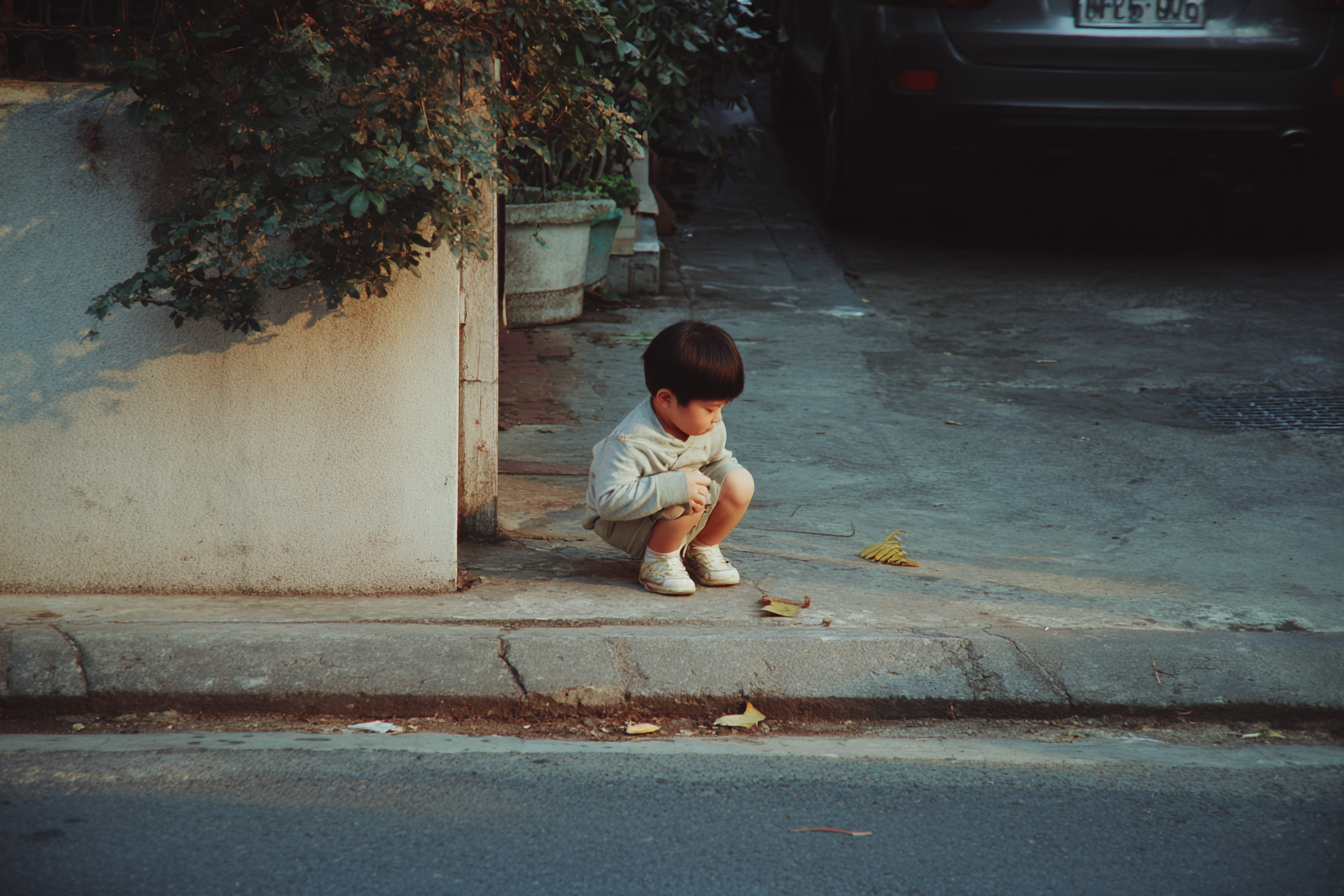
You know how this goes. You have twenty minutes before dinner needs to be started, bags need unpacking, and somebody is going to need a bath. You are moving at a reasonable adult pace. Your toddler is not.
They have stopped at the cracked paving stone — the exact one they stop at every day, the one with the small tuft of weed growing through the middle — and they are crouching down to look at it as if it has only just appeared. Before you can say anything, they stand back up, notice a dog crossing the road, say doggy and look at you to make sure you also saw the dog. Then they notice a leaf in the gutter. Not just any leaf — the large one, orange-brown at the edges. They pick it up. They carry it for half a block before handing it to you to hold while they drag one foot slowly along the yellow kerb edge. Then they freeze, because the bus is coming, and they want to watch it all the way past.
Then they say: again?
None of this is efficient. All of it is important.
The walk home — the unremarkable, slightly inconvenient, stop-start walk after daycare or the shop or the park — is one of the richest developmental spaces in a toddler’s day. It just doesn’t look like one. It looks like a small person who refuses to hurry, finding reasons to pause at things you stopped noticing a long time ago.
But what toddlers are doing on these walks is genuinely worth pausing to understand. Not so you can optimise it. Just so you can stop calling it wasted time.
The Walk Home Is Not Empty Time
There is a particular quality to the walk home that makes it developmentally valuable in ways a planned activity often can’t replicate. It is real. It repeats. It happens in the actual world, not in a room arranged for learning. And it usually happens right after something that asked a great deal of a toddler — a full day at daycare, a crowded supermarket, a long visit somewhere new.
Toddlers spend most of their structured time inside environments that have been designed to contain them — rooms with predictable layouts, adults who manage transitions, schedules that tell them what comes next. The walk home is different. It is uncontrolled, textured, and genuinely unpredictable. The dog might bark. The crossing light might take longer than usual. A puddle might have appeared overnight exactly where they always step.
That unpredictability is not a problem. It is precisely what makes the walk home useful.
The walk home is not a gap between activities. It is its own activity — one of the most real ones in your toddler’s day.
There is also something worth naming about the timing. Walking home after daycare places a toddler in a particular in-between state — away from the big experience, but not yet home. Their nervous system is still processing. Their body needs to move. Their mind is looking for something gentle to land on. The walk home, unhurried, is exactly that landing space. It doesn’t ask anything of them. It just offers things to notice.
And toddlers — who are still building their understanding of the world almost entirely through physical, sensory, and repeated experience — are very good at noticing.

What Toddlers Are Learning On The Walk Home
There is no single developmental thread running through the walk home. There are many, happening at once, woven together in the way real learning always is — not separated into subjects, not bounded by a timer, not waiting for a grown-up to begin.
Here is what is actually happening when your toddler stops to examine a drain cover for the fourth time this week.
Before a toddler can name a thing, they have to see it. The walk home is a daily exercise in visual attention — scanning, focusing, comparing what is there today with what was there yesterday. The puddle that appeared overnight. The scooter that is usually chained to the fence but today is missing. The shadow that looks different in the afternoon than it does at noon.
This kind of noticing is not passive. It is the foundation of observation, of reading the world. And toddlers do it constantly on a route that repeats enough to feel familiar, which means any change registers immediately. They remember where the cat sits. They notice when the plant pot has moved. Familiarity does not breed boredom at this age — it breeds deeper looking.
Words learned in lived context tend to stick. When a toddler says wet because they have just touched a rain-damp gate, they are not performing vocabulary — they are experiencing it. The word lands in the body first, and the body remembers.
The walk home is extraordinarily rich in exactly this kind of lived vocabulary: up, down, wet, dry, heavy, waiting, slow, fast, big, little, turn, stop, open, closed, loud, far. These are not abstract concepts. They are things a toddler encounters, physically, on almost every walk. When you name what they notice — simply, without making it a lesson — language grows through the texture of real experience. At this age, that kind of learning tends to go deeper than words met in other contexts.
The physical and the intellectual are not separate on the walk home. They arrive together, in the same moment, through the same small body.
A toddler navigating a real pavement is doing genuinely demanding physical work. Uneven surfaces, kerb edges, narrow stretches between a wall and a parked car, the need to slow before a corner, to balance while carrying something, to walk close beside another body without stepping on their feet. None of this appears in a play gym or a sensory tray. It appears on the walk home.
Stepping off a kerb requires judging depth and adjusting balance in real time. Carrying a juice bottle or a precious found leaf while walking requires managing two tasks at once. Slowing before a crossing, adjusting when someone overtakes on the pavement — these are small but genuine exercises in coordination and body awareness. A toddler who takes the same route daily is, quietly, becoming more capable in it.
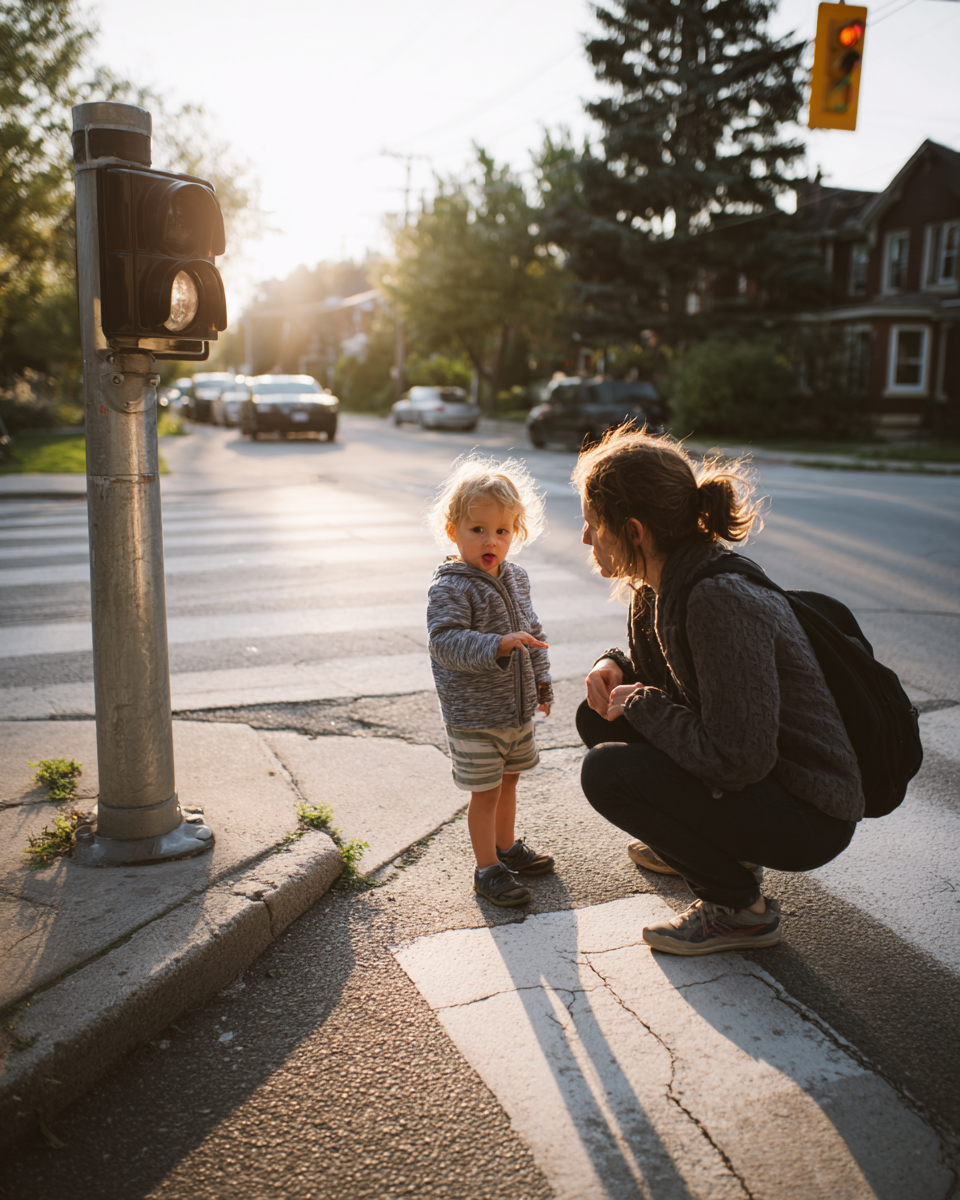
The world does not pause for toddlers. The traffic light takes as long as it takes. The bus passes before you can cross. The gate is heavy and must be properly held before it will open. These small delays — experienced daily, on a familiar route, with a calm adult nearby — are some of the most natural ways a toddler learns that the world has its own rhythms.
This is different from being told to wait at a table or to stop playing. It is structural. The light is red. The car is moving. The world is simply doing what it does. A toddler who encounters these rhythms repeatedly begins to anticipate them, to recognise the pattern — and gradually to accept small pauses not as frustration but as part of how things work. That particular kind of patience cannot be taught directly. It grows through repetition, in real situations, over time.
After pickup, some toddlers need to talk. Others need to move in silence for a while. The walk home is one of the few environments that can hold both.
A toddler who has spent six or seven hours in childcare has been navigating social demands, noise, transitions between activities, the presence of many other children, and the absence of the person they are most attached to. That is a significant amount of emotional labour for a very small person. The walk home offers something a rushed car ride or an early screen session does not: gentle, unhurried movement through space, with the person they most want to be near.
Some toddlers talk more on the walk home than they do for the rest of the evening. Something about side-by-side movement, outdoor air, the lack of direct eye contact — it opens up a different kind of conversation. Others need the opposite: movement and quiet and the sensation of their own feet on pavement. Both are decompression. Neither requires anything of the parent except presence.
There is a moment — somewhere around 18 to 24 months — when a toddler starts to know the route. They begin to anticipate the turn before it comes. They point toward the bakery before they can see it, because they remember it is there. They say home or nearly or make the particular sound they make for a specific gate or tree or shop front, weeks before they have the words to explain what they are recognising.
This internal map — built walk by walk, repetition by repetition — is not a small thing. It is a child building a sense of place, of predictability, of belonging to a neighbourhood. For a toddler whose world is still largely mysterious, knowing the walk home is a real and significant kind of knowledge. I have been here before. I know what comes next. That quiet certainty is part of how safety is made.
Two of the most underrated things the walk home offers are connection and usefulness. They are often happening at the same time.
Side-by-side conversations are different from face-to-face ones. When two people are walking in the same direction, looking at the same world, things get said that might not come out otherwise. There is less performance, less expectation. You are not sitting down Together To Talk. You are just both going somewhere.
This is often where toddlers produce unexpected observations, fragments of the day, things that happened that they are still working through — not because you asked, but because the conditions were right. Movement. Proximity. Shared attention outward. The walk home creates these conditions reliably, for free, every day. The conversation is not the goal. It is simply what tends to happen when a small person walks beside a person they feel safe with.
The idea that children learn through real participation — not through performed tasks or play simulations, but through genuine involvement in ordinary life — begins, in many ways, on the street. Pressing the crossing button. Carrying the shopping bag. Holding the key at the door. Deciding which side of the pavement to walk on. Bringing a found stone home. These are not pretend responsibilities. They are real ones, with real physical weight.
A toddler who presses the button feels the button press back. A toddler who carries something feels its heft shift in their hands as they walk. This is usefulness, not a simulation of usefulness. And children at this age — between two and three especially — are hungry for it: to be participants in the world, not just passengers through it.

- Stopping at the same cracked paving stone every day to look through the gap
- Insisting on pressing the crossing button — and being genuinely upset if you press it first
- Picking up one autumn leaf and carrying it the whole way home, refusing to put it down
- Noticing immediately that the red scooter is missing from its usual spot by the fence
- Saying the name of the dog who lives on the corner before you have even rounded the corner
- Pausing at the gate just to feel it swing
- Pointing at the sky when a plane passes and waiting, completely still, until it is gone
- Asking what something is — a crack, a shadow, a manhole cover — that you have walked past a hundred times without seeing
Why Toddlers Walk So Slowly (And Why That’s the Point)
Toddlers are not slow walkers because they are being difficult. They walk slowly because they are still in the middle of meeting the world, and the world, on a familiar route, keeps offering them things to meet.
An adult walking home is, neurologically, largely on autopilot. The route is known. The brain has filed it away and decided none of it requires active attention. You can think about what to cook for dinner while your feet navigate the pavement without a single conscious decision. The gate, the kerb, the turn at the corner — none of it registers because you have processed it hundreds of times already.
A toddler’s brain is not doing this. Their brain is still building the catalogue. Every gate is an object with properties worth investigating: cold or warm, smooth or rough, does it ring when you knock it? The crack in the pavement is a feature worth noting — is it bigger than yesterday? The person approaching is a situation requiring assessment. The sound of a truck means turning to find it before it passes. This is not inefficiency. This is a brain doing exactly what it is supposed to do at this age: making contact with the world, slowly and thoroughly, through touch and repetition and attention.
There is something worth sitting with in that contrast. You have stopped seeing the gate. Your toddler is still seeing it for the first time — or rather, seeing it with the particular attention of someone who wants to understand it completely before moving on. That quality of attention — slow, sensory, unhurried — is exactly what early learning runs on.
The pauses your toddler insists on are not obstacles to the walk. They are the walk. When you understand that the stopping is the point, the stopping becomes a lot easier to allow.
This does not mean every walk becomes an expedition. Children at this age can be gently hurried, carried some of the way, redirected with warmth. But on the days when you can afford to be slow — when there is no dinner burning and no meeting to make — the walk home is better for both of you when it is allowed to be slow. You tend to notice things too.

How To Support The Walk Home Without Turning It Into A Lesson
The most important thing about the walk home is that it does not need to become educational for it to matter. It is already developmental. Your job is not to make it more so — it is simply to avoid rushing the best parts of it away.
A few things that tend to help:
- Name what they notice, rather than testing what they know. When your toddler points at a truck, you don’t need to ask “what colour is it?” You can just say “that’s a big orange truck.” The information lands without the pressure of a quiz.
- Leave some silences unfilled. Not every observation needs a response. Sometimes your toddler is simply watching something and doesn’t need you to comment on it. The companionable quiet of walking alongside someone is its own kind of closeness.
- Let them stop sometimes. Not every day, not for unlimited time — but when you can, let the stop happen. Let them look at the thing they’re looking at. You can always say “one more minute and then we walk” and mean it gently.
- Create one small ritual. It doesn’t have to be elaborate. “Shall we look for the red scooter?” or “let’s wave to the cat if she’s in the window” or “you carry the bag to the corner.” A tiny ritual gives a toddler something to anticipate and quietly names the walk as a shared thing between the two of you.
- Read their cues about conversation. Some days they want to talk. Some days they need movement and quiet. Both are completely legitimate. The walk home can hold either without effort.
- Let them carry something real. A found object, the bag strap, the house key at the door. Participation in the real mechanics of getting home gives them a sense of genuine usefulness.
You do not need to turn the walk home into a learning activity for it to support your child’s development. The walk home is already a learning activity. Your presence — calm, unhurried, noticing things alongside them — is the thing that makes it one.
There is a pressure many parents feel to make every transition productive — to use the walk to practise colours, to count things, to narrate everything with educational intent. That impulse comes from a good place. But it can also make the walk feel like homework. And the walk home works precisely because it isn’t homework. The moment it starts to feel like one, something essential gets lost.
If you’re curious about what development looks like at your child’s specific age, the Learning Goals for 2 Year Olds article breaks down what children are naturally developing across language, observation, movement, and social connection — much of which the walk home supports without any intervention at all.

A Quiet Truth About Ordinary Walks
There will be a version of your child who does not stop at every drain. Who does not crouch over every leaf. Who moves at something close to an adult pace, because the world has become familiar enough that they no longer need to investigate each part of it quite so carefully.
That version will arrive faster than you expect.
Right now, in this particular window, the walk home is still a genuinely astonishing thing to your toddler. The route is known enough to feel safe, but still surprising enough to offer something new every time. The cracked paving stone is worthy of daily examination. The orange leaf in the gutter is worth picking up and carrying home. The bus deserves to be watched all the way past, because it is still extraordinary that something so large moves so quietly through the world.
The walk home does not need to become educational to matter. It does not need to be turned into a game or a lesson or a moment of intentional stimulation. It needs, mostly, to be allowed to be what it already is: a small piece of real life, taken at toddler speed, with the person they most want to walk beside.
You don’t need to manufacture this. It is already happening. It has been happening every time you’ve walked home together and found yourself thinking, gently, that you really should be moving faster by now.
The walk was always the lesson. You were just both too busy getting home to see it.

Prompt Cards
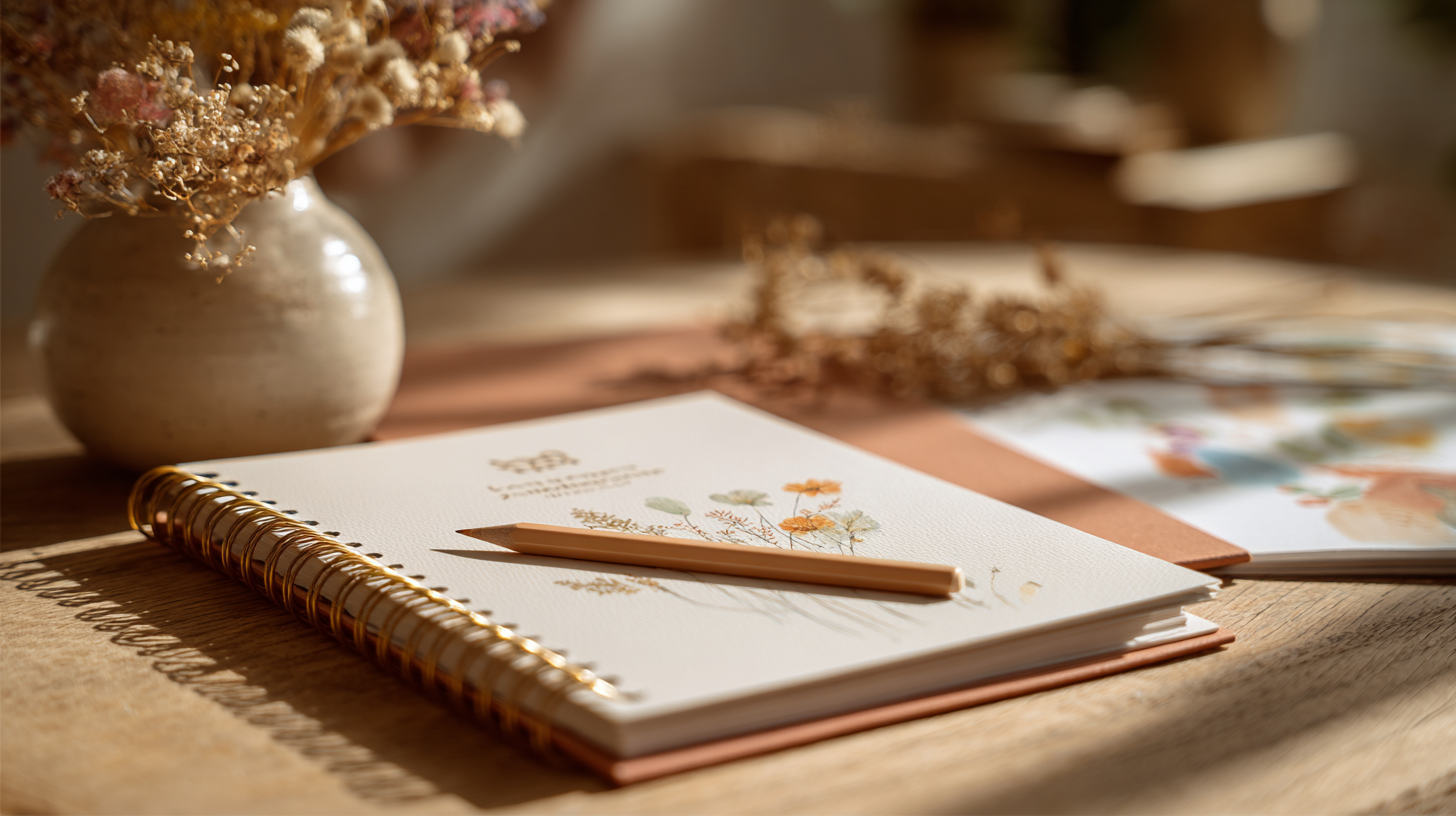
A gentle set of prompts for the walk home — designed to help you notice alongside your toddler without turning the walk into a lesson. Things to look for, things to say, things to listen to, things to carry. A simple companion for one of the most ordinary and important parts of your child’s day.
Prompt Cards
A gentle set of prompts for the walk home — designed to help you notice alongside your toddler without turning the walk into a lesson. Things to look for, things to say, things to listen to, things to carry. A simple companion for one of the most ordinary and important parts of your child’s day.
- Language Grows In Moments — How Toddler Vocabulary Builds Through Ordinary Life
- Learning Goals for 2 Year Olds — What Development Really Looks Like
- Practical Life Activities for 2 Year Olds — What Counts as Real Work
Yes — and in particular, walking a familiar route tends to be very good for vocabulary. When a toddler walks the same way repeatedly, they encounter the same objects and landmarks over and over, and repeated real-world contact is one of the ways words become properly owned rather than just heard. Naming what they notice — the dog, the wet gate, the colour of the truck — builds language through lived context in a way that feels natural rather than instructional.
Follow their attention rather than directing it. If they stop to look at something, name it simply and let them lead. Running commentary works well at this age: “there’s the cat,” “that’s a very loud motorbike,” “look — the leaves are wet today.” Short, natural, tied to what they’re already looking at. Silence is also fine. The walk doesn’t need to be filled with words to matter.
Very common, especially between 18 months and 3 years. Toddlers stop because they are still meeting the world with genuine attention — comparing today’s route to yesterday’s, investigating objects whose properties are still being understood. The stopping is not stubbornness. It is how this age learns. It tends to reduce naturally as the route becomes familiar enough to process without pausing.
It can be particularly useful as a decompression space. A toddler who has spent hours away from home in a social environment often needs an unhurried transition back before they can fully settle. Walking — with movement, fresh air, and proximity to the person they most wanted all day — offers that transition. Many parents notice their children are more talkative or more settled after a walked-home day than a rushed one.
That’s also fine. Being carried is not developmentally neutral — a toddler in arms is still looking at the world, still hearing language, still experiencing the route and its landmarks. Some days they need the closeness more than they need to walk. That need is worth meeting.
Movement tends to help the nervous system process and release built-up tension. For toddlers who arrive from daycare in an activated state — running, crying, throwing things — a walked transition often results in a calmer arrival than a rushed or driven one. The walk doesn’t fix a hard day. It can soften the landing.
There is no fixed rule, and children vary. A two-year-old might comfortably walk 15–20 minutes before needing a break or wanting to be carried. What matters more than distance is pace — slow and unhurried tends to work better than fast and frustrated. Carrying them for part and walking together for part is a perfectly reasonable approach on harder days.