
One Word Can Carry a Whole Conversation
When a toddler says only one word, it may look small from the outside. But inside that word, there may be a request, a memory, a feeling, a question, or an invitation to connect.

The Word Parents Almost Miss
She is standing by the window. Her hand goes up, index finger pointing toward something in the garden — a bird on the fence, a truck rolling past, a shadow moving through the light. She turns her face just slightly, finds you with her eyes, and says: “Mama.”
You think she is calling you. You answer: “Yes, I’m right here.” But she doesn’t look at you. Her eyes are still on the window. Her finger is still raised.
She isn’t calling you. She is inviting you.
“Mama” in that moment means: Come see this with me. Look where I am looking. I want to share this thing with you.
One word. One full social act. A toddler using everything she has to reach toward connection — and a parent who, in a fraction of a second, gets to decide whether to receive it.
This is what one-word communication looks like from the inside. And it is worth slowing down to notice.
A Toddler Word Is Often Bigger Than It Sounds
Between around 12 and 24 months, most toddlers are living in a space between what they understand and what they can say. They hear full sentences. They follow multi-step directions. They notice the subtle shift in your voice that means something has changed.
And yet, in their own speaking, they may have only a handful of words to work with.
One word has to do the work of many. It carries intention, emotion, memory, and social meaning — all compressed into a single sound. This is not a limitation. It is remarkable.
A toddler who says “more” at the table may mean I enjoyed that or don’t take it away yet or I want to keep being here with you at this meal.
A toddler who says “car” while sitting at the window may mean I heard it go by or I remember our drive this morning or can we go outside? The parent who hears the word and wonders about the meaning is already doing something important.
The job is not to demand a longer sentence. The job is to receive the meaning and offer a little more in return.
| Toddler says | It may mean | A gentle response |
|---|---|---|
| “Mama” | Look, help, stay close, see this | Mama is here. You want me to look? |
| “More” | Continue, I like this, don’t stop | More banana. You liked that bite. |
| “Up” | Pick me up, help me reach, I want to see | Up. You want to see what’s on the counter. |
| “Car” | I saw one, I remember one, I want to go outside | A car. You heard it go by. |
| “No” | I need control, I’m unsure, not yet | No socks yet. You’re not ready. |
What this table cannot capture is the pause before the word, the small tilt of the head, the way the hand reaches or rests. Those are part of the conversation too.
“The word is only part of the message. The eyes, hands, timing, and pause are part of the conversation too.”
The Five Jobs One Word Can Do
A single toddler word is rarely just labeling something. It is doing something — reaching, asking, sharing, remembering, or expressing. Here are five of the most common jobs a one-word utterance might carry.
Ask for help
When a toddler says “Mama” with their arms raised, or “stuck” while their foot catches on a step, they are making a genuine request. They know something needs to happen, and they know you are the one who can make it happen.
“You want help. I’m coming.”
Responding without insisting on a longer request teaches the child that communication works — which is the foundation of all language growth.
Share attention
When a toddler points and says “Bird!” or “Dog!” or “Moon!”, they are not testing vocabulary. They are saying: I see something beautiful. Come look with me. This kind of joint attention — sharing an experience with another person — is one of the deepest things language is for.
“A bird. You found it in the tree.”
Joining the child’s gaze and naming what they found tells them: your attention matters. I will follow it with you.
Remember something
Toddlers often say a word when they are remembering — not reacting to what’s in front of them, but connecting back to an earlier experience. A child who says “Bus” while sitting quietly at home may be replaying the ride from this morning, linking their current moment to an earlier one.
“The bus from our walk. You remembered.”
Acknowledging a memory tells the child that their inner world is real and worth noticing.
Continue a routine
When a toddler says “Again” after a song, or “More” at the end of a familiar story, they are often not just asking for repetition — they are demonstrating that they have understood how something works and want to be part of it again. This is a sophisticated act of participation.
“Again. You want the song one more time.”
Routines are some of the richest language environments in a toddler’s life. Participating in them — even with one word — is meaningful engagement.
Express emotion
When a toddler says “No” at a transition, or goes quiet and says “Mama” softly after a loud noise, they are often expressing something about how they feel — not just what they want. The word is a bid for understanding as much as it is a request.
“No. You need a little space right now.”
Naming the need behind the word — without rushing past it — helps the child feel understood. That feeling is what keeps the conversation open.
What To Say Back When Your Toddler Uses One Word
There is a simple pattern that works in almost every one-word exchange, and it does not require special training or a prepared script. It goes like this: the child offers a word, the parent receives the meaning and reflects it back with a little more, and then — this part matters — the parent pauses.
The pause is where the conversation lives.
Parent: “Mama is here. You want me to look?” — pause —
Parent: “Yes, a red car. It went fast.” — pause —
Parent: “More banana. You liked that bite.” — pause —
Parent: “No shoes yet. You want a minute.” — pause —
Notice that none of these responses ask the toddler to try again. None of them say “can you say the whole thing?” or “what color is it?” or “use your words.” The parent simply receives the word, offers a natural extension, and waits.
This is not passive. It is one of the most active things a parent can do for language: keep the door open instead of turning every exchange into a test.
If you are curious about how this connects to why toddlers repeat words — especially when a child seems to say the same word over and over — there is a separate piece on that worth reading alongside this one.
You do not need to make your toddler repeat the better sentence. Your calm model is already teaching. The pause after your words is often where the conversation continues.
Get the One-Word Conversation Tracker
A simple printable to help you notice what your toddler may be communicating before full sentences arrive — with gentle response examples you can use at the table, on walks, during transitions, and at bedtime.
Why Expanding Works Better Than Correcting
There are two very different things a parent can do when a toddler offers one word. One keeps the conversation open. The other tends to close it.
Expansion means taking the child’s word and adding just a little more — not correcting what they said, but building gently on it. The child is not wrong. The child said what they could say. The parent’s job is to show them where that word might grow.
Correction — asking the child to repeat a longer form, or implying that what they said wasn’t quite right — can shift the conversation from shared meaning to performance.
The child may start to feel assessed rather than understood. Over time, some toddlers become quieter in exactly those moments when they might have kept reaching.
“Say ‘I want more banana.’ Can you say banana?”
“More banana. You’re still hungry.”
“No, say ‘red car.'”
“A red car. It drove past us.”
“Use your words.”
“You’re reaching for the cup. Water?”
The difference is not just in what the child hears. It is in what the child experiences: either that communication is something they do together with you, or that communication is something they have to get right before they get a response.
“Expansion keeps the conversation open. Correction often closes it.”
For a longer look at how to use language in daily moments at home, the piece on 30 tiny phrases that teach toddlers new words every day offers a practical companion to this one.
Everyday Moments Where One Word Becomes A Conversation
Language doesn’t live in lesson time. It lives in the five minutes before lunch, in the walk to the gate, in the pause before a nap. These are the real classrooms — and the one-word exchange is one of their most ordinary and important features.
May mean: I enjoyed that. I want to stay here with you a little longer.
Mealtime is one of the richest language contexts for toddlers. Naming what they want in the moment — without turning it into a lesson — keeps the emotional tone of eating warm and connected.
May mean: I see it. Did you see it? It’s familiar. Can we get closer?
Outdoor walks are full of language opportunity precisely because the child’s attention is always moving. Following where they look, and naming what they see, is a form of reading the world together. For more on this, see Language Grows in Moments.
May mean: I noticed something. This feels different. I want to tell you what my body is experiencing.
Sensory vocabulary is some of the earliest and most powerful language children acquire. When a parent names body sensations in ordinary moments, they give the child words for their inner experience — not just the world outside.
May mean: I need more control here. I’m not ready. This part of the routine feels too fast.
Transitions are often where one-word resistance appears most clearly. Receiving the “no” without escalating — and offering a gentle reframe — keeps the dressing routine from becoming a confrontation.
May mean: I’m not ready to sleep. I want more time with you. This is a ritual I love.
Bedtime is when toddlers often reach for language with the most intention — because the stakes feel high. One more word, one more moment. Receiving it gently, rather than managing it away, turns the ending of the day into a shared thing. See also: What To Say At Bedtime To Build Toddler Language.
When Your Child Uses the Same Word for Everything
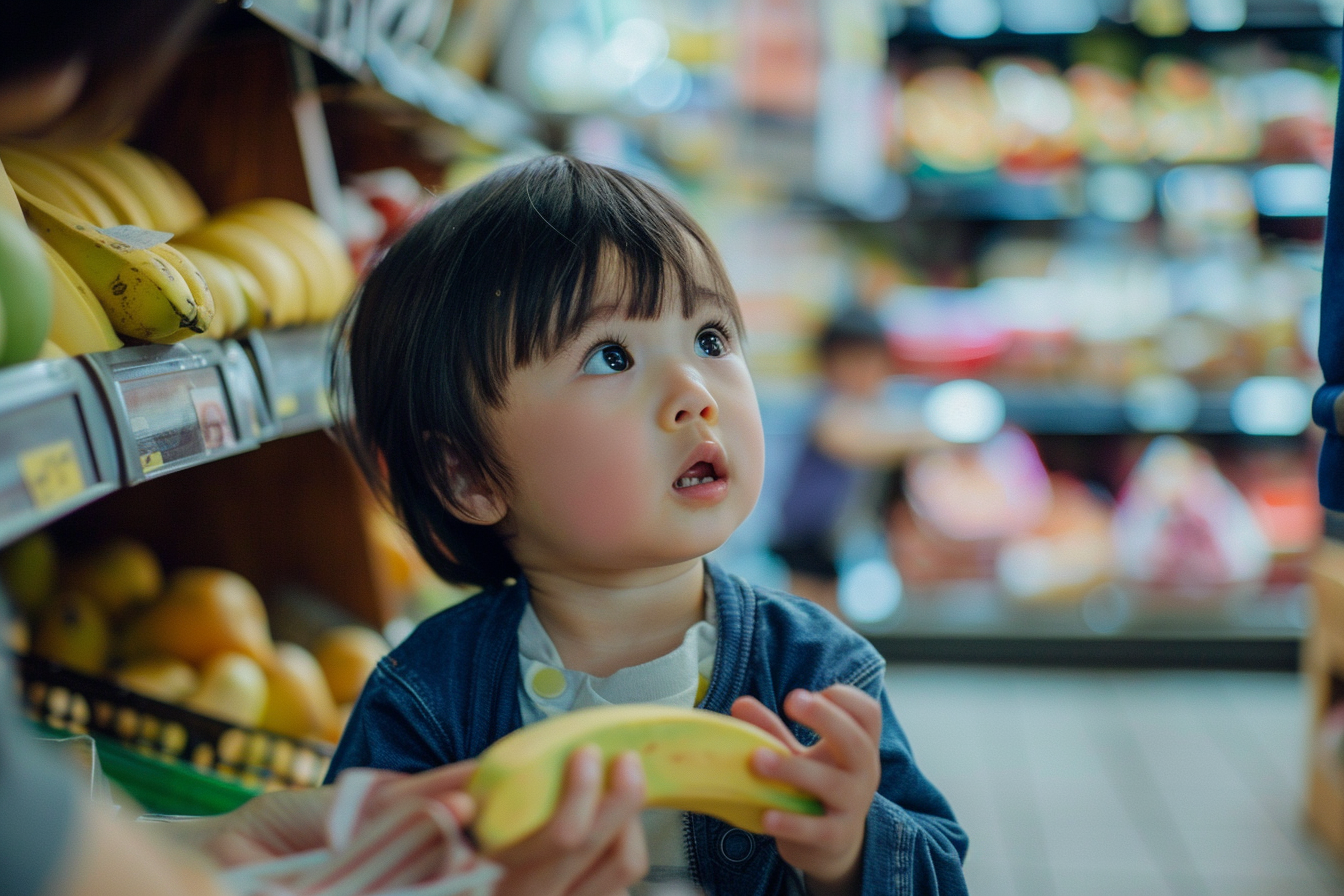
Some parents notice that their toddler uses one word — sometimes the same word — across many different situations. “Mama” for everything. “No” for everything. “More” for everything. This can feel confusing, and occasionally worrying.
But a toddler testing how far one word can travel is not a child who is stuck. They are a child who is exploring the limits of their tools — using what they have to reach as far as it will go. This is a sign of intention, not absence.
The key is to look past the word itself and notice everything surrounding it: where the child is, what they are looking at, what just happened, how their body is oriented, and whether they are waiting for a response.
Those details are where the meaning lives.
- At the door Come with me. I want you nearby.
- Near the shelf Help me reach. I can’t get it alone.
- By the window Look at this. I want to share it.
- After a loud sound Is everything okay? I need to feel safe.
- At bedtime Stay close. Don’t go yet.
One word doing five different jobs is not a problem. It is a child with intention and no shortage of things to say — just waiting for more tools to say them with.
If you are curious about the other side of this — what happens when a toddler seems to understand a great deal but says very little — the article on Late Talker? What Your Toddler May Be Learning Before The Words Come explores this territory carefully and without alarm.
What To Notice This Week
This is not an assessment. There is no score. It is an invitation to pay a different kind of attention to something that may already be happening in your home every day — you just haven’t had a frame for it yet.
- What word does your toddler use most often this week?
- What happens right before the word — what were they looking at, reaching for, or moving toward?
- Does your child point, look, pull your hand, give you something, or pause after the word?
- Does the same word show up in different situations with different meaning?
- Does your child wait for your response before doing anything next?
- What happens when you expand the word gently — does the child relax, respond, or offer more?
You do not need to track all of this formally. You do not need to record it or turn it into data. Simply noticing — and staying curious — is enough. The parent who pays attention is already creating exactly the kind of language-rich environment where toddler words grow.
If you enjoy building a language-rich home without adding more to your plate, there is a whole piece on this worth reading slowly.
Many toddlers develop language at their own pace, and a child who uses one word for many things is often doing exactly what their brain is built to do at this stage. This article is not a diagnosis and is not intended to replace professional guidance.
If you have concerns about your child’s hearing, their ability to understand what is said to them, their use of gestures and eye contact, a loss of words they previously had, or a very limited range of communication overall — it is always appropriate and worth it to speak with your pediatrician or a speech-language professional. Early conversations with a professional are never a sign that something is wrong; they are a sign that you are paying attention.
Is it normal for a toddler to use one word for many things?
Yes, this is very common and developmentally expected. Toddlers in the one-word stage often use a single familiar word to carry many different meanings. The word “more” might mean continue, I’m hungry, I’m enjoying this, or don’t take it away. The word “Mama” might mean help, look, come here, or I need comfort. This flexibility is a sign of communicative intention — the child knows they want to say something and uses whatever word is most available to them. As vocabulary grows, the range of words expands alongside the precision.
Should I correct my toddler when they only say one word?
Gentle expansion tends to be more effective than correction. When a toddler says “dog,” responding with “a dog, a big dog” keeps the conversation warm and moving forward. Asking the child to repeat a longer phrase — or pointing out that they didn’t say the full thing — can shift the exchange from connection to performance. The goal at this stage is not perfect sentences; it is communication that keeps growing.
How do I help my toddler move from one word to short phrases?
The most natural way is to model the next small step without pressure. If your child says “up,” you might say “up, you want up” or “up please, you want to be held.” You’re not demanding they repeat it — you are just placing a slightly fuller phrase in the air near the word they already said. Over time, toddlers absorb these expansions and begin using them. The process tends to happen gradually and in its own time. For more practical language phrases, the article on 30 tiny phrases that teach toddlers new words is a useful companion.
What if my toddler understands a lot but says very little?
A toddler whose comprehension is strong but whose spoken vocabulary is still small is often storing a great deal before they begin to speak more fluently. This is sometimes called a “language burst” — a period of quiet absorption followed by a noticeable increase in words. It is common, particularly between 18 and 24 months. That said, if you have specific concerns about your child’s development, a conversation with your pediatrician is always a reasonable and welcome step.
Does repeating one word count as language development?
Yes. Repetition in toddler language is not a sign of being stuck — it is often a sign of practice. A toddler who says “car” ten times during a car-watching session at the window is refining their ability to use that word, linking it to context, and learning that it reliably gets a response. Repetition is part of how language becomes stable and automatic. It is worth honoring rather than trying to redirect away from.
Should I ask my toddler to repeat after me?
Occasional, playful repetition in a song, rhyme, or shared game is completely fine — toddlers often enjoy it. But using “say it again” or “repeat after me” as a regular way to respond to their communication can shift the tone from conversation to assessment. A better default is to model naturally and trust that the child is absorbing far more than they are producing yet. The absorption often comes first.
When should I talk to a speech-language professional?
Most toddlers find their rhythm in their own time, and there is a wide range of what is typical. That said, it is always worth a gentle conversation with your pediatrician if your child is not using any single words around 16–18 months, or is not beginning to combine two words around 24 months. It is also worth mentioning if you notice a loss of words they previously used, if your child rarely points or uses other gestures to communicate, or if they seem to understand very little of what is said to them. These are simply good things to share — not reasons to worry. A speech-language professional is a helpful resource, not a last resort, and an early conversation with one is often reassuring.
The Word Was Never Small
One word may be the beginning of a conversation. One word may be the child reaching toward connection with the tools they have in this moment — tools that are still being made, still being tested, still finding their range.
The parent does not need to pull a sentence out of the child. The parent can answer the meaning, model a little more, and wait. Waiting with warmth is not doing nothing. It is doing the most important thing.
For more on how language builds through the ordinary rhythm of a toddler’s day, Language Grows in Moments and Phrases To Help A Toddler Express Feelings are both worth reading slowly.
“Sometimes the conversation begins long before the sentence arrives.”