Practical Life at Home
When Your Toddler Wants to Help but Everything Takes Longer
Your child wants a part in the work. You still need dinner on the table. Here is how to make room for both, on the days you can slow down and the days you can’t.

It’s ten minutes to dinner. The rice is almost done, something is sizzling in the pan, and you are trying to remember whether there are any clean cups. Then a small body presses against your leg, and a hand reaches up toward the counter.
“Me help.”
You can picture where this goes. A stool dragged across the floor. Water on the counter. A spoon dropped onto the floor. Dinner, already running late, moves a little later.
And still, that reach is sweet, and you know it. Your child isn’t asking for an activity. They are asking for a place in what is happening in their home.
Much of the advice about toddlers and chores assumes you have time to spare. This piece is for the moments when you don’t: when the wish to help arrives at exactly the wrong minute, and you have to decide, quickly, what to do with it.
Why “helping” can feel so hard
When a toddler asks to help, they usually aren’t thinking about the finished task. They want to do what you are doing, with the things you are using, right next to you. The pouring, the stirring, the carrying: that is the appeal. Whether the table actually gets set is almost beside the point.
You, meanwhile, are thinking about the finished task, because someone has to. The food needs cooking. The bag needs packing. The door needs to close behind you by 8:15.
So the friction is real. Toddler help usually does take longer, and it often leaves something to wipe up. Admitting that isn’t a failure of patience. It’s an honest place to start.
The useful part is this: you rarely have to choose between handing over the whole task and saying no to all of it.
A small question to ask in the moment
When the hand reaches up, ask yourself one thing:
“Do we have time to do this together right now?”
It’s a yes-or-no question, and both answers are fine.
We have a few minutes
Give one real, manageable part
Not the whole job. One piece of it. Your child rinses the potatoes while you chop. They carry the spoons while you carry the plates. You stay with the task; they join one corner of it.
“You can wash this potato. I’ll cut it after.”
We need to move now
Name the limit, then offer what you can
Say plainly why this isn’t the moment. If there’s a safe job close by, offer it. If there isn’t, name a specific later time, and try to keep it.
“The pan is hot, so this part is mine. You can put the spoons out.”
Neither answer is the “good parent” answer. A few minutes of shared work is lovely. So is getting everyone fed.
Give your toddler a real, small part
Helping doesn’t have to mean doing the whole task, or even most of it. A toddler who puts out the napkins has helped set the table. The trick is finding the slice of work that fits their hands and your minutes.
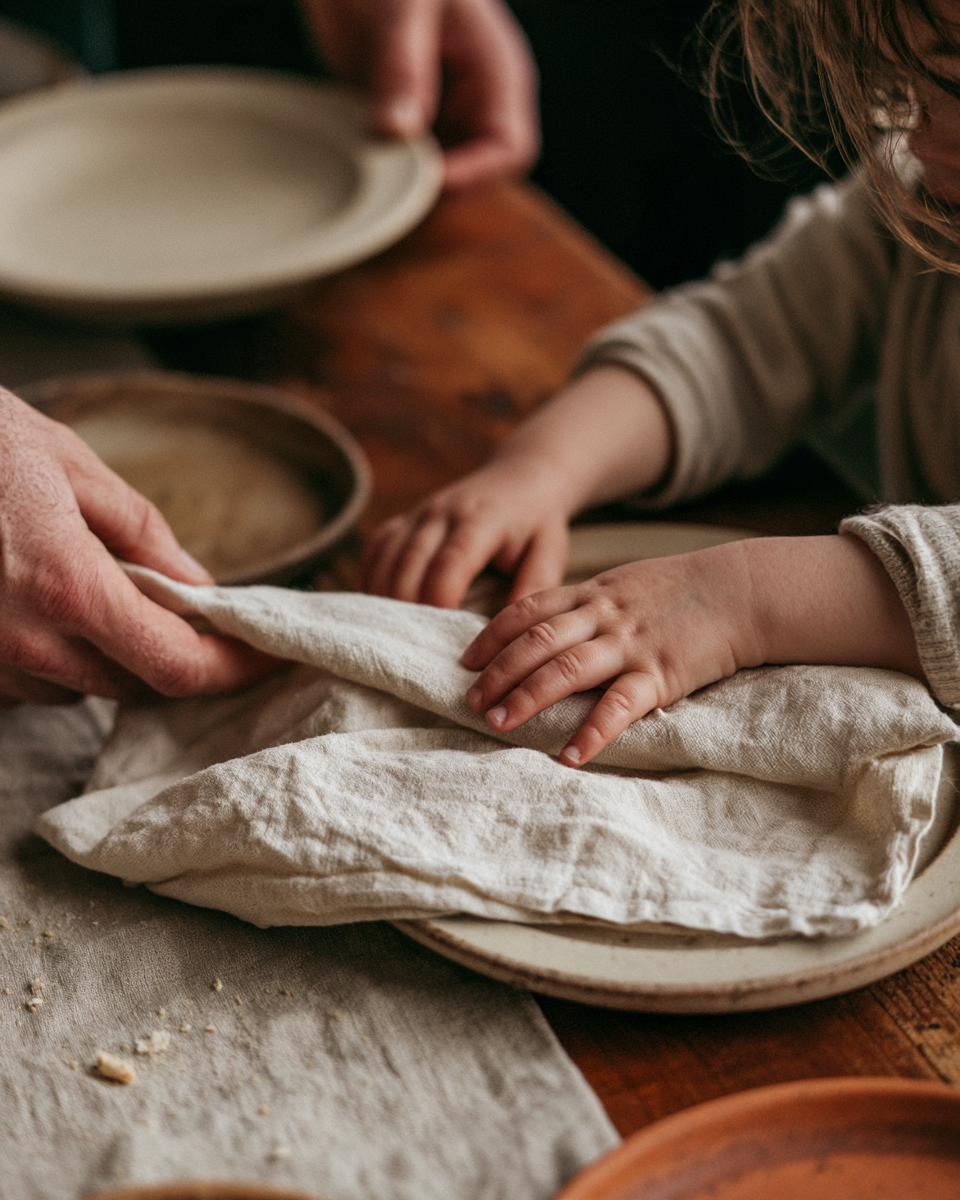
Setting the table
- You
- Carry the plates, glasses, and anything hot or breakable.
- Your toddler
- Places one napkin at each seat, or one spoon beside each bowl.
If the napkins end up crooked, that’s fine. They are on the table because your child put them there.
Laundry
- You
- Sort, run the machine, and handle the detergent and the folding.
- Your toddler
- Drops clean socks into a basket, or takes damp clothes from the machine and hands them to you one at a time.
A shared laundry corner in an apartment building works too; the basket is the job. More ideas are in our guide to laundry practical life activities for toddlers.
Washing produce
- You
- Set a bowl with a little water on a towel, and do all the peeling and cutting.
- Your toddler
- Washes one apple or potato, rubbing and rinsing, with you right beside them.
Choose a whole apple or potato that your child can comfortably hold, and stay beside them while they wash it. For more jobs sized for small hands, see kitchen practical life activities for toddlers.
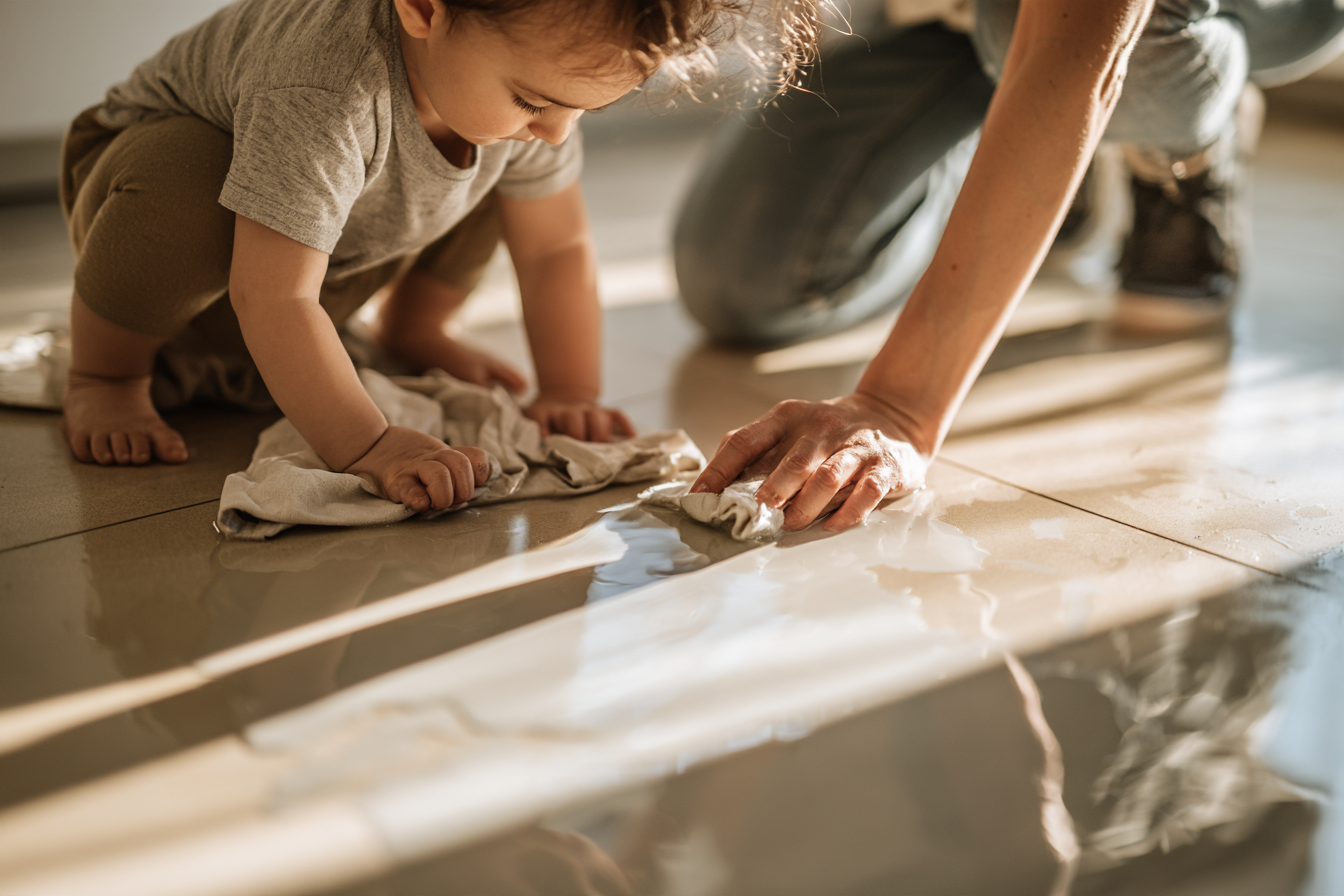
Wiping a small spill
- You
- Deal with anything large, broken, or needing a cleaning product.
- Your toddler
- Wipes a small patch of water or crumbs with a damp cloth, then hands the cloth back.
Plain water and a cloth are enough. Sprays and cleaners stay up high.
None of these ask your child to finish anything. They ask them to take part, alongside you. That still counts as helping.
When you cannot slow down
Some days the answer is no, and that is allowed. The aim isn’t to avoid disappointing your child. It’s to be honest about what is happening, and kind in how you say it. Here are a few lines you can use:
What to say
- “I need to handle the hot pan. You can put these napkins on the table.” When there is a safe job nearby.
- “We’re leaving now. You can help me put the shoes away when we get home.” When the help has to wait for later.
- “The knife is only for grown-ups. You can choose the bowl for the apples.” When the task itself isn’t safe for small hands.
- “I’m carrying the groceries in fast this time. Tomorrow you can carry the bread.” When you can name a specific next chance.
- “I can see you want to help. I need to finish this by myself right now. I’ll tell you when I’m done.” When there is nothing to offer in the moment.
That last one matters. Sometimes there is no substitute job, and inventing one would take longer than finishing the task. Saying so is honest.
Your toddler may not take any of this calmly. They may protest, cry, or try to climb up anyway. That doesn’t mean you said it wrong. You can name the feeling (“You really wanted to stir”), keep the hot pan out of reach, and carry on. The limit stays, and so does the welcome.
If you offer a “later,” try to make it happen. A later that actually comes is what makes it worth believing next time.
When their help creates more work
Your child is carrying a cup of water to the table, very carefully, and halfway there it tips. Water on the floor, on their socks, on the chair leg.
In the moment, a short response may be all you need: “Oops, the water spilled. Here’s a cloth.” Hand them one, take another, and wipe together. The spill becomes the next small job instead of a verdict on their help.
Afterward, change one thing for next time, not everything:
- Less water. An inch in the cup spills far less than a full one.
- Fewer objects. Two spoons, not the whole drawer.
- A cloth nearby. Whenever water is involved, keep one within reach.
- A smaller work area. A tray or folded towel shows where the work happens and catches much of what falls.
Pick one. The goal is a setup that takes a few seconds, not one that takes longer than the task itself.
Make room for helping when no one is rushing
An unhurried moment makes it easier to let a child practice. Instead of trying to say yes every time, choose one recurring moment, like weekend breakfast or folding towels, and make it the place where your child can count on helping a few times a week.
A simple rhythm keeps it light:
- InviteOffer, don’t assign. “I’m folding towels. Want to help?” If the answer is no, that’s fine too.
- ShareGive them one part, like the washcloths rather than the bath towels, and keep the rest for yourself.
- Finish togetherPut the last thing away side by side and name it. “The towels are done.”
Keep it loose. Some weeks it happens three times, some weeks once. You’re not aiming for your child to do the job alone; you’re giving them a familiar place in it. If you’d like a little more structure, a simple toddler independence routine for real homes walks through one way to build it.
Back at the stove
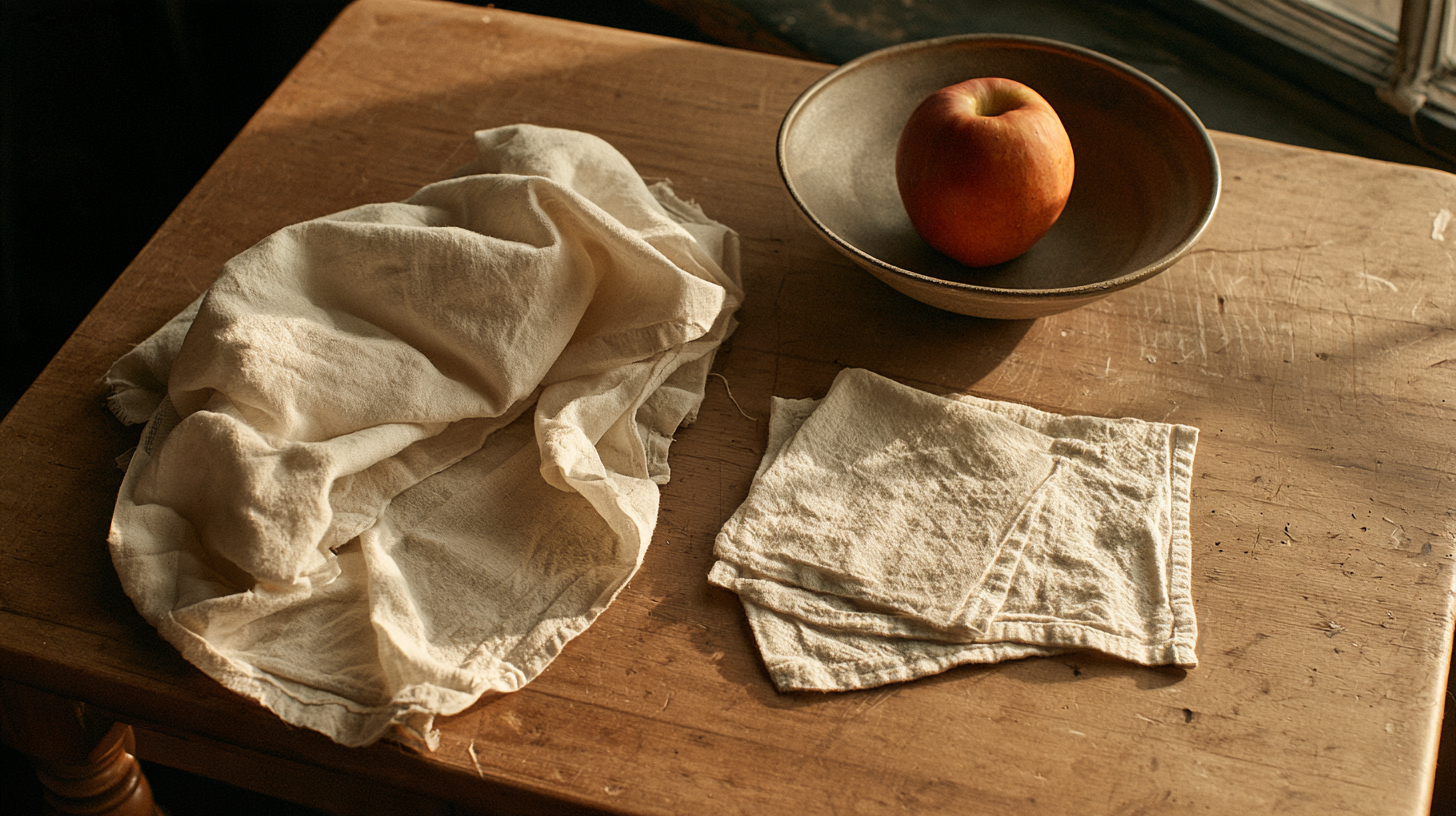
Think again about that hand reaching toward the counter while the rice was nearly done. Some evenings you’ll pull the stool over and pass down a potato to wash. Some evenings you’ll say, “The pan is hot. You can bring the napkins.” And some evenings you’ll need to finish on your own, with a small person protesting at your knee.
No single evening decides anything. What your child takes from all of this is built slowly, across many ordinary days: that the work of the house is something they belong to.
There is usually a place for them in it, even when the place is small, and even when today isn’t the day.


