

Practical Life · Toddler Independence
A Simple Toddler Independence Routine for Real Homes
One familiar moment, one small part for your child, and help when they need it. A way to begin tomorrow—no special shelf or perfect schedule required.

Dinner is over. The plates are stacked, someone needs a bath, and you are already running the next twenty minutes in your head. Then a small hand reaches past you for the crumpled napkin.
“Me do it.”
You know how this goes if you say yes. The napkin takes the long way around the table, maybe by way of the floor or the dog, and a two-second job becomes a one-minute one.
Still, that reach is worth noticing. Your toddler is not asking for an activity. They are asking for a part in what the family is doing—and you can give them one inside a moment your day already has.
What is a toddler independence routine?
It is a small, repeatable way for your child to take part in the life of your home, built from four ingredients:
- A familiar moment that already happens most days—after dinner, getting dressed, coming home.
- A reachable task your child can do, or mostly do, with things you already own.
- An invitation, rather than an order or a test.
- Support when needed from an adult close enough to help, show again, or finish together.
You do not need a special shelf, child-sized tools, or a chart on the fridge. What makes it work is repetition: the same moment, in roughly the same way, often enough that your child begins to recognize it.
It is also not about leaving a toddler to manage alone. At this age, independence grows with an adult nearby who steps in when a hand is needed.
One familiar moment. One small part. Help when needed.
The five-part method
One example runs through all five steps—putting a napkin in a basket after dinner. Once you see how the pieces fit, swap in a moment from your own home.
-
Choose one moment
Pick a moment that already happens most days and does not feel rushed. The end of a meal often works well, because the pressure of getting food on the table has passed.
Starting in three places at once usually leaves none of them enough patience.
Napkin example: the minute after dinner, when everyone is still at the table or just getting up.
-
Make the task reachable
Look at the job from your child’s height. Can they reach the thing they are putting away, and the place it goes? Often a basket on the floor is all the setup you need. One napkin, not the whole table.
Napkin example: a small basket or bin sits on the floor near your child’s seat. Use whatever napkins you already have, cloth or paper.
-
Invite
Offer the part simply, then give your child a moment to respond. An invitation names the next step without making it a test.
“Your napkin can go in the basket.”
Napkin example: instead of scooping up the napkin yourself, you pause, say the sentence once, and glance toward the basket.
-
Wait and help
This is the hardest part. Count slowly in your head and let the attempt happen, wandering route included. If your child gets stuck, help with only the next bit instead of taking over: point, move the basket closer, or put your hand beside theirs.
“Do you want help, or do you want to try?”
Napkin example: the napkin lands next to the basket. You slide the basket a little closer and let them try again—or you pick it up together.
-
Close together
Mark the job as done with a small shared moment. Describing what happened, rather than offering general praise, helps your child connect their action to the life of the house.
“You put your napkin away. The table is getting clear.”
Napkin example: you both look at the basket for a second, then move on to the next part of the evening.
Tomorrow, the same moment comes around again. That is the routine. Some children begin the step before you invite them; others need the invitation for a long time. Both are part of the process.
Three everyday places to try it
Most homes have three natural openings: the start of the day, the end of a meal, and the wind-down before bed. These are options, not a schedule. Choose one to begin; the others will still be there later.

In the morning
After getting dressed, your child carries their pajamas to a basket. A younger toddler might drop them in while your hand steadies the basket; an older child might carry them from the bedroom alone. If laundry becomes a favorite, there are more ideas in our guide to laundry practical life activities for toddlers.
After a meal
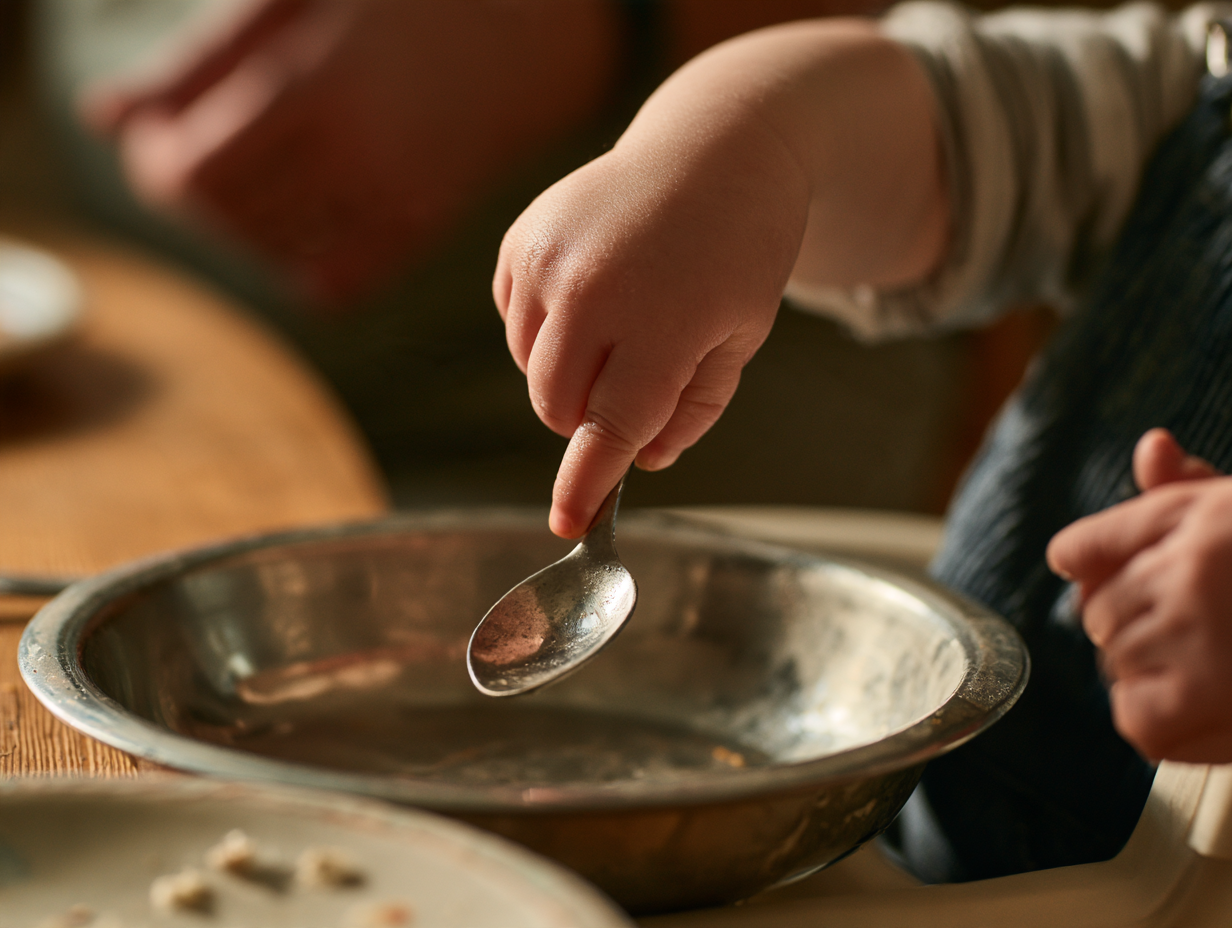
This is where the napkin lives. Once that feels familiar, the same moment can hold a spoon or an unbreakable cup carried to one low spot you have chosen—a tub on a chair, or a corner of the counter within reach. For more jobs that suit small hands, see kitchen practical life activities for toddlers.
In the evening
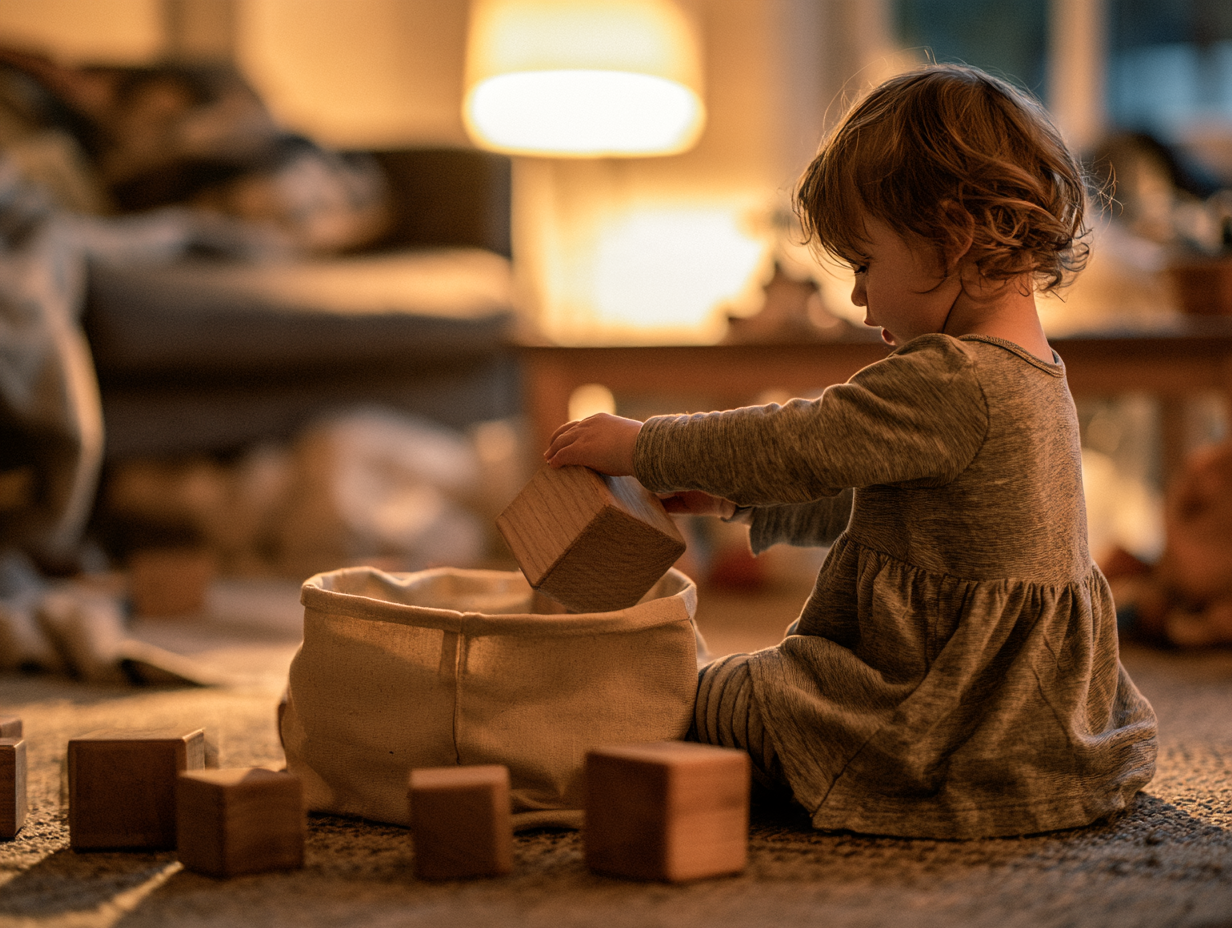
Before the bath, one kind of toy goes back into one bin—only the blocks, or only the books. Not the whole room. A single category is easier to see, easier to finish, and easier to repeat tomorrow.
Keep it safe
Keep these jobs away from hot surfaces, knives, and glass, and keep small objects that could be a choking risk out of reach. Stay close while your child works. If you later add a job with water, stay within arm’s reach and empty the container as soon as you finish.
When real life interrupts
Some days will go smoothly, and plenty will not. Here is how to keep the moment small enough to survive the most common interruptions.
When your toddler says no
A child who says no has not failed the routine. They may be tired, full, absorbed in something else, or simply enjoying the word. Offer once more, lightly, and then let it go: “Okay. I’ll put it in today.” Or make the job smaller: “Can you hand it to me?” Your child still saw the step happen.
When something spills
If a job involves anything that can spill, it will sometimes spill. Keep the amount small, keep a cloth nearby, and treat wiping up as one more part of the job: “Uh-oh. Here’s the cloth.” For early tries, choose unbreakable things.
When they want to do it alone but still need help
Sometimes a child insists on doing it alone, then gets frustrated when it does not work. Offer help as a choice rather than a rescue: “Want me to hold the basket?” Helping with one part—steadying, starting, or finishing the last bit—lets your child keep ownership of the rest. If frustration is building, these phrases for frustrated toddlers may help.
When you have only two minutes
On rushed days, shrink the moment instead of dropping it. Hand your child the napkin and hold the basket out to meet them. Do it together, your hand beside theirs. Or let them do only the very last step. A tiny version keeps the rhythm going without making you late.
Gentle reminder
Skipping a day does not undo anything. The moment will come around again tomorrow, and so will your child’s interest.
What progress can look like
Progress here is quiet and uneven. Rather than a sudden leap, you are more likely to notice small shifts:
- Recognizing the step. Your child glances at the basket when dinner ends, or says “napkin!” before you do.
- Attempting it. Reaching, carrying, trying—even when the napkin does not quite land.
- Asking for help. Bringing you the napkin or tugging the basket closer. Asking is part of independence, not the opposite of it.
- Returning to it. Doing the step again on another day, or trying it with a different object.
The CDC’s tips for parents of 2-year-olds suggest letting a child help get ready for meals by carrying items such as plastic cups or napkins to the table, and helping with simple chores like putting toys or laundry in a basket. Every child comes to these at their own pace, and this routine is not a test to pass. If you have questions about your child’s development, your pediatrician is a good person to ask.
When you want more ideas, our list of 40 ways to build toddler independence at home is a good place to browse—one at a time.
Choose one moment this week
Tonight or tomorrow, look for one ordinary moment when your child is already hovering near what you are doing. Give them one small part of it. Wait a little longer than feels natural. Help when help is needed. Then do the same thing the next day.
It will not look impressive, and it does not need to. A napkin in a basket is small. Being trusted with it, again and again, is not.
Independence grows when a toddler has a small, familiar part in the life of the home—with an adult nearby to help when needed.
Sources
- Centers for Disease Control and Prevention. Milestones by 2 Years (see “Parenting Tips”).
- American Academy of Pediatrics, HealthyChildren.org. Choking Prevention for Babies & Children.
- American Academy of Pediatrics, HealthyChildren.org. Drowning Prevention for Curious Toddlers.


