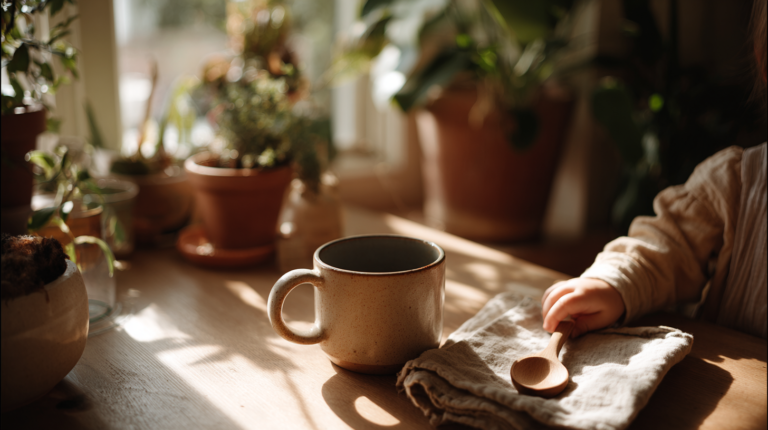
The Day I Stopped Doing Everything For Him
A quiet shift that changed more than I expected — and five simple practical life activities that helped my toddler build confidence one small responsibility at a time.
He wanted to pour his own water.
I said no.
Not because it was dangerous. Not because he couldn’t do it. Because I was tired and the idea of wiping the floor again felt like one task too many in a day already full of small tasks I hadn’t asked for.
So I poured it for him. He watched. And then he turned back to his cup and went quiet in a way I didn’t know how to read.
This happened often that season. The shoes. The jacket zip. The spoon he always wanted to hold himself. Each time I swooped in, I told myself I was being efficient. Getting us out the door, getting to the next thing.
It wasn’t until I watched him reach for a glass and then pull his hand back — like he already knew what I would say — that I understood something had shifted.
Maybe I wasn’t helping as much as I thought.
Children Don’t Want Our Perfection. They Want Participation.
I had been thinking of independence as something I would hand him when he was ready. My job was to do things correctly until he could. That felt like care.
But watching him pull his hand back from the glass, I started to wonder whether he was already ready — and it was me who wasn’t.
We started small. A small pitcher he could reach. His own cloth for the table. The laundry basket moved lower. I didn’t announce any of it. I just stopped moving so fast.
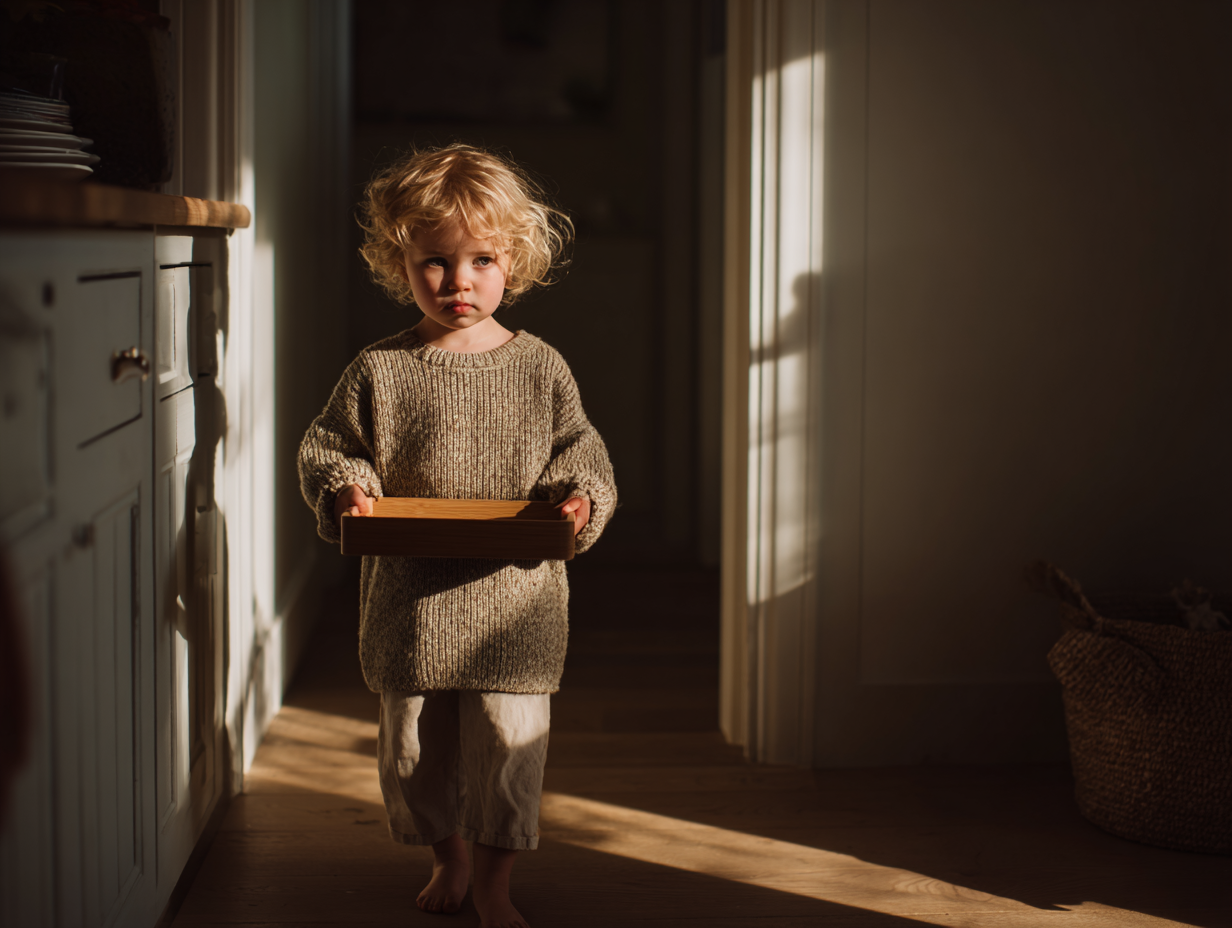
“The first time he carried his own plate to the sink, he looked proud in a way no toy had ever made him look.”
It wasn’t a loud pride. It was quiet and serious and entirely his. He did it with both hands, walked carefully, and when he put the plate down he looked at it for a moment before looking up at me. Not for praise. Just to share the fact of what he’d done.
I hadn’t known how much I had been standing between him and that feeling.
The Activities We Started With
None of these required anything we didn’t already have. That was part of the point. Practical life isn’t a category of play — it’s just life, moved down to a size a child can reach.
Watering a Plant
A small watering can — the kind that held about a cup of water. I showed him once how to tip it over the soil. Then I stepped back.
The first week the plant was either parched or swimming. He watered it when he noticed it, which was not on any schedule I would have chosen. I didn’t correct the frequency. I let the plant sort itself out.
What he was really practising- noticing something outside himself that needed tending
- carrying liquid carefully and adjusting grip under pressure
- having a small thing in the house that was his responsibility
The activity itself lasted less than two minutes. The concentration lasted much longer.
Carrying Laundry to the Basket
This one started by accident. I was gathering clothes from his room and he picked up a sock and followed me. I didn’t take it from him. He dropped it in with both hands, deliberately, then turned around to find more.
After that I moved the basket somewhere he could reach. When I changed his clothes I handed him the old ones instead of carrying them myself. Most days he took them. Some days he didn’t and I carried them without comment.
What he was really practising- contributing to the visible work of the home
- learning that ordinary tasks belong to everyone, not just adults
- the small satisfaction of putting something where it belongs
Wiping the Table After Meals
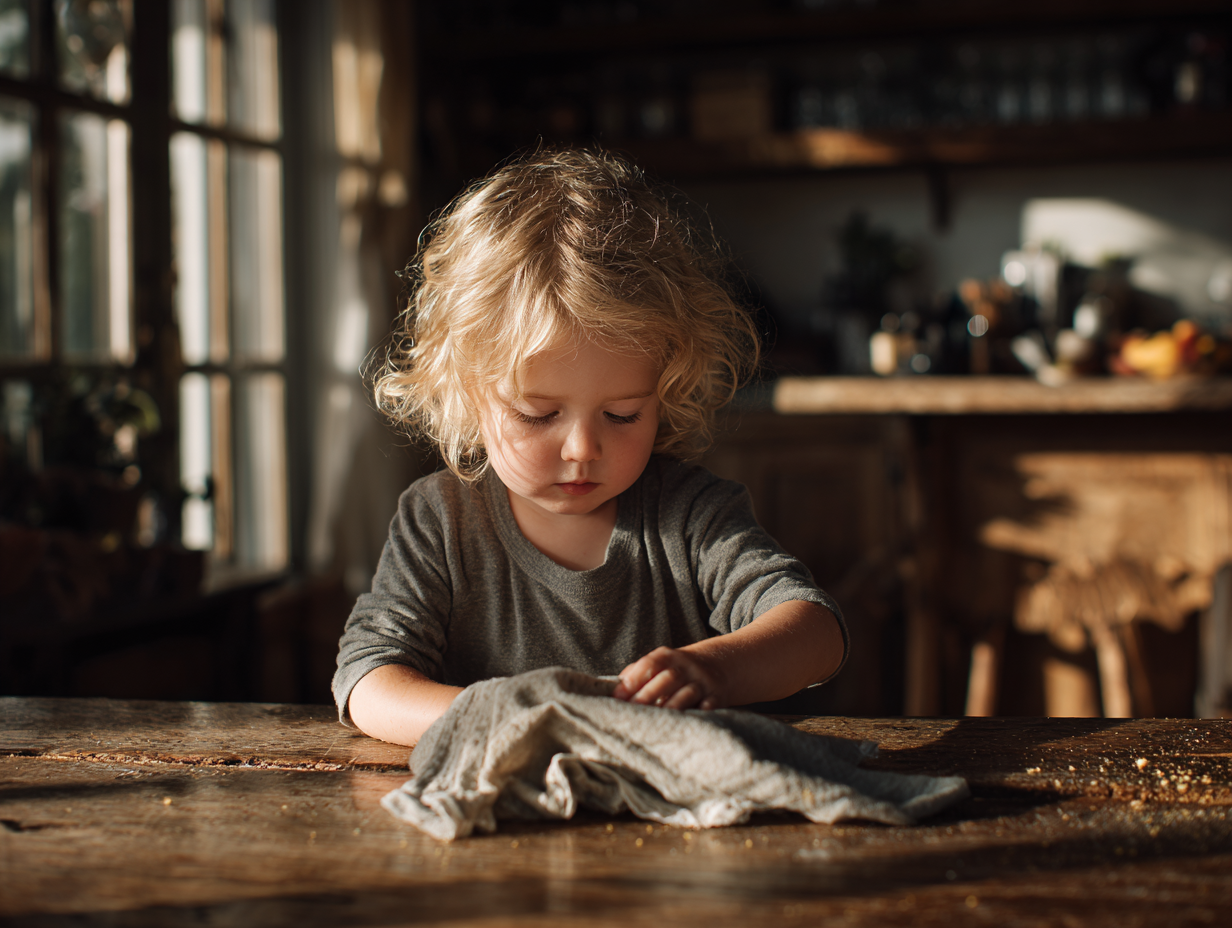
I cut an old dish cloth into squares and left one folded on the edge of the table. After lunch I handed it to him and said nothing else.
He wiped in circles. He missed large sections. The table was not cleaner after he finished. But he finished — and within a few weeks he was wiping before I asked, because he had come to understand that this is what happens after eating.
What he was really practising- sequencing — meals have a beginning and an end
- completing something with a visible effect on the space
- belonging to the rhythm of the home
He didn’t need praise for these things. He needed the chance to do them.

Pouring Water Into His Cup
A small ceramic pitcher — already in the cupboard — filled with a little water at breakfast. His cup sat next to it. He learned to pour slowly, tilting by the handle with both hands.
There was a lot of water on the table in the beginning. We kept a cloth nearby. He wiped it himself, so the two activities began to connect. He spilled less as the weeks passed — not because I corrected him, but because he was paying attention to his own hands.
What he was really practising- fine motor control under real conditions — not a toy, an actual task
- self-correction without adult direction
- getting his own needs met through his own action
Putting His Shoes on the Shelf
A low shelf near the door. I moved his shoes there and stopped putting them away for him. When we came in from outside I took off my shoes and said nothing. Most days he took his off too and placed them on the shelf — sometimes neatly, often not.
I left them however he left them. This was harder for me than it sounds. After a month he started straightening them without prompting, the way he had seen me straighten mine. Not every time. But sometimes.
What he was really practising- understanding that objects belong somewhere — and he was responsible for them
- imitating with genuine comprehension rather than performance
- the small dignity of caring for his own things
He didn’t learn these things because I taught them. He learned them because I stopped taking them away from him.
The Part Nobody Talks About
The first few weeks were slower. Much slower.
Water landed on the floor. Shoes ended up in strange places. The table was only half clean. There were mornings I handed him the watering can and had to actively resist taking it back.
But something else was happening. He stopped waiting for me. He started looking for ways to help — not because I asked, but because he had begun to see himself as someone who was part of how the house worked.
- I did it for him
- things were faster
- he watched
- he waited to be helped
- we did it together
- things were slower
- he participated
- he started without being asked
What Actually Changed
Not better behaviour. Not more obedience.
He moved through the house differently — with more ownership. He noticed things that needed tending. He looked for small ways to be useful without being asked to perform usefulness.
One afternoon I watched him notice a plant that looked dry. No one had asked him to water it. He simply remembered. He got the small can, filled it at the sink — slowly, because water — carried it over, watered the plant, and put the can back. He didn’t announce it. He didn’t look for a reaction.
“That was the moment I realized this wasn’t about plants. It was about becoming someone who notices.”
That is what practical life actually grows — not chores done correctly, but a child who is beginning to develop the quiet orientation of someone who pays attention to what is around them and moves toward what needs doing.
That comes from practice. And practice comes from being allowed to try.
Start With Just One
If this feels like a lot, don’t start with five activities.
Start with one. One watering can. One cloth. One small responsibility that already makes sense in your home.
That is enough. The second one will follow when the first one has settled. There is no schedule for this. There is only the next ordinary day.
Free Practical Life Cards For Ages 2–4
30 tiny responsibilities that help toddlers participate instead of waiting to be helped.
- builds independence and confidence through real participation
- no special materials — ordinary home objects only
- Montessori-inspired, designed for real homes not perfect ones
- suitable for ages 2–4, adaptable by child and day
Tiny responsibilities. Lifelong confidence.
You do not need a prepared environment or matching baskets or a morning that goes to plan.
You need a child who is allowed to try. Who spills occasionally and wipes it up. Who does things imperfectly and is not corrected into doing them perfectly. Who discovers, over ordinary weeks in an ordinary home, that they are capable of more than anyone was giving them credit for.
That is already a meaningful childhood. Nothing more is required.
Chichiberry · Practical Life Series