He Wasn’t Ignoring You: What Toddlers Learn Before They Ever Join In — Chichiberry Parenting
Chichiberry Parenting · Toddler Social Development
He Wasn’t Ignoring You.
What Toddlers Learn Before They Ever Join In.
On the quiet intelligence of watching — and why a child standing at the edge of a playground may be doing the most important work of the day.
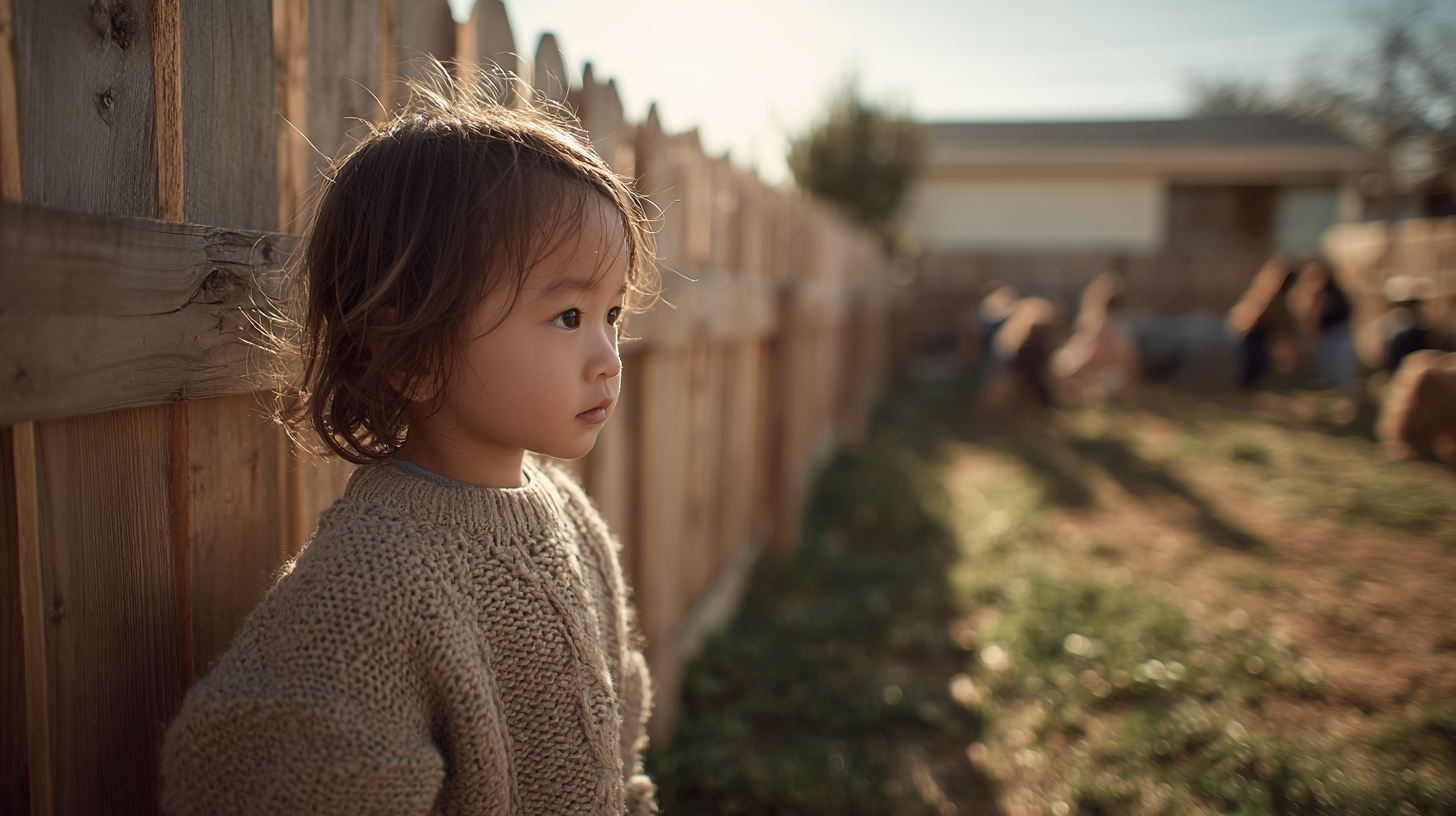
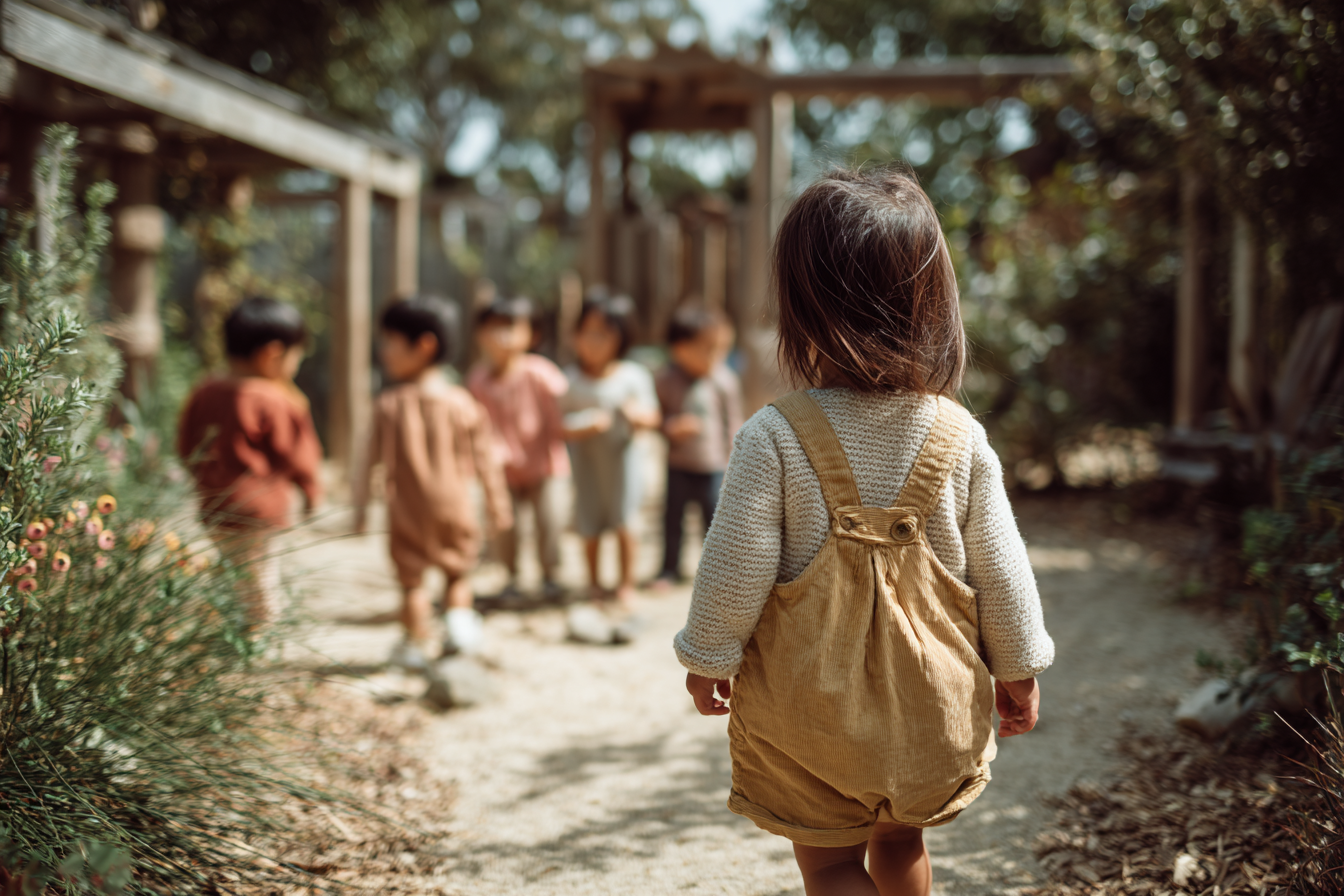
A child standing at the edge is not always hesitant. Sometimes he is studying the room before he enters it.
Chichiberry ParentingAges 12–36 monthsToddler Social DevelopmentReading time: 14–16 min
He stood at the edge of the playground for eleven minutes. You counted.
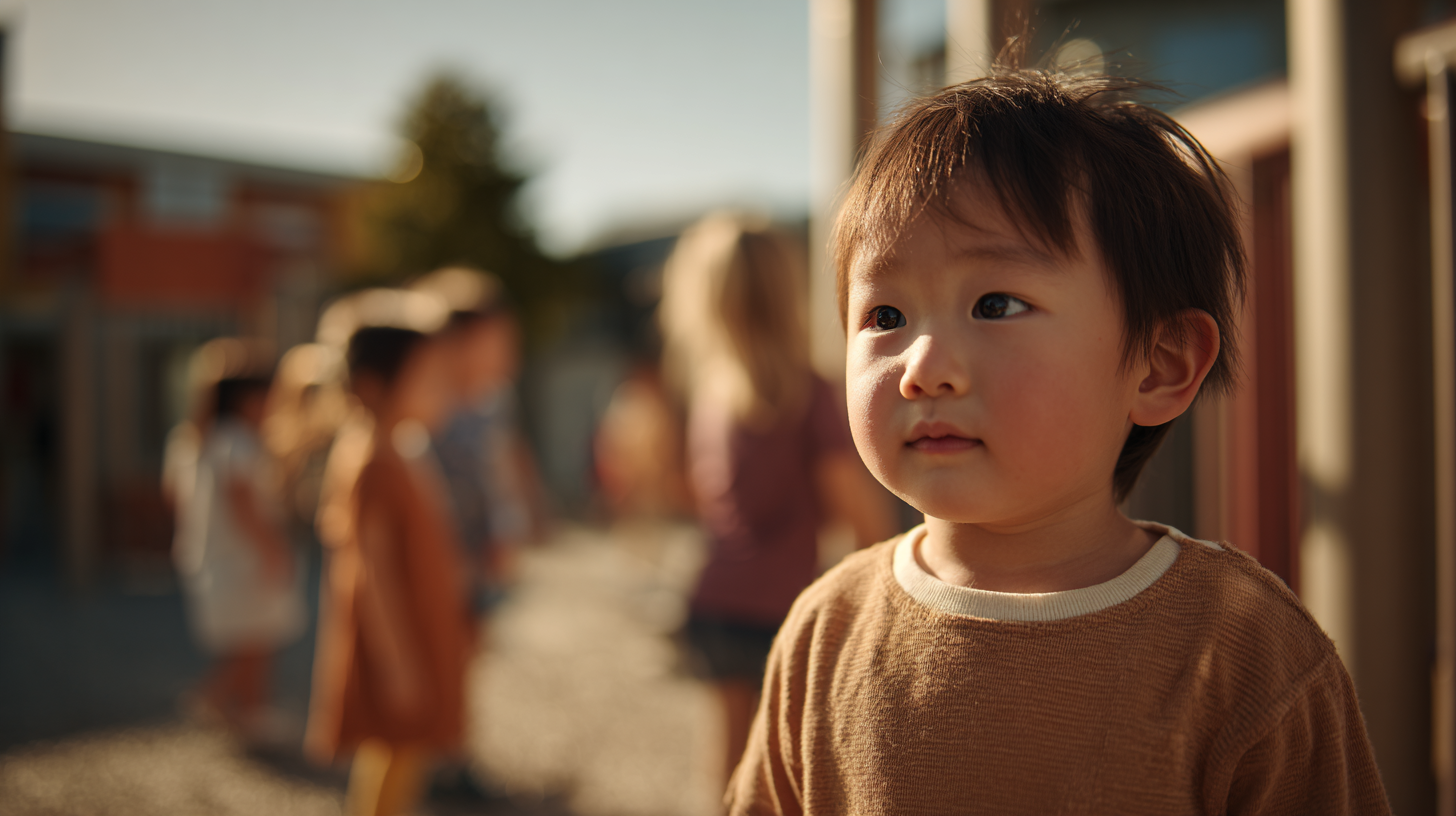
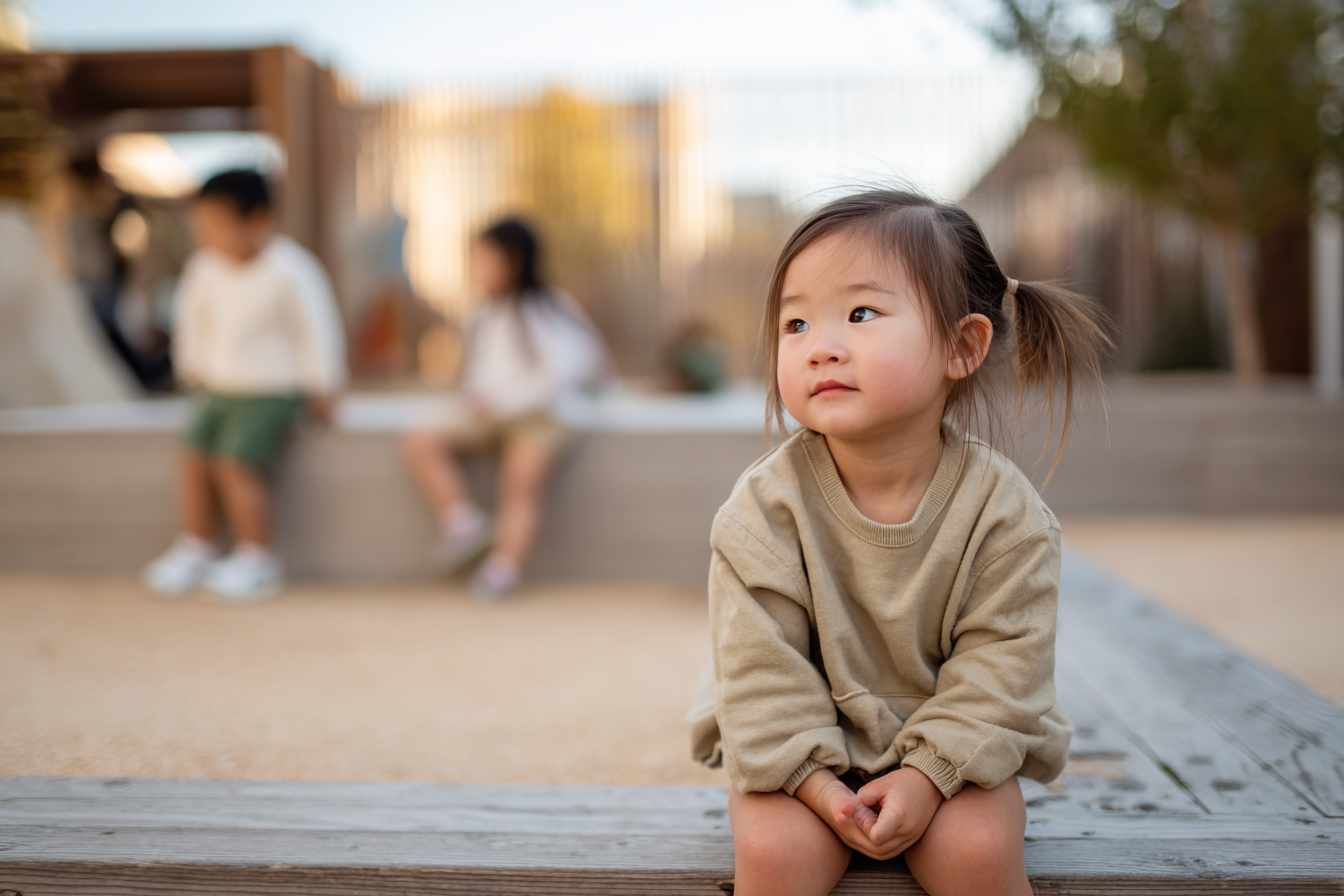
The other children were spinning on the roundabout, tumbling down the slide, negotiating who got to hold the bucket. There was noise and motion and laughter. And there he was — your child — standing at the boundary between the path and the mulch, perfectly still, watching all of it with the kind of focused attention you rarely see from him when you ask him to put on his shoes.
You felt it before you thought it. That low-grade parental anxiety. Should I push him in? Is he shy? Is something wrong? Is he missing out? Another parent nearby catches your eye and gives you a sympathetic half-smile, the kind that says don’t worry, mine used to do that too — which somehow made it feel both less alarming and more.
So you waited. You said, “Do you want to go play?” He didn’t answer. You tried again: “Look, that little girl has a bucket just like yours.” Nothing. His eyes didn’t move from the roundabout.
And then, after those eleven minutes — unhurried, unconcerned, entirely on his own schedule — he walked in. Went directly to the roundabout. Reached out a hand to one of the spinning bars and joined it with the ease of someone who had done it a hundred times.
He hadn’t been hesitating. He hadn’t been shy. He hadn’t been missing out.
He had been studying.
Save This Thought
“The child who watches is not the child who is absent. He is the child who has not yet finished learning.”
Chichiberry Parenting
We have a tendency, as the adults who love small children, to believe that learning begins when participation begins. That the real thing — the growing, the developing, the experiencing — starts when a child steps forward, speaks up, joins in. That the standing-and-watching is a prelude to the thing, not the thing itself.
This article is a gentle argument against that belief. It is also, if you needed it, permission to let your child stand at the edge a little longer.
◇
Before Participation Comes Observation
There is a gap between what a parent sees and what is actually happening. It is not a small gap. It is the gap between absence and presence, between waiting and working, between a child who needs help and a child who is doing exactly what development asks of him.
What looks like waiting may actually be careful observation, social reading, and quiet preparation.
What Parents See
Standing still at the edge
Watching other children play
Not joining in
Waiting quietly
Appearing to do nothing
Hesitating
Needing encouragement
What Is Actually Happening
Studying the movement patterns of others
Learning the social rules of the group
Preparing to participate with accuracy
Building the internal safety to enter
Processing information at high speed
Gathering the confidence to move
Completing the observation stage of learning
A Gentle Reminder
The child who watches quietly is not learning less. In many cases, he is learning more thoroughly — absorbing context, rhythm, and social nuance before committing to action. This is not avoidance. This is strategy.
The Invisible Learning Cycle
The whole article in ten seconds
↓
👁
Watch
Attend to what is happening
↓
🧠
Understand
Map the rules, rhythm, and risk
↓
🌿
Feel Safe
Build internal readiness to enter
↓
🌱
Build Confidence
Know what to do before doing it
↓
✦
Join In
Enter with ease and accuracy
◇
Why Watching Is a Developmental Skill
Think of the last time you walked into a room full of people you didn’t know. A work event, a social gathering, the first meeting at a new job. What did you do first?
You probably didn’t walk directly to the center of the room and start talking. You likely stood near the edge for a moment, read the room, found the rhythm of the conversations already happening, identified where you might fit, and then — when you felt sufficiently oriented — you moved in.
Adults do this instinctively. We observe before we act. We gather before we give. We watch before we join. And we give ourselves credit for this: we call it being thoughtful, being discerning, taking things in. We do not call ourselves shy. We do not call ourselves behind.
Toddlers do the same thing. The difference is that we tend to pathologize it when it happens in a small body with a short track record.
Observation is not a workaround for participation. It is a legitimate, developmentally appropriate mode of learning — one that developmental researchers have documented across cultures and age groups under the term observational learning. Children do not need to be doing to be learning. They need to be attending, and attending carefully takes work.
The pathway from watching to doing is not a shortcut. It is the actual road.
01
Stage One
Observation
02
Stage Two
Understanding
03
Stage Three
Confidence
04
Stage Four
Participation
What we often celebrate — the moment a child finally joins in — is actually the fourth stage of a process that began long before anyone noticed it was happening. The visible moment is the end of the story. The invisible moment — the watching, the taking in, the internal preparation — is where the story actually began.
◇
Not All Watching Looks the Same
Before we go deeper into what toddlers learn through observation, it’s worth pausing on something most parenting articles skip entirely: toddlers don’t all watch in the same way. The child at the edge of the playground is not doing a single, uniform thing called “observing.” They are doing one of several quite different things — and the distinction matters, both for understanding your child and for knowing how best to stand alongside them.
Here are the four most common observation styles. You may recognize your child in one of them immediately. You may find them in two or three, depending on the situation.
Observation Style 01
The Social Observer
Watches · People
This child is studying relationships. They are tracking who leads and who follows, how children enter and exit the group, what happens after a disagreement, what the unspoken rules of this particular group seem to be. Their eyes move between faces rather than objects. They are not watching what the children are doing so much as watching how the children are being together.
You might notice
Eyes tracking faces and expressions more than actions
Pausing when there’s a social shift — a conflict, a laugh, a new child arriving
Entering groups smoothly when they do join, because they’ve already read the room
Observation Style 02
The Movement Observer
Watches · Actions
This child is studying bodies in motion. They are tracking how the slide works from top to bottom, what a successful jump looks like versus one that ends in a stumble, how someone manages to balance on the beam without looking at their feet. This is physical intelligence being built from the outside in — learning how to do something by watching it done, repeatedly, until they can run the internal simulation themselves.
You might notice
Eyes fixed on specific physical movements rather than the whole scene
Head tilting slightly, as if measuring something
When they finally try a skill, they often get it right the first time
Observation Style 03
The Language Observer
Watches · Words
This child is listening. They are absorbing the actual scripts of play — the phrases that invite someone in, the words that assign a role, the tone of voice that signals pretend versus real, the language of negotiation when two children want different things. For a toddler who is still building their expressive vocabulary, watching other children talk is one of the richest language environments that exists.
You might notice
Eyes moving toward whoever is speaking, even from a distance
Lips moving slightly, as if practicing
Using play-entry phrases days after they were overheard — unprompted
Observation Style 04
The Practical Life Observer
Watches · Real Work
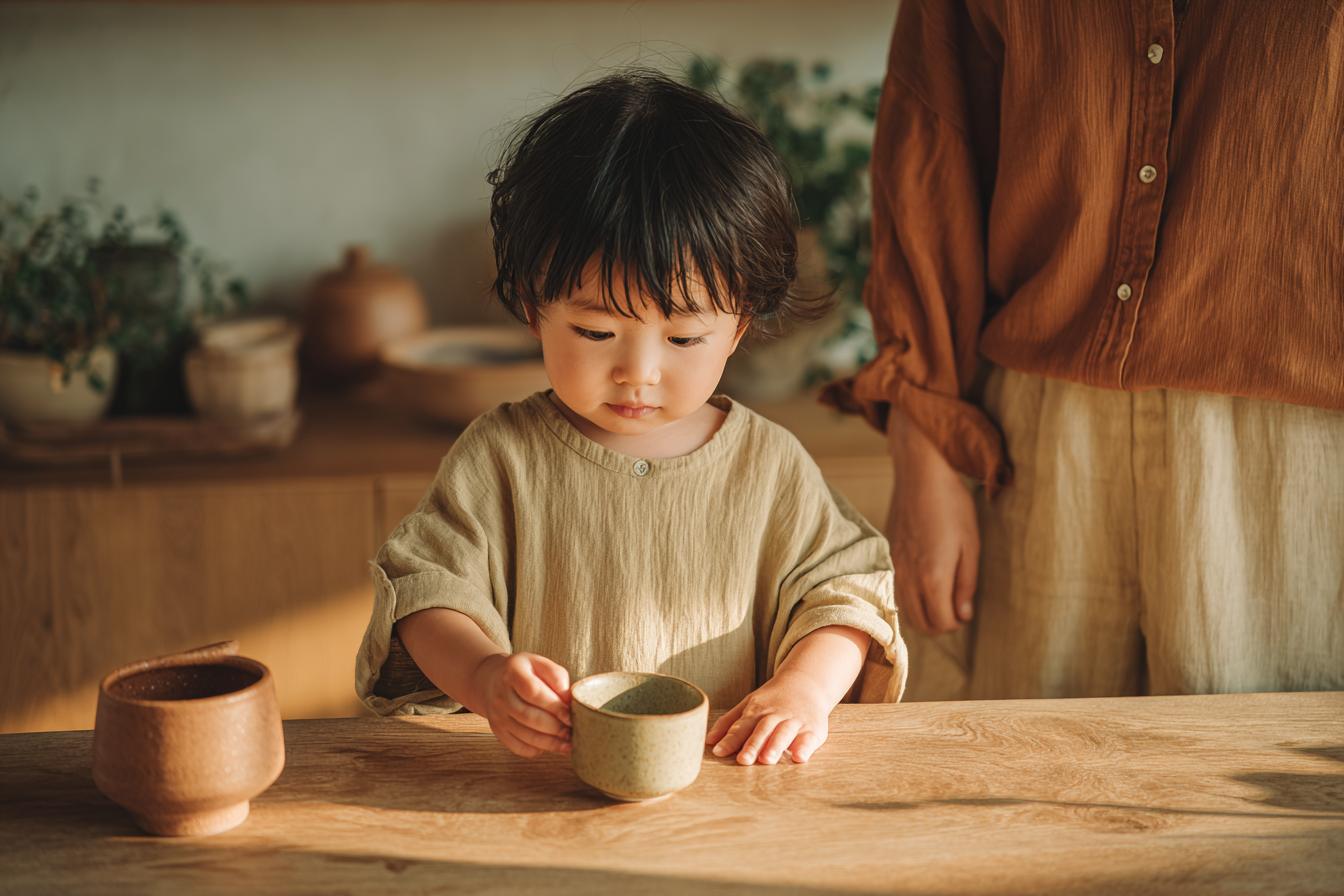
This child is not watching play — they are watching work. A parent cooking. An older sibling folding something. A neighbor sweeping a step. A market vendor arranging fruit. They are attending to real-world competence with a seriousness that can feel uncanny in a two-year-old. This is the child who wants to try what you just did the moment you put it down. The watching was the preparation. The doing is already underway before they move.
You might notice
Still, focused attention during adult practical tasks
Asking to “help” immediately after observing something done
Attempting complex tasks with surprising accuracy for their age
A Note on Observation Styles
Most toddlers move between these styles depending on the environment. A child can be a Social Observer at the playground and a Practical Life Observer in the kitchen. The style is not fixed — but noticing which one is active in a given moment can help you understand what your child is actually doing, and what they might do next.
◇
What Toddlers Learn While Watching
It would be easy to assume that a child watching other children is simply… watching. That it is passive. That the learning is thin. What follows is an attempt to show you how much is actually happening — and to make visible the invisible curriculum that plays out every time your child stands at the edge of something and pays close attention.
A · What They’re Learning
The Social Rules of the Group
There are rules to every group of playing children. Some are spoken (“you can’t have the red bucket”) and some are entirely unspoken — who initiates, who follows, when the group direction shifts, what counts as joining and what counts as intruding, how close you can stand before someone moves away.
Adult humans spend years learning these rules in new social environments. We call it “reading the room.” Toddlers are learning exactly this from the edge of the playground — they are watching the social grammar of a particular group before they attempt to speak it.
A child who walks directly in and grabs the bucket hasn’t misunderstood; they may simply not have had the chance to observe long enough. The child who waits and watches has built a map of the group before entering it. When they join, they often join more smoothly — because they’ve already done the social reading.
Cause and Effect
One of the most fundamental things a toddler brain is working on is understanding consequence — what happens after what. Watching other children play is a rich, unedited feed of exactly this.
B · What They See First
A child climbs to the top of the slide too fast and tumbles off the side
One child grabs a toy without asking; the other cries
A child offers a shovel; the other smiles and makes room
Two children run toward the swing at the same moment; one stops and waits
What They File Away
Climbing that way carries a risk I need to account for
Taking without asking tends to end the interaction
Offering something opens a door
Yielding can be what keeps a connection going
This is not abstract moral instruction. This is live-feed learning from a natural environment, processed by a brain that is purpose-built for exactly this kind of observational cause-and-effect mapping.
Language Patterns
A watching toddler is also a listening toddler. The language of play — the negotiations, the invitations, the repairs — is a living language lab that no curriculum could replicate.
C · A Typical Playground Exchange (As Heard from the Edge)
Child A
“You want to be the puppy?”
Child B
“I want to be the mama.”
Child A
“Okay you can be the mama and I’ll be the puppy and the puppy lives here.”
Child B
“And we need food. What do puppies eat?”
Child A
“Dog food. I’ll go find some.” (runs to the sand area)
Your child, standing nearby, has just heard: role assignment language, collaborative negotiation, imaginative transformation, and a question that opens rather than closes the play. All without a single flash card.
Many toddlers watch real work with deep attention before they try it themselves.
Movement Skills
Internal Observation Journal, Age 22 months
D · What They’re Filing
0:00
The big child grips the bar with two hands before swinging. Note: two hands first.
0:03
She jumped from the second step. The first step didn’t require a jump — the second one does. This is important.
0:07
When you go down the slide, you tuck your chin slightly at the bottom or your head bumps the frame. I’ve seen this three times now. Confirmed.
0:11
You can slow yourself on the roundabout by dragging one foot. Or you can let go and spin away. These are two different outcomes. Which one do I want?
0:11:30
Ready. Entering now.
The child who watched that roundabout for eleven minutes did not emerge from those eleven minutes unchanged. He emerged from them with a working mental model of how it moves, what it requires, and what is likely to happen when he joins it. That is not nothing. That is planning.
Emotional Safety
E · The Internal Readiness System
What a toddler is calibrating before joining
Is this environment safe?
Assessing
Do I understand what’s happening?
Building clarity
Is there a role for me?
Scanning
Do I know what to do when I arrive?
Almost there
Do I feel ready to move?
Ready
Emotional safety is not a luxury for sensitive children. It is the ground condition for learning for all children. A toddler who doesn’t feel emotionally safe enough to enter a new situation will not learn once they’re in it — they’ll be too busy managing the overwhelm. Watching from a safe distance is how a toddler builds the emotional readiness to participate without being overwhelmed when they get there.
Problem Solving
1
F · The Problem
Two children want the same spot on the bench. There is a conflict. One child is crying. One child is explaining something at high volume.
2
The Observation
Your child watches from nearby. Still. Eyes moving between the two children. Processing: what is the problem? What is each person trying to get? What are the possible outcomes here?
3
The Resolution
A third child suggests they take turns. The crying stops. The loud explanations stop. Both children sit down together. The problem dissolves.
4
What Was Filed
Your child has just watched a complete problem-solution arc: conflict → negotiation → resolution. No adult facilitation required. This is social problem-solving, observed in the wild, filed for future reference.
Community Norms
G · What This Group Does
Older children go first on the slide
You ask before you take something from the shared pile
When someone is upset, the play usually pauses
Dogs are greeted loudly; adults are greeted quietly
Running near the equipment is allowed; running on the ramp is not
What Your Child Learns
Every group has a social hierarchy, and it can be read from the outside
Resources in shared spaces have etiquette attached to them
Emotional events have social consequences
Context changes what is appropriate behavior
Invisible rules are everywhere; watching reveals them
Confidence
H · The Thing We Often Miss
Confidence is not built by pushing someone in.
Confidence is built when a child knows what to do before they have to do it. The child who has watched the roundabout for eleven minutes approaches it with a fundamentally different internal experience than the child who was pushed toward it before they were ready. One child has a mental map. One child is navigating without one. Watching is how toddlers build the map. And the map, once built, is confidence.
◇
A Founder Moment · Chichiberry Parenting
The Day I Almost Interrupted
I was sitting on a low wall at the edge of our local park, watching my daughter from a distance. She was twenty-two months old. There was a group of children near the water table — three of them, maybe four — all deeply involved in whatever elaborate system they had constructed for moving water from one container to another. She was standing about two metres away from them. Just standing. Arms loose at her sides. Eyes on the water.
She had been there for a while. Long enough that I had drunk most of my coffee. Long enough that the other parents at the park had glanced over once or twice, the way you do. Long enough that I started to feel it — that specific discomfort of watching your child appear to be left out of something, or unable to access something, while everyone else just continues without noticing.
I thought: I should go over. I should help her in. I should say something that gives her a way to join — “Can she play too?” or “Shall we go ask if you can have a turn?” I had already started to stand up.
What stopped me was not strategy. It was simply that she moved first. She took one step forward. Then another. She reached out a hand toward one of the cups on the edge of the table — not taking it, just touching it — and one of the other children, without looking up, slid it toward her. She picked it up. She began to pour.
She had been in that group for perhaps forty seconds before I finished standing.
I sat back down. And I stayed there, feeling something I couldn’t quite name — a mix of relief and something more unsettling. Because I had been about to interrupt a process that was, as far as I could tell, going perfectly. I had been about to insert myself into the precise moment between the watching and the joining — not because my daughter needed me to, but because I was uncomfortable with the watching.
My discomfort with her stillness was not evidence that something was wrong. It was evidence that I had not yet learned to read her process.
The next morning, she woke up and went directly to the kitchen sink and began filling and pouring from cups with a fluency and purposefulness she had not had the day before. She did not ask to be shown. She simply did it, with the ease of someone revisiting a skill rather than acquiring a new one.
I had watched her watch the water table. I had been present for every minute of the observation. But I had still almost missed what was happening — because I was looking for the doing, and the doing hadn’t started yet. I was looking for the visible thing. And the real thing was invisible, and quiet, and very nearly interrupted by a well-meaning mother who had finished her coffee too quickly.
That afternoon is why I started paying attention differently. Not to what my children were doing. To what they were attending to. The attending, it turns out, is most of the work. The doing is just what happens after the work is done.
◇
The Children We Often Misunderstand
There are children who are wired for observation as a primary mode of engaging with the world. They are not rare. They show up in every family, every playgroup, every classroom. They have different names in different frameworks, but they share something essential: they look, before they leap. And they are frequently misread.
The Watcher
What Adults Often Assume
Antisocial. Withdrawn. Not interested in other children. Possibly behind.
What May Actually Be Happening
This child processes social information externally — by watching — rather than internally or by diving in. They may be highly socially aware, more tuned-in to the group dynamics than the children who are already in it.
The Observer
What Adults Often Assume
Too cautious. Anxious. Needs to be pushed to grow. Missing out on the fun.
What May Actually Be Happening
This child has a strong information-gathering instinct before acting. They are not hesitating out of fear; they are completing a natural preparation phase. Their participation, when it comes, is often more targeted and successful precisely because of the observation period.
The Slow Warmer
What Adults Often Assume
Shy. Needs extra support. Perhaps socially immature. Takes too long.
What May Actually Be Happening
Slow-to-warm is a recognized temperamental style, not a developmental delay. These children genuinely need more time to orient to new environments and new groups. That time is not wasted time — it is how their nervous system does its job. Once warmed, they are often among the most connected and engaged participants in the group.
The Thoughtful Child
What Adults Often Assume
Overthinking. Lacks spontaneity. Needs to loosen up. Over-sensitive to risk.
What May Actually Be Happening
This child is genuinely engaged in careful planning before acting. They have a high need for internal coherence — for knowing that what they’re about to do makes sense — before committing to it. This trait, often frustrating in a two-year-old, is the same trait that makes for careful adults, precise thinkers, and people who rarely regret their decisions.
A Small But Important Distinction
Observation-before-participation is a style, not a signal. It does not indicate anxiety, social difficulty, or developmental lag on its own. It is a mode of engaging with the world that is just as valid as jumping straight in — and in many situations, considerably wiser.
◇
What Happens When We Push Too Soon
The phrases are so familiar they barely register as pressure.
“Go play. Join them. Don’t be shy. Just try. You’ll like it once you’re in.”
They are said with love, almost always. They come from genuine care — from a parent who wants their child to have a good time, to make a friend, to feel included in the ordinary joy of the playground. The intention is kind. But the effect, for the child in mid-observation, can be something quite different.
When we interrupt the observation phase — when we redirect, push, or pull a child away from their watching before it’s finished — we do not speed up the process. We more often restart it. The child who was almost ready to enter now has to reorient. They’ve lost the thread. They may feel exposed, or embarrassed, or simply confused about what just happened to the internal preparation they were building.
Worse, over time, consistent pressure can teach a child that their natural process is wrong. That the way they come to things — slowly, carefully, through watching — is something to be corrected rather than respected.
The Pressure Pathway
◉
Child is watching, building readiness
◉
“Go on, just go play.”
◉
Child enters before internal preparation is complete
◉
Feels uncertain, possibly overwhelmed
◉
Retreats, or struggles, or shuts down
◉
Parent interprets this as confirmation of a problem
◉
More pressure next time
The Trust Pathway
◉
Child is watching, building readiness
◉
“Take your time. I’m right here.”
◉
Observation continues until internal readiness is reached
◉
Child enters on their own timeline
◉
Feels oriented, capable, and ready
◉
Participation is successful; confidence grows
◉
Child learns: my process works. I can trust it.
A Gentle Reminder
The goal is not to get your child into the group faster. The goal is to get them into the group as themselves — ready, oriented, and trusting their own process. That is the version of participation that builds something lasting.
◇
How to Support an Observing Toddler
Supporting a watching child does not require strategy so much as it requires restraint. It asks the parent to hold their own anxiety quietly while the child does something that looks passive but isn’t. The practical piece is mostly about what you say — or more often, what you choose not to say.
Below are script pairs: the phrase that comes naturally versus a CCBR alternative that honors the observation process without adding pressure.
Instead of saying
“Go play with them.”
Try saying
“You’re watching. That’s okay. Take as long as you need.”
Instead of saying
“Don’t be shy.”
Try saying
“What are you noticing?”
Instead of saying
“You’ll like it once you try.”
Try saying
“You can watch first. You’ll know when you’re ready.”
Instead of saying
“Aren’t you going to join in?”
Try saying
“You’re learning about how it works.”
Instead of saying
“Look, they’re playing with a ball — go ask if you can join!”
Try saying
“I see you’re watching the ball game. I’ll be right here.”
Instead of saying
“Why are you just standing there?”
Try saying
“Sometimes you need a moment to watch before you’re ready. That makes sense.”
Instead of saying
“You need to make friends.”
Try saying
“I’m noticing you’re taking it all in. What have you seen?”
Instead of saying
“Hurry up, it’s almost time to go.”
Try saying
“We have a few more minutes. If you want to join in, now would be a good time.”
Instead of saying
“What’s wrong? Why aren’t you playing?”
Try saying
“Nothing has to happen. You can just be here.”
Instead of saying
“That other child just joined in fine.”
Try saying
“Everyone does this differently. Your way is okay.”
◇
Learning Happens Before Performance
We celebrate visible moments. The first climb. The first time they ran into the group without hesitating. The first conversation started from nothing. The first jump from the high step. We take a breath, feel that particular warmth in the chest, and know: something happened today.
And something did. But the something that happened today was the final chapter of a story that began earlier — perhaps much earlier. In the watching. In the noticing. In the ten-minute study session on a Tuesday afternoon that you did not see the value of, that you tried gently to end by saying “go on, they seem nice.”
Performance is visible. Learning is often invisible. And we have built an entire parenting culture that celebrates the visible — the milestones, the firsts, the moments of obvious engagement — while quietly devaluing the invisible, the observation, the orienting, the internal preparation that made the visible moment possible.
The joining often looks sudden. The learning that made it possible began much earlier.
The first climb was the end of the learning. The watching from the ground — that was the beginning. And the middle. And most of the work.
When your child stands at the edge of something and you feel that pull toward encouraging them in, try to hold, just for a moment, a different image: not a child who needs to be pushed, but a child who is already working. Whose mind is busy with the kind of learning that does not make noise. Who will arrive at the thing — the conversation, the roundabout, the group — when the internal process is complete. Not a moment before. And not really a moment after.
“Performance is visible. Learning is often invisible.
What looks like waiting is frequently the most important part.”
Chichiberry Parenting
You will not always know when the watching is done. Your child will. The signal is not something you’ll ask for or arrange. It will happen the way things do when they’re ready — a shift in the body, a direction of movement, and then they will simply walk in, as if they had been waiting for precisely this moment. Because they have been. And now it is here.
◇
Questions Parents Often Ask
Why do toddlers watch before participating?
Toddlers watch before participating because observation is how they build the internal readiness to join in. Before entering a new group or environment, young children need to understand the social rules, the physical demands, and the emotional texture of what’s happening. Watching gives them this. It is not hesitation — it is preparation. Participation that follows observation tends to be more confident and more successful than participation pushed before the watching was finished.
Is it normal for toddlers to observe other children before joining play?
Yes — completely normal and developmentally appropriate. Many toddlers, especially between 12 and 36 months, use observation as their primary way of learning about a new social environment before deciding to enter it. This behavior is well-documented in developmental research and is not a sign of shyness, anxiety, or social delay on its own.
How long should I let my toddler watch before encouraging them to join in?
There is no set time — and that is intentional. The observation period is complete when your child is internally ready, not when a clock suggests they should be. Some toddlers take two minutes; others take twenty. Wait until you notice a shift: a change in posture, a movement toward the group, a question with new curiosity in it. Gentle remarks (“Take your time,” “I’m right here”) support the process; countdown pressure tends to interrupt it.
Could my toddler’s tendency to watch rather than join be a sign of anxiety?
Observation-before-participation and anxiety can look similar, but they feel different in the child. A toddler in a genuine anxiety response often shows visible distress — clinging, crying, physical complaints before social situations. A toddler in an observation phase tends to look calm and interested — watching with attention, not recoiling. If watching is accompanied by significant distress, or if your child avoids familiar settings as well as new ones, mention it to your pediatrician. A calm, focused watcher who eventually joins is most likely in a natural preparation phase.
What are toddlers actually learning when they watch other children?
Quite a lot: social rules, cause and effect, language patterns, movement skills, emotional dynamics, problem-solving strategies, community norms, and internal confidence — often all at once. The watching is a rich, multi-layered learning experience. It simply doesn’t look like one from the outside.
My toddler watches but never joins. Should I be concerned?
If your toddler consistently watches but never joins across many settings and over a sustained period, it’s worth exploring — not because watching is a problem, but because the goal is for observation to eventually support participation. Consider: does your child join familiar settings more readily? Do they show genuine interest in what they’re watching? If they participate in some contexts, even different ones, there is likely no developmental concern. Your pediatrician can help distinguish temperament from something that might benefit from support.
How can I support my toddler’s observation skills at home?
Create opportunities to watch before doing. Let your child observe you do a new activity without expectation that they’ll join immediately. At the park, allow time to settle and observe before moving toward others. Name what they’re watching: “You’re looking at how she made that.” Normalize the process by not treating it as something to correct. The message you want your child to internalize is simple: your way of coming to things is okay. Watching first makes sense.
Free Download · Chichiberry Parenting
The Invisible Learning Journal
25 Signs Your Toddler Is Learning Even When Nothing Seems To Be Happening
Most parenting resources help you notice what your child is doing. This one helps you notice what they are becoming — while they are still, and quiet, and watching. It is a journal for the invisible phase of learning: the preparation that precedes every visible moment of growth.
✓
Signs of active observation — what to look for when your child is watching
✓
Signs of internal preparation — the quiet signals that joining is near
✓
Signs of confidence building — how readiness actually looks from the outside
✓
What to write down — prompts for your own noticing practice
✓
What not to worry about — the list every observing parent needs to read
✓
25 observable signs that learning is quietly, steadily underway
Printable journal pagesAges 12–36 monthsNo milestones. No assessment.
Children Remember Connection, Not Perfection — Chichiberry Opening The Lie What They Remember A Story The Invisible Research The Belief You Are Enough CCBR Belief Series · No. 001 Connection · Memory · Enough Children Remember Connection,Not Perfection Especially on the days you think you are not enough. 7 minute read It is 5:47 in…
Toddler Emotions & Boundaries What To Say When Your Toddler Says “No” All Day A gentle guide for the moments when every small request becomes a power struggle — and you still need to get through the day. Chichiberry Parenting · Toddler Emotions · 18–36 Months A small refusal moment before moving on — held…
What Toddlers Learn On The Walk Home (Without Any “Teaching”) — Chichiberry Parenting IMAGE 01: A toddler and a parent walking on a quiet neighbourhood pavement late afternoon, the toddler has stopped to crouch and examine something near the gutter — a leaf or a crack — while the parent waits patiently beside them. Documentary…
Toddler Development · Everyday Learning What Toddlers Are Learning In Your Ordinary Day A quiet guide to the language, movement, confidence, thinking, and connection toddlers build inside the day you are already living together. Chichiberry Parenting · Toddler Development · Everyday Learning An ordinary morning, already full of learning. The Ordinary Day Is Not Empty…
What Actually Builds A Toddler’s Brain — Chichiberry Parenting TIER B · PILLAR ARTICLE Target: 3,500–4,500 words Purpose: Pinterest traffic · Development authority · Parent belief shift · Email capture Cluster: Brain Development · Learning Through Play · Toddler Development · Daily Routines Chichiberry Parenting · Brain Development What Actually Builds A Toddler’s Brain It…
Daily Routines Mornings don’t usually need a better schedule. Most of the time, they just need a few calmer words inside the rush. What children are actually responding to During busy transitions, children borrow regulation from the adults around them. The words themselves matter less than the feeling underneath them. A rushed voice creates more…