
Learning Goals For 18–24 Months: What Learning Really Looks Like In Everyday Life
A calm, observation-based guide for parents who want to understand what is already happening inside ordinary moments.
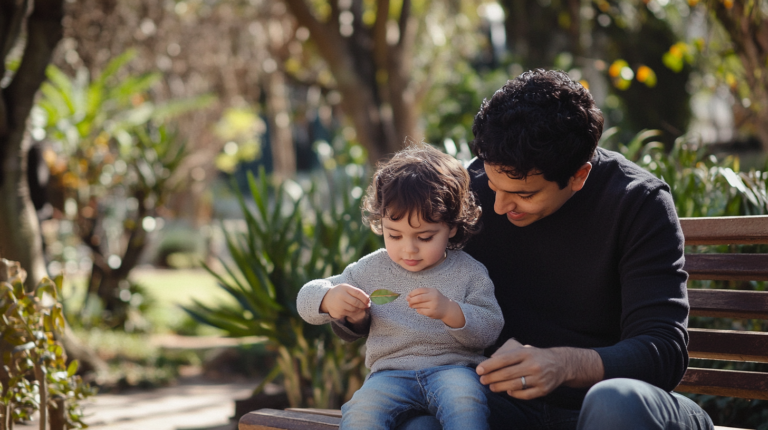
Nothing about the moment looks educational. And yet learning is happening everywhere.
Many parents imagine learning goals as things children can perform. A word spoken on cue. A colour named correctly. A shape matched to its hole. These moments feel satisfying because they are visible. Measurable. Easy to share.
But the science of early child development tells a quieter story. Between 18 and 24 months, the most significant learning is not taking place in structured activities or educational moments. It is taking place in the texture of daily life — in the carrying and pouring and watching and helping that most parents have learned to work around rather than witness.
This guide is an attempt to restore visibility to what is already happening. Not to add more to your day, but to see more clearly what is there.
Why 18–24 Months Matters So Much
There is no moment in early childhood quite like this one.
Between 18 and 24 months, several things happen at once — not sequentially, not according to a fixed schedule, but in an overlapping, sometimes overwhelming rush. The toddler who was just beginning to walk is now running. The child who had ten words may suddenly have forty. The baby who watched everything from a safe distance is now in the middle of everything, insisting on participation.
Mobility expands the entire world available to a toddler. Walking, climbing, and carrying are not just physical achievements — they are cognitive ones. A child who can walk to the shelf, choose an object, carry it to another room, and bring it back has just navigated space, made a decision, exercised a plan, and returned with results. This is the beginning of genuine intentionality, and it happens dozens of times before breakfast.
Language is growing — but rarely in the neat, linear way milestone charts suggest. Some children accumulate words slowly and steadily. Others plateau and then expand almost overnight. Many understand far more than they can say, which means the months of quiet observation that precede speech are not empty. They are full.
Symbolic thinking begins its emergence during this window. A toddler who pretends a spoon is a telephone, or who offers their teddy a pretend drink, is demonstrating something remarkable: the ability to let one thing stand in for another. This is not play in a trivial sense. It is the foundational cognitive act that eventually enables language, literacy, mathematics, and art.
Participation in family life becomes increasingly urgent and persistent. The toddler wants to help carry, pour, wipe, press, fold, sort. This is not a developmental inconvenience. It is the expression of one of the deepest human needs — to belong, to matter, to contribute. When we allow participation, however slow and imperfect, we are meeting a need that shapes identity for years to come.
And underneath all of this: a growing awareness of self. A child this age begins to experience and assert preferences, to recognise their own reflection, to understand that they are a separate person with a distinct perspective. The emotional intensity that often accompanies this period is inseparable from the developmental work being done.
This is not a preparation period for learning. It is learning — concentrated, physical, social, emotional, and deeply rooted in the ordinary texture of daily life.
Why Most Learning Goal Lists Miss The Point
The trouble with most milestone checklists is that they focus almost entirely on outcomes. Can your child do this? Does your child know that? Has your child reached this point by now?
Children, however, learn through processes. And the process is rarely the part that looks impressive from across the room.
A toddler who is pouring water is not making a mess. She is learning about gravity, volume, cause and effect, and her own ability to control something in the physical world. A toddler who lines things up is not being obsessive. He is practising categorisation, spatial reasoning, and the satisfaction of bringing order to his environment. A toddler who watches quietly while you peel vegetables is not being passive. She is absorbing information, preparing for participation, and building a mental model of how real life works.
The CCBR approach is grounded in three simple principles: observation before evaluation, connection before correction, participation before performance.
This is not a rejection of developmental knowledge. It is a reorientation of attention. When we stop looking for what children can perform and start noticing what they are genuinely trying to do, the whole landscape of learning shifts.
The goal of this guide is not to give you another checklist. It is to help you see what is already happening — so that you can support it more quietly, and worry about it less.
What Learning Really Looks Like Between 18 and 24 Months
Rather than a list of milestones, CCBR uses ten learning domains to describe the shape of development at this age. These are not separate skills to be ticked off. They overlap. They deepen each other. They often appear in the same ten-minute stretch of a morning.
- Carrying objects with clear intention
- Wanting to join in real tasks
- Noticing small details adults overlook
- Adding new words — sometimes suddenly
- Experimenting with pretend play
- Expressing preferences more strongly
- Returning to favourite activities
- Everything takes longer than it used to
- Routines require more negotiation
- The child is in everything, always
- Emotions arrive quickly and intensely
- Some things are fascinating; others, irrelevant
- Repetition feels endless
- Small moments suddenly seem important
Notice that none of these domains require a worksheet. None require a flashcard. None require a lesson. They emerge naturally from a child’s daily experience — when that experience includes real materials, unhurried time, and a trusted adult nearby.
Learning Domains Do Not Develop Separately
One of the most important things to understand about development at this age is that the domains above are not a checklist of independent skills. They are interconnected, constantly feeding into each other, and often active simultaneously.
| This domain | Naturally leads toward | Because |
|---|---|---|
| Explore | Observe Sort Count | Testing objects builds noticing, categorising, and early quantity sense together |
| Observe | Describe Connect | Watching carefully generates language and the impulse to share what has been noticed |
| Describe | Connect Express | Naming things is both a language act and a social one — it invites shared attention |
| Sort | Count Explore | Grouping by property naturally generates quantity comparisons and further investigation |
| Move | Explore Help | Physical confidence expands the range of investigation and enables real participation |
| Imagine | Express Connect | Symbolic play generates both emotional expression and the desire to share invented worlds |
| Connect | Express Help | Shared attention creates the conditions for communication and the drive to participate |

The 10 Learning Goals That Matter Most
Below, each domain is explored in more detail — with what it often looks like at home, what parents sometimes worry about, and what may actually be happening underneath.
What Parents Often Miss
Some of the most ordinary toddler behaviours carry the clearest developmental signals. Here are five things that frequently worry parents — and what may be behind them.

What Matters More Than Early Academics
There is no need to dismiss academic learning. Numbers and letters have their place. The question is not whether they matter — it is whether they belong here, yet.
Between 18 and 24 months, the things that build the most durable foundation for future learning are not the things that look most like school.
- Curiosity — the habit of finding things interesting, which no curriculum can replicate once it has been discouraged
- Observation — the capacity to slow down, look closely, and notice what is actually there
- Language — built through real conversation, shared attention, and being heard rather than tested
- Connection — the sense that learning happens with people, not just from materials
- Movement — the physical confidence and proprioceptive awareness that underlies nearly every other skill
- Participation — the deep satisfaction of contributing to real life, which builds identity and intrinsic motivation simultaneously
These are not consolation prizes for children who are not ready for academics. They are the conditions under which academic learning eventually becomes possible and meaningful. A child who is curious, observant, verbally engaged, physically confident, and socially connected will learn almost anything when the time comes.
Children learn best when learning remains connected to real life. Not real life tidied up and made educational — just real life, with an unhurried adult alongside.
How To Support Learning Without Turning Childhood Into A Curriculum
The good news is that almost everything you are already doing counts. The adjustments are small. The principle is consistent: participation over performance.
Below are ordinary activities that support all ten learning domains — with no preparation required.
None of these require planning. None require purchasing. All of them contain the conditions that learning between 18 and 24 months needs most: real objects, real purposes, and a real adult who is paying attention.
A Simple Weekly Observation Practice
You do not need a formal assessment system to understand what your child is learning. You need only a few minutes at the end of the week to notice what actually happened.
The following five questions are enough. Not all five will have answers every week. That is fine. The practice is the noticing, not the recording.
- What interested my child most this week?
- What did they repeat?
- What did they notice that I almost missed?
- What did they try to communicate?
- What did they keep coming back to?
Over time, patterns emerge. A child who returns to the same kind of sorting each week is telling you something about where their interest lives. A child who keeps pointing at the sky is showing you something about what captures their attention. These patterns are not diagnoses. They are invitations to follow.
And there is something else. A parent who observes without needing to intervene, correct, or enhance is modelling something powerful: that paying close attention to another person is itself a form of care. The child who is genuinely watched — not monitored, but noticed — experiences something that no curriculum can replicate.
Looking Ahead
After 24 months, several things naturally begin to emerge. Language expands — sometimes suddenly, as though a door has opened. Symbolic play becomes more elaborate. Questions begin: not just pointing but asking, with increasing persistence. The drive toward independence deepens, sometimes in ways that feel like confrontation.
The toddler who spent the previous six months collecting and carrying and sorting and watching is now ready to begin organising their experience into something more intentional. The work done between 18 and 24 months was not preparatory. It was foundational.
- Learning Goals For 12–18 Months
- Learning Goals For 24–36 Months
- Preschool Readiness: What Really Matters Before Age 3
Learning between 18 and 24 months rarely looks impressive from across the room.
It often looks like a small hand holding a pinecone.
Looking closer.
Turning it over.
Then doing it all again tomorrow.
And sometimes that is exactly what learning is. Nothing more is required.