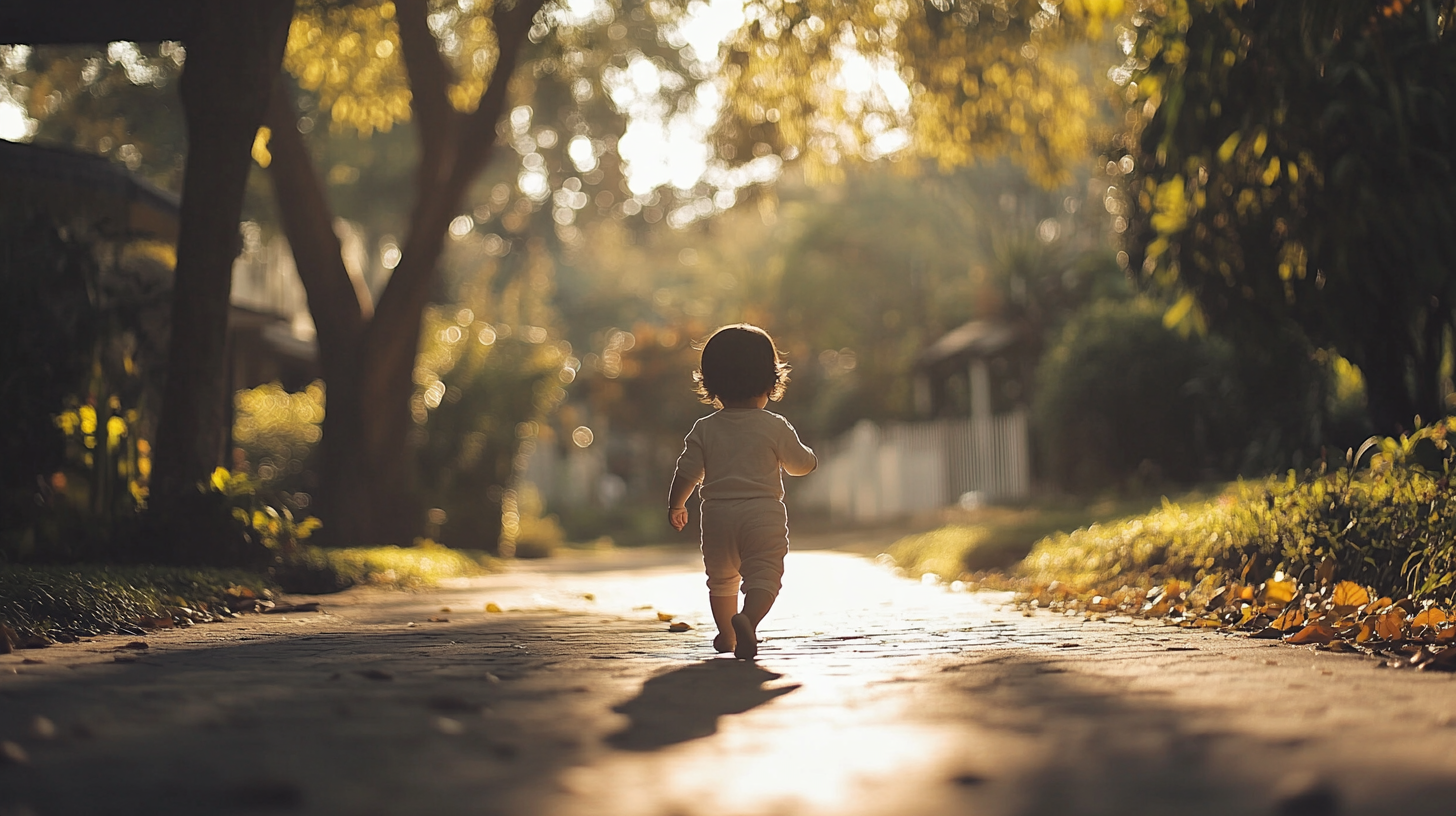
Toddler Outdoor Learning
40 Things Toddlers Learn On A Walk
The toddler walk may look slow, distracted, and inefficient — but something much deeper is happening.
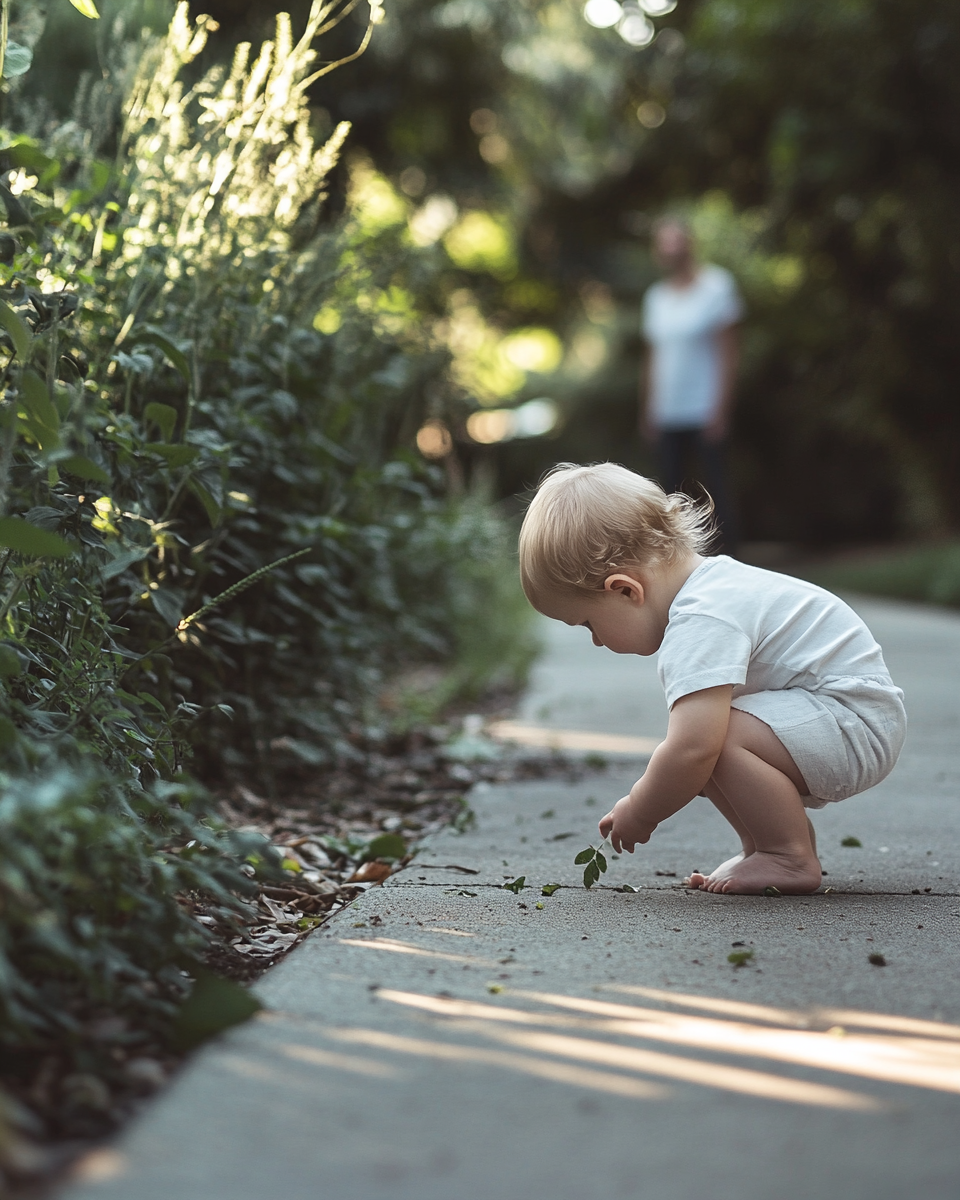
A toddler walk is rarely efficient. There is the stop at the crack in the sidewalk. The crouch beside an ant. The point at a bird nobody else noticed yet. The request to go back — again — to the same patch of grass. The long, unhurried minute spent studying a leaf that, to you, looks like every other leaf on the street.
If you are measuring the walk by how far you got, this can feel like nothing happened. If you are watching for what is actually being built in those pauses, something is happening almost every time your toddler stops.
This is not a failed walk because you never reached the corner store. It is not wasted time because your toddler stopped every few steps. For a toddler, the walk itself is often the classroom — no lesson plan required, no basket of materials, no worksheet at the end.
Part of why the pace can feel so hard to tolerate is that adults tend to walk with a destination already fixed in mind. A toddler is usually walking without one — or with a destination invented three seconds ago and abandoned just as quickly for something more interesting. Neither way of walking is wrong. They are simply two different ways of using the same stretch of sidewalk.
“The walk is not the thing before learning begins. The walk is the learning.”
The Toddler Walk: What’s Actually Happening
An ordinary walk asks a toddler’s whole body and brain to work at once. They are processing sound, light, texture, and movement, while also managing balance on ground that is never quite flat. They are tracking where you are, deciding where to look next, and half-remembering the last time they came this way. None of that shows up as an “activity.” It shows up as slowness.
- Sensory processing — sorting through sound, light, texture, and movement all at once
- Visual tracking and scanning the environment
- Listening for direction, distance, and rhythm
- Balance and coordination on uneven ground
- Body planning — figuring out how to move through the space ahead
- Spatial and descriptive language
- Memory of the route and what happened there before
- Prediction of what might come next
- Emotional safety in a big, open, unpredictable space
- Shared attention with you
None of this needs a label to be real, and it rarely happens in a tidy order. On any given walk, a toddler is usually working on several of these at once, in whatever sequence the world in front of them happens to offer. If you’re curious about the wider picture, what learning often looks like for 2 year olds touches on nearly every one of these areas — walks just happen to be an unusually rich place for them to show up together.
Gentle Reminder
A toddler does not walk through the world the way an adult does. They study it in pieces.
It can look like distraction. It is often closer to collecting — one small fact about the world gathered at a time. A toddler walking past a fence, a puddle, or a row of parked bicycles is already doing this work whether or not anyone names it for them. Naming it out loud simply makes the noticing easier to share.
Outdoor space and nature in particular tend to offer an unusually generous version of this kind of collecting; if you want the fuller picture of why that is, why nature is the original Montessori classroom goes deeper into it.
What Toddlers Learn With Their Eyes
Long before a toddler can explain what they’re looking at, their eyes are already doing careful, deliberate work.
- Notice what moves and what stays still
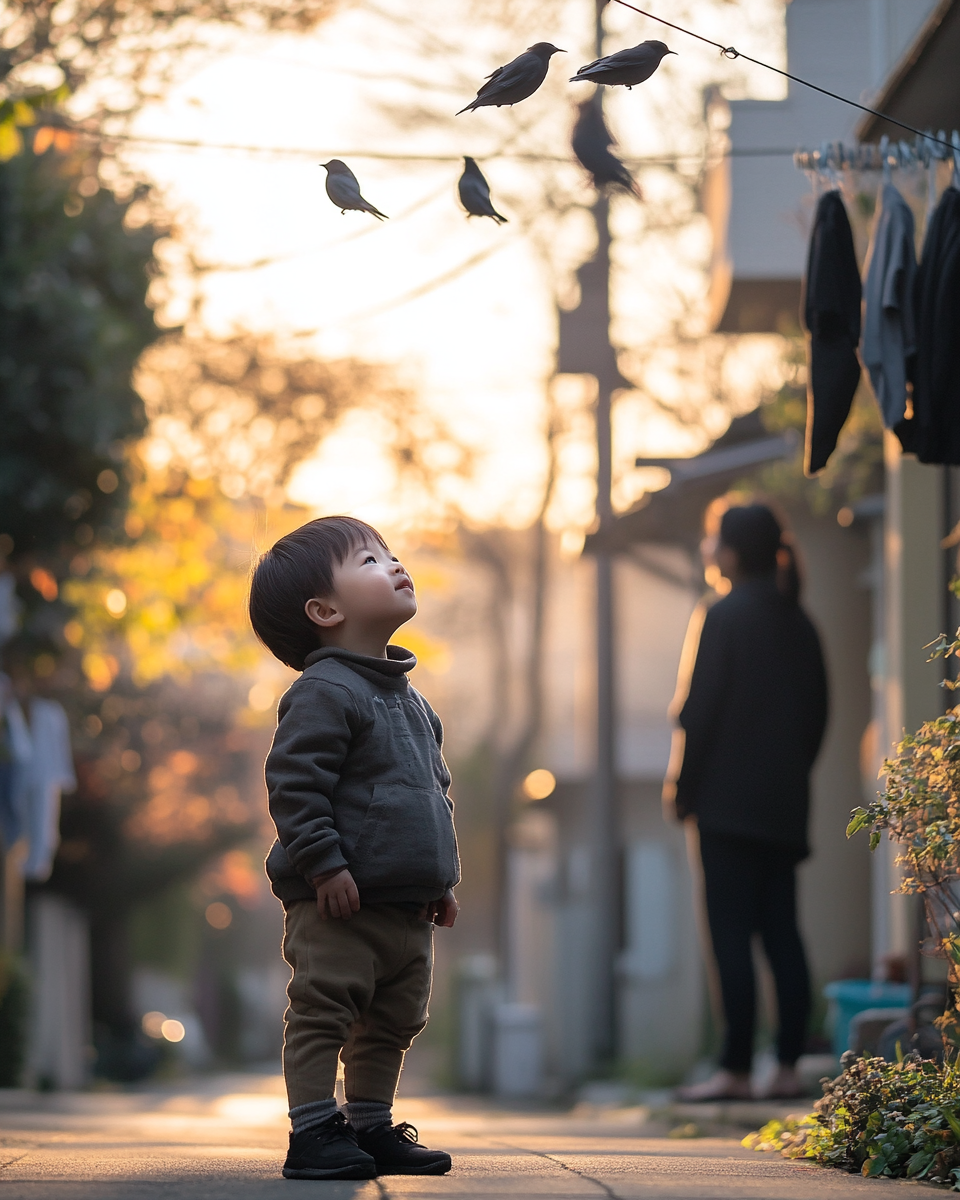
- Track a bird across the sky
- Find the same color twice
- See something small on the ground
- Look far, then close
This builds visual attention, comparison, tracking, scanning, noticing detail, and distance awareness — early observation skills that later support reading, math, and sustained attention, long before any of that is the point of the walk. Finding two flowers the same shade of yellow, or noticing there are three birds instead of one, is often where early counting quietly begins too; you can see more of that in nature counting for toddlers.
On a five-minute stretch of sidewalk, an adult might see nothing worth mentioning. A toddler might notice a trail in the dirt, three different leaf shapes, and the exact spot where the pavement changes color. None of it needs to be pointed out to count as learning — the noticing itself is doing the work.
What You Might Say
- “That bird is moving fast.”
- “You found another yellow flower.”
- “This one is close. That tree is far away.”
- “You noticed something tiny.”
What Toddlers Learn With Their Ears
Outdoor listening helps a toddler connect sound with its source — direction, rhythm, distance, and where to look next.
- Name the sound before seeing it
- Stop and just listen
- Notice quiet vs. loud
- Tell the difference between near and far
- Identify a repeating sound
A single walk can offer a dog barking, a scooter passing, birds overhead, wind moving through leaves, footsteps behind you, running water, distant construction, a gate opening and closing. A quiet stretch of street is information too — it tells a toddler something about pace, about safety, about what to expect next.
A toddler who stops mid-step because a scooter is approaching from somewhere out of sight is doing real listening work — locating a sound before confirming it with their eyes. That small pause, easy to rush past, is often the moment the ears are working hardest.
What You Might Say
- “I hear it too.”
- “That sound is far away.”
- “It got louder.”
- “Let’s listen for one more second.”
What Toddlers Learn With Their Hands
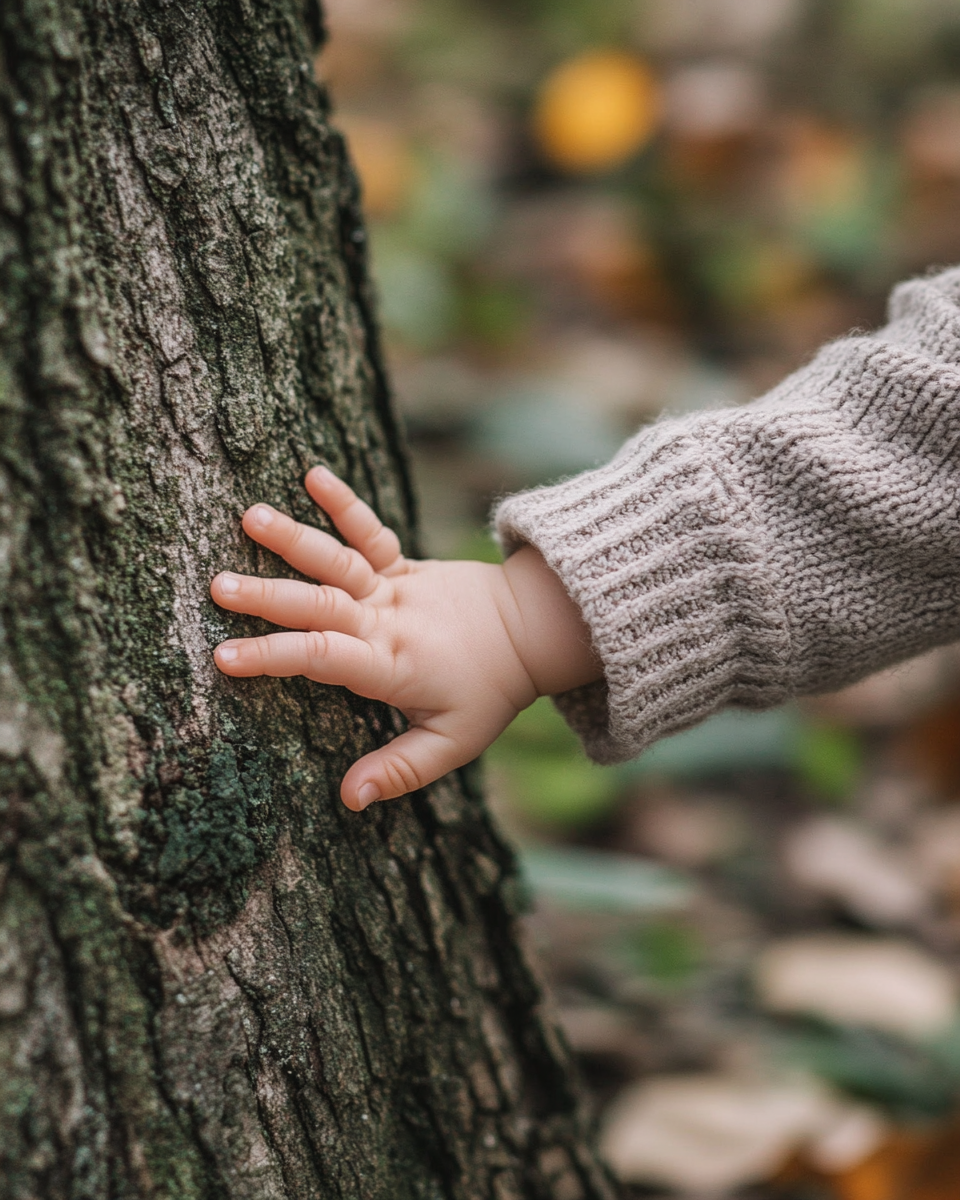
Hands teach texture, weight, temperature, pressure, and gentleness — often faster than words ever could.
- Feel rough and smooth bark
- Pick up something heavy
- Carry a large leaf or safe natural object
- Touch wet grass, then dry
- Hold a leaf gently
A few simple boundaries can go a long way without turning every walk into a safety lecture: “We can look,” “We can touch this,” “This stays on the ground,” “This one is not for hands.” A few clear, calm lines are usually enough — the goal is confidence, not caution around every leaf.
A stone that feels heavy in a toddler’s hand, and a leaf that tears the moment it’s gripped too hard, are both teaching the same underlying lesson: how much pressure a task actually needs. That is knowledge no explanation can really substitute for.
What You Might Say
- “That bark feels rough.”
- “This stone is heavy.”
- “You are holding it gently.”
- “Wet grass feels different from dry grass.”
What Toddlers Learn With Their Body
A walk builds gross motor skill, balance, coordination, motor planning, core strength, and the harder-to-name skill of pacing — starting, stopping, and adjusting to whatever the ground offers.
- Walk on uneven ground
- Step over a crack or root
- Crouch low to look at something
- Balance on a low edge
- Keep up with your pace
A playground is not the only place movement develops. Sidewalks, grass, slopes, curbs, garden paths, and quiet park trails all offer body learning that a flat playground surface simply cannot.
A sidewalk with a slight slope, a curb to step down from, a patch of grass that gives slightly underfoot — an adult barely registers any of it. For a toddler, each one is a small negotiation between balance, confidence, and effort, repeated dozens of times over a single walk.
This is also why a toddler’s walking pace often changes depending on the surface, even when nothing else about the walk has changed. Slower over gravel, steadier on smooth pavement, more careful near an edge — the body is constantly recalculating, even when it looks like nothing is happening at all.
What You Might Say
- “You stepped over it.”
- “That ground is bumpy.”
- “You slowed down.”
- “You found your balance.”
What Toddlers Learn With Language
Walks naturally support language because language is attached to real things happening in real time, in front of both of you, right now.
- Point, and you name it
- Repeat a new word once
- Use “up there” or “over there”
- Say “again” to something they liked
- Name a color without prompting
This is joint attention, naming, repeating, spatial words, descriptive words, verbs, and emotional words, all folded into one unhurried block of time. “Again” is communication too — a request to revisit something that mattered. The same everyday-moments-build-language idea applies just as well outdoors as it does at the kitchen table or the bookshelf.
What You Might Say
- “You see the truck.”
- “Up there — the bird is on the wire.”
- “You want to see it again.”
- “That was loud.”
- “The leaf is stuck.”
A toddler who says “truck” while pointing isn’t only labeling an object. They’re checking whether you noticed it too, and whether the word they’re trying out actually lands. That small exchange, repeated across a walk, is language practiced in its most natural form.
Repetition is doing more work here than it looks like too. A toddler who asks to see the same fountain, the same dog, or the same gate “again” on three separate walks isn’t stuck — they’re consolidating. The tenth look at something familiar often teaches as much as the first.
The goal is not to turn the walk into a vocabulary lesson. The goal is to give words to what already has their attention.
What Toddlers Learn With Thinking
Underneath the slow pace, a toddler is often running through early executive function: memory, planning, prediction, problem-solving, comparison, and flexible thinking.
- Decide which way to go
- Remember where to turn
- Predict what’s around the corner
- Notice something changed from last time
- Solve where to step next
This shows up in small, ordinary ways: choosing left or right at the corner, remembering that the bakery is just past the next turn, noticing that yesterday’s puddle has disappeared, predicting the dog might be behind the gate again, or figuring out how to step around a patch of mud without help.
None of this looks like problem-solving from the outside. It looks like a toddler standing still at a corner for a few extra seconds, or backtracking slightly to step around a puddle they remembered from last time. The pause is the thinking.
What You Might Say
- “You remembered this way.”
- “What changed today?”
- “You found a dry place to step.”
- “You thought the dog might be there.”
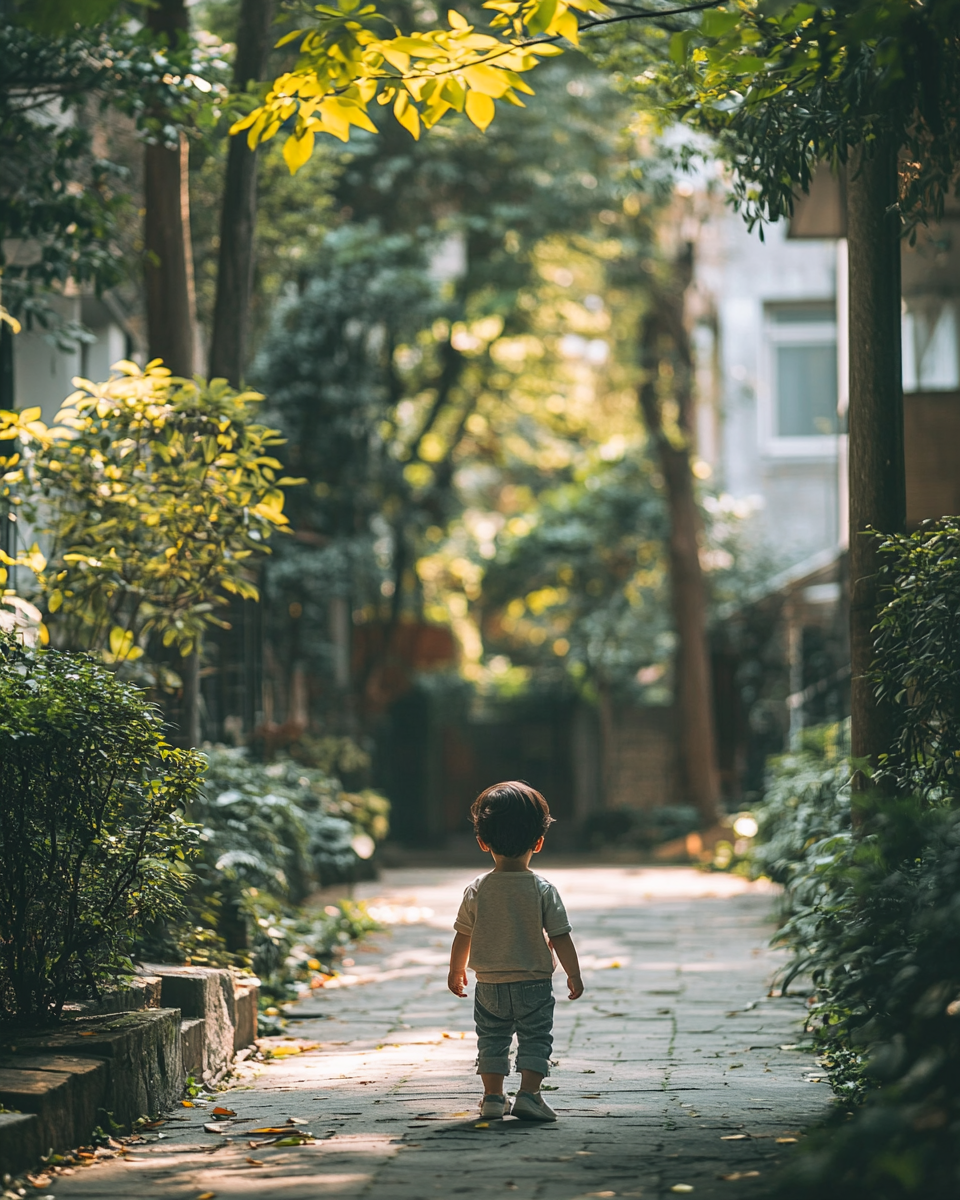
What Toddlers Learn About The World
Walks help a toddler build a slow, layered understanding of the physical and social world — weather, seasons, time, animals, vehicles, people at work, neighbors, public space, gardens, quiet rules, and the way things change over days and weeks.
- Big things go past slowly
- Puddles shrink in the sun
- Dogs on leads vs. dogs free
- People do different things
- Gardens are all different
A truck passing feels enormous and slow in a way a toddler wants to watch to the end. A puddle that was ankle-deep on Monday is a damp patch by Thursday. One dog trots calmly on a lead while another runs loose in a yard, and a toddler notices the difference before anyone explains it. This garden has red flowers. That one has tall grass and nothing else. None of it is taught, exactly — it is simply available to anyone walking slowly enough to see it.
A toddler who watches a delivery truck reverse into a driveway, or notices that the same gate is open today when it was shut yesterday, is quietly building a working model of how the world around them operates — one small, unremarkable observation at a time.
What You Might Say
- “The puddle is smaller today.”
- “That dog is on a leash.”
- “The gardener is watering the plants.”
- “This garden has red flowers. That one has tall grass.”
What Toddlers Learn With You
This is the part of the walk that is easiest to miss and probably matters most.
- You’ll wait when they stop
- Something small is worth noticing
- Walking together is enough
- They can show you things
- The world is safe to explore
A walk builds relationship — trust, shared attention, emotional safety, and confidence — along with the quiet, foundational feeling that a child’s own noticing matters to someone else. This is also, often, where a parent’s own patience is quietly being stretched — and where the walk is teaching something to both of you at once.
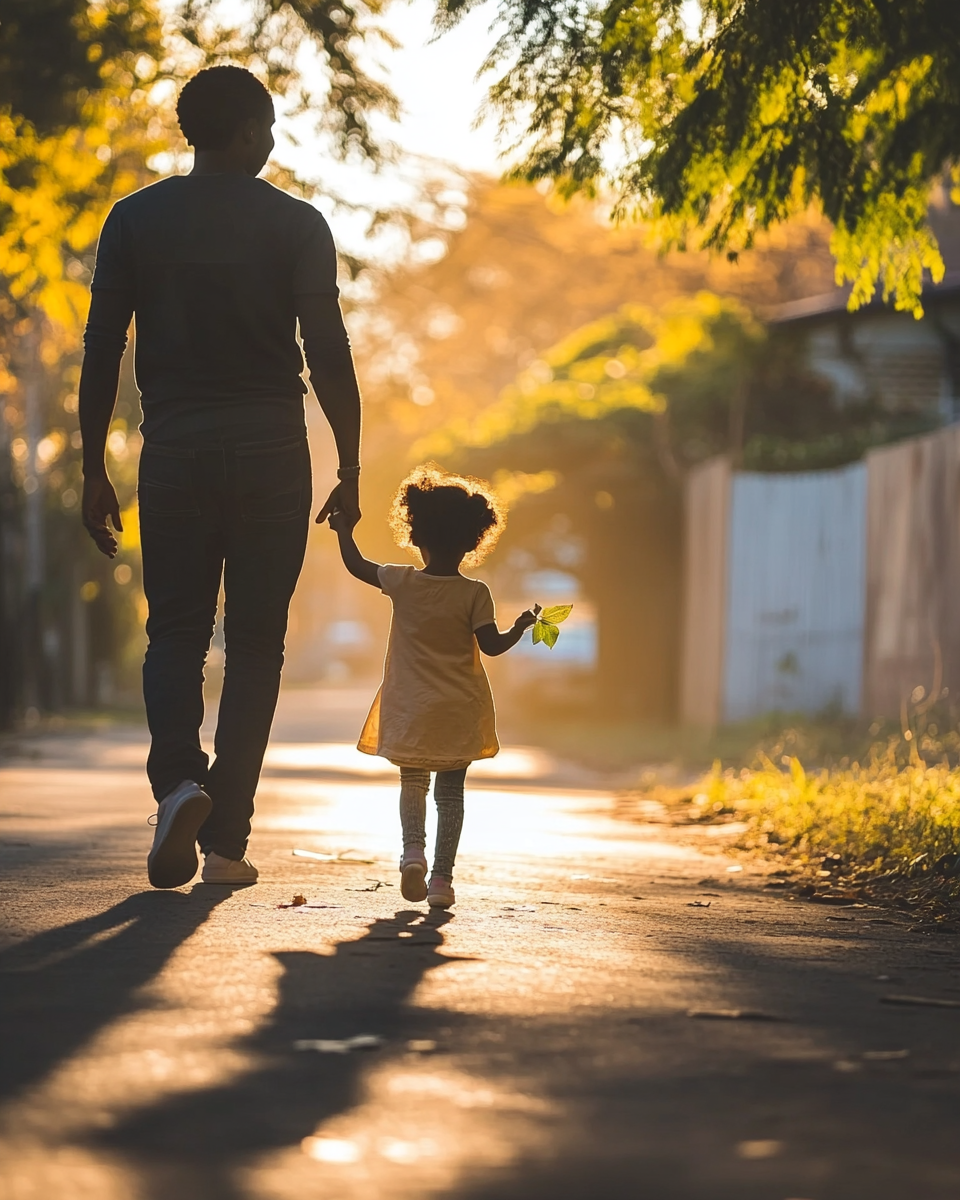
Closing / With You Image
Alt text: “A parent and toddler walking slowly together on a quiet path in warm late-afternoon light, the toddler slightly leading the way.”
How To Make A Toddler Walk Richer Without Turning It Into A Lesson
None of this needs a plan. A few small habits are usually enough to help a walk go a little deeper, without asking it to become an activity. Most of it isn’t about adding more to the walk at all. It’s about resisting the urge to speed it up, tidy it up, or turn it into something more obviously productive.
- Follow one detour
- Pause before correcting
- Name what they notice
- Ask fewer questions
- Use real words
- Let them carry one safe object
- Revisit the same route
- Notice changes over time
- Allow some repetition
- Keep expectations low
- Stop before everyone is exhausted
A few of these matter more than they might seem. Revisiting the same route lets a toddler notice change over time — the kind of comparison that quietly builds thinking skills without any prompting from you. Asking fewer questions leaves room for your toddler to offer their own observation first, rather than performing an answer for someone else.
If you like the idea of gently tracking what you both notice over time, a simple nature observation journal can be a quiet way to do that, without turning your walks into homework.
Try This On Your Next Walk
- Name one sound.
- Notice one texture.
- Compare one near/far thing.
- Let your toddler choose one turn.
- Say one sentence about what changed.
A Simple Walk Is Enough
You do not need a prepared nature activity, a basket, a printable, or a lesson plan for every outdoor moment. Those can be lovely, but the walk itself already holds so much.
The slow pace counts. The stopping counts. The repeated route counts. The tiny thing on the ground counts. None of it needs to be turned into anything more than what it already is.
The walk counts — even when it is slow. Especially when it is slow.
In one walk, a toddler might be working on all of this
- With their eyes
- With their ears
- With their hands
- With their body
- With language
- With thinking
- About the world
- With you
And on some days, the walk will still feel messy. Someone will get tired. Someone will want to be carried. Someone will stop in the exact place you were hoping to pass quickly. That does not undo the value of the walk. Ordinary learning rarely looks polished while it is happening.
A Few Questions Parents Ask
A few of the questions that come up most often about ordinary toddler walks.
Are walks really learning for toddlers?
Yes — in an everyday, unforced sense rather than a formal one. An ordinary walk touches sensory processing, language, movement, thinking, and connection all at once. It doesn’t need to be framed as a lesson for the learning to be real, and it doesn’t need a special outing to count.
How long should a toddler walk be?
There’s no fixed number that fits every child or every day. Some walks are ten slow minutes around the block; others stretch much longer. What matters more than the length is whether there’s room for your toddler to stop, notice, and set some of the pace — a short walk with that room often does more than a long one without it.
What if my toddler keeps stopping?
Stopping is often the point, not a problem to fix. Each pause is usually your toddler noticing, processing, or deciding something. If time allows, following a few of those stops — rather than moving past them — is often where the richest learning happens. If time genuinely doesn’t allow it, a gentle heads-up before you leave (“we can look at one thing on the way”) can help.
Should I ask questions during a walk?
A few are fine, but naming tends to work better than quizzing. Instead of “what color is that?”, try “that flower is yellow.” Naming what already has their attention usually keeps the walk feeling like connection rather than a test.
What can I say during a toddler walk?
Simple, real-time language works best — naming what you both see, hear, or feel, as it happens. “That bird is moving fast.” “This one is heavy.” “The puddle is smaller today.” You don’t need a script beyond describing what’s actually in front of you.
Want to keep noticing with your toddler?
A simple observation journal can help you turn ordinary walks into small moments of attention — without turning them into lessons.
Get the free nature observation journal