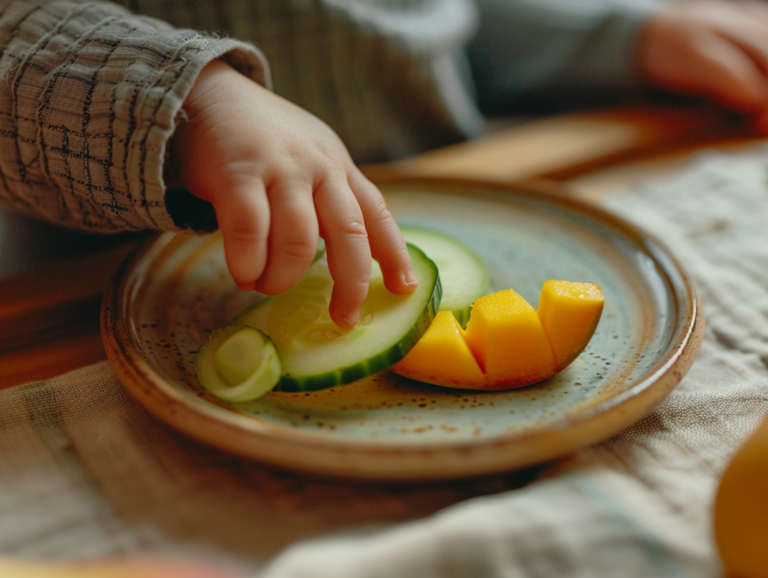
Most toddlers learn language long before they speak clearly. Here’s what healthy language growth actually looks like in everyday life — long before the words arrive.
12 minute readAges 12–36 monthsObservation-Based
Long before words come clearly, language is already taking shape.
At every birthday party, every pediatrician visit, every conversation with another parent at the park, the question came in the same form. “How many words does he have?”
She started keeping a mental tally without meaning to. Three words. Then five. A plateau that lasted what felt like forever, though it was really only a few weeks. Other toddlers his age were stringing together short sentences. Hers pointed at the refrigerator and said nothing at all.
A Real Moment
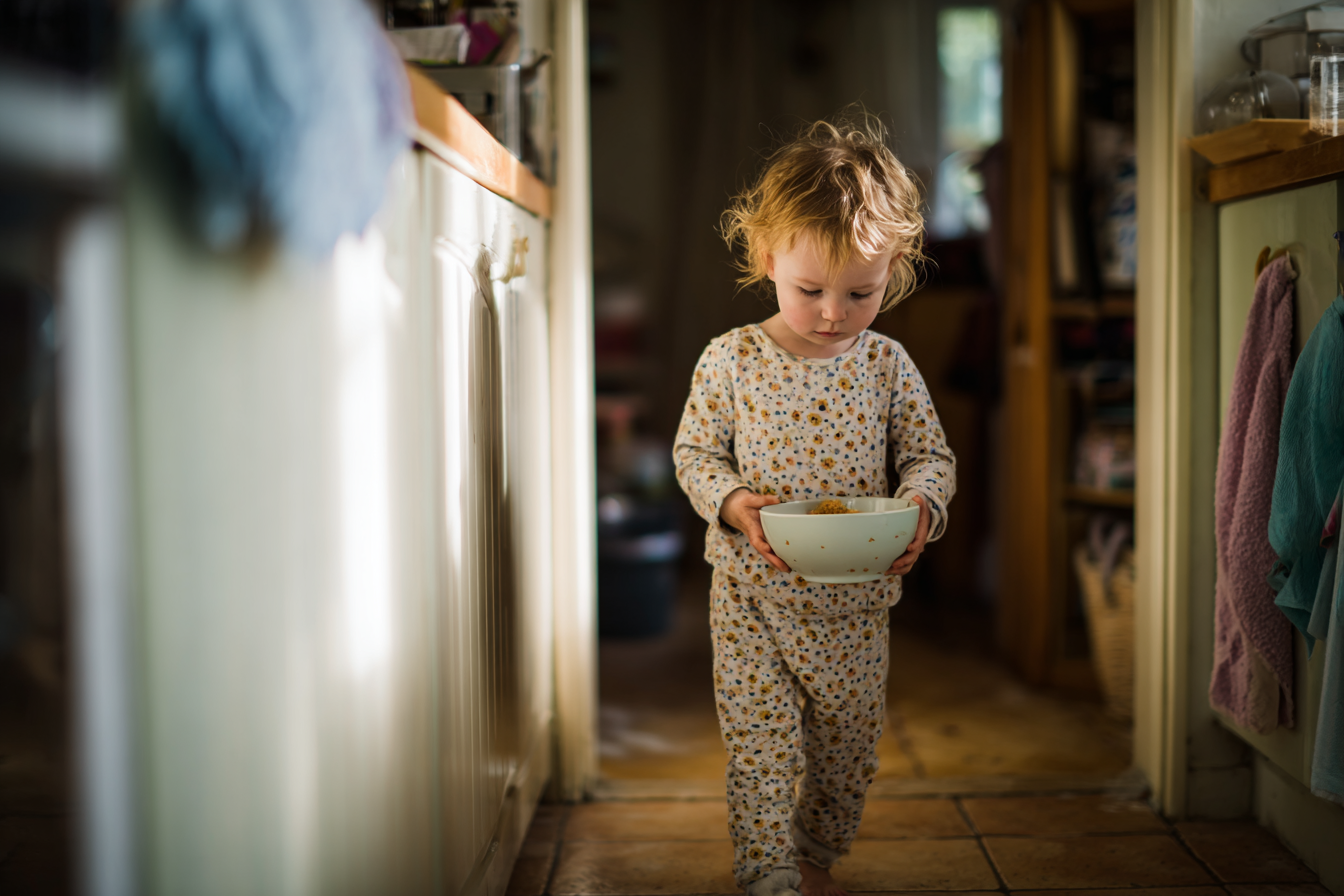
One afternoon, she asked him — almost as a test, almost without expecting anything — to bring his shoes from the hallway. He turned, walked to the hallway, found the shoes among a pile of other things, and carried them back to her.
He had never said the word “shoes.” Not once. But he knew exactly what it meant, where to find them, and what she wanted him to do with them.
Nobody at the pediatrician’s office had asked her that question. Everyone wanted to know how much he could say. Nobody asked how much he already understood.
This is the gap that worries so many parents — and the gap that almost nobody explains well. A toddler’s spoken vocabulary is the part of language development that is easiest to count, which is exactly why it becomes the part everyone asks about. But it is only one piece of something much larger, and very often, it is the last piece to arrive.
If you’ve found yourself counting words, comparing your toddler to a cousin or a classmate, or quietly wondering whether something is wrong — this article is for you. Not to tell you to stop noticing. Noticing is exactly the right instinct. But to widen what you’re noticing, so the picture you’re building is closer to the truth of what’s actually happening inside your child.
A Necessary Distinction
Speech Is Not The Same Thing As Language
Most language development happens somewhere parents aren’t looking — because they’ve been told to look at the mouth, when the real activity is happening in the mind.
Speech, language, and communication get used interchangeably in everyday conversation, but they describe three different systems. A toddler can be strong in two of them and still say very few words. Understanding the difference changes what you watch for.
Term
What It Actually Means
What It Looks Like
Speech
The physical act of producing sounds and words with the mouth, tongue, and breath.
Pronouncing “ba-na-na” clearly enough for a stranger to understand.
Language
The internal system of understanding meaning, structure, and how words relate to each other.
Knowing that “shoes” means the things you put on your feet before going outside — whether or not the word is ever spoken aloud.
Communication
The broader act of sharing intention, attention, or meaning with another person, in any form.
Pointing at the door, then looking back at you, to say “I want to go outside.”
A toddler with very few spoken words can still have rich language and strong communication. In fact, this is the typical pattern, not the exception. Comprehension — the language side — almost always develops ahead of production — the speech side. Children spend months, sometimes well over a year, quietly building an internal library of meaning before they begin pulling words out of it on demand.
Save This Thought
“Words are only the visible tip of language development.”
Chichiberry Parenting
This is why counting words alone can give a misleading picture. A parent measuring only spoken vocabulary is measuring the smallest, latest-developing piece of a much larger system. The signs worth watching for live underneath the surface — and they are visible, once you know where to look.
“
The question isn’t only: “How many words does my toddler say?” The Better Question“How much language is already there?”
Chichiberry Parenting
What’s Happening Underneath
The Invisible Side Of Language Development
Before a child says a single clear word, an enormous amount of language work is already underway. None of it announces itself. All of it matters.
Long before speech, toddlers move through a quiet sequence of language-building activity. Each layer below depends on the one before it — and each one is something you can actually observe, today, in an ordinary afternoon.
01
They Watch
Studying faces, mouths, and gestures during conversation — collecting information long before any of it is used.
02
They Listen
Tuning in to tone, rhythm, and the shape of sentences — long before individual words are identifiable.
03
They Understand
Connecting sounds to meaning — knowing what “outside,” “bath,” or “all done” means well before saying any of them.
04
They Predict
Anticipating what comes next in a familiar routine or sentence — the beginning of grammar and sequence.
05
They Imitate
Practicing mouth shapes, sounds, and intonation in play — rehearsal that often looks like nothing at all.
By the time most parents start worrying about word count, their toddler has often already moved through several of these layers. The worry tends to focus on the one piece of language that requires the most physical coordination to produce — clear, intelligible speech — while ignoring four layers of evidence that the system underneath is working exactly as it should.
The next section walks through seven specific, observable signs that this invisible work is happening — signs you can look for starting today, without a single word being spoken.
The Three Layers Of Early Language Development
Understanding
Follows directions
Understands routines
↓
Communication
Uses gestures
Responds to name
Shares attention
↓
Speech
Tries new sounds
Copies words
Most toddlers build language in roughly this order — understanding first, communication next, and spoken words last. The seven signs below map onto these same three layers, which is exactly why a quiet toddler can still be right on track.
The Core Of This Article
7 Signs Language Development Is On Track
None of these require a single spoken word. All seven are things you can look for today.
A point, a glance, a reach — language showing up before the words do.
01
Follows Simple Directions
Receptive Language
Observation Story
“Bring your shoes.” “Put the book on the couch.” “Go get your cup from the table.” These short, one-step requests ask a toddler to do something far more complex than it looks — to hold a string of words in mind, decode their meaning, and translate that meaning into a physical action, all without a single visual cue.
A toddler who can follow one of these instructions, even inconsistently, is demonstrating receptive language — the ability to understand spoken language. This skill is one of the clearest, earliest, and most reliable indicators that language comprehension is developing exactly as it should, regardless of how many words a child is saying out loud.
Receptive language consistently develops ahead of expressive language — the ability to produce words. A toddler who understands far more than they say is not behind. They are following the typical order of operations: understanding first, speaking second.
It helps to notice the difference between following a direction because of the words, and following it because of context. A toddler who runs to the door every time you put on your own shoes might simply be reading the routine, not the language. To check for true word comprehension, try giving the instruction without the usual cues — asking for the cup from across the room, away from mealtime, with your hands still. If they still find it, that’s the language doing the work, not the pattern.
Why This Matters
Following a spoken direction requires a toddler to hold a sequence of words in working memory, map each word to its meaning, and translate that meaning into a coordinated physical action — all in real time, with no visual prompt to fall back on. This is genuinely complex cognitive work. A toddler who can do it, even occasionally, is demonstrating that the core machinery of language comprehension — not just isolated word recognition, but the ability to process connected speech — is online and functioning.
What Parents Often Misinterpret
It’s easy to assume a toddler only followed a direction because of context clues — the time of day, the room they were already standing in, a gesture you didn’t realize you made. This is a fair instinct, and sometimes it’s exactly right. The way to tell the difference is to strip the context away: give the same instruction at an unexpected moment, from across the room, without pointing or moving toward the object yourself. A toddler who still finds the right item is responding to the words themselves, not the surrounding pattern.
Moon’s Note
One of the biggest shifts in my parenting happened when I stopped counting words and started noticing understanding. The moment I began paying attention to what my children understood, their development suddenly looked much bigger than it had the day before.
02
Uses Gestures To Communicate
Communication Map
Gestures are not a substitute for language. They are one of its earliest forms — and research consistently shows that gesture use is one of the strongest predictors of later spoken vocabulary growth. A toddler who gestures is actively communicating, even without a single word.
☝️
Pointing
Directing your attention toward an object, person, or event — the foundation of shared attention and, later, naming.
🤲
Showing
Holding something up for you to see, often paired with a glance toward your face to check that you noticed.
🙌
Reaching
Stretching toward a desired object or person — an early, deliberate request, long before “want” is ever spoken.
🎁
Bringing Objects
Carrying something to you — a book, a shoe, a toy — as a way of starting an interaction without any words at all.
Each of these gestures carries intention. A toddler who points, shows, reaches, or brings things to you is already practicing the core structure of communication: I have something in mind, and I want you to know about it too. The words will eventually attach themselves to gestures that are already doing real communicative work.
Why This Matters
Gesture and spoken vocabulary draw on the same underlying skill: the ability to represent an idea and share it with another person. Studies tracking toddlers over time consistently find that the number of gestures a child uses at 12–18 months predicts the size of their spoken vocabulary months later, often more reliably than early word count itself. Gesture isn’t a workaround for missing language — it’s an early, fully formed expression of it.
What Parents Often Misinterpret
Because gestures aren’t words, it’s tempting to read heavy gesture use as a sign that a toddler is avoiding talking, or compensating for a delay. The opposite is usually closer to the truth. A toddler who gestures frequently and purposefully is demonstrating strong communicative intent — exactly the foundation spoken language is built on top of. The toddler to watch more closely is one who shows little interest in gesturing or communicating in any form at all, not the one who gestures often instead of speaking.
03
Responds To Their Name
Everyday Moments Grid
Responding to a name being called is one of the earliest and most consistent signs that a toddler is tuned into language and the people speaking it. It shows that they can distinguish their own name from the general stream of sound around them — and that they understand being called means something is being asked of them.
🏠
Home
Looks up from play when called from another room.
🌳
Park
Turns toward you when called across the playground, even mid-run.
🍽️
Mealtime
Glances up when their name is said before a question or request.
🛁
Bath Time
Pauses splashing to look at you when their name is called gently.
This response doesn’t need to happen every single time to count. A toddler who is deeply absorbed in play may not respond instantly — that’s focus, not a language concern. What matters is a consistent pattern of response across different settings and moods, showing the skill is genuinely there.
Why Responding To Name Matters
Recognizing your own name inside a constant stream of background speech is a genuinely sophisticated listening skill — it requires distinguishing one specific, brief sound pattern from everything else being said nearby, then connecting that sound to the understanding that something is now expected of you. This combination of auditory attention and social awareness is one of the earliest building blocks of conversation itself: noticing you’re being addressed, and orienting toward the person addressing you.
When Not Responding Is Completely Normal
An occasional non-response is not a red flag. It’s far more often a sign of focus than a sign of language difficulty.
Deep concentration — fully absorbed in stacking, sorting, or examining something closely.
Loud environments — a busy playground or noisy gathering can mask a quieter call.
Fatigue — tired toddlers process and respond to language more slowly across the board.
Exciting play — genuine delight or excitement can momentarily override attention to anything else.
What Parents Often Misinterpret
A single ignored call, especially in a loud or distracting moment, can feel alarming in isolation — but isolated moments are a poor measure of any developmental skill. The more useful question isn’t “did they respond just now,” but “do they respond across a range of ordinary moments — at home, outdoors, calm and excited, tired and rested.” A toddler who reliably responds in most everyday contexts, even while occasionally tuning out during deep play, is showing exactly the pattern of name recognition this sign is looking for.
04
Understands Familiar Routines
Routine Recognition Timeline
Toddlers learn language through repetition embedded in real, predictable experience — not through isolated vocabulary drills. A child who anticipates what comes next in a familiar routine is demonstrating that they’ve connected language to sequence, which is one of the building blocks of grammar itself.
Breakfast
Heads toward the high chair as soon as you say “time for breakfast” — connecting the phrase to the expected next step.
The Walk
Moves toward the door when you mention “shoes” or “outside,” anticipating the sequence before it’s fully described.
Bath
Begins undressing or heading to the bathroom at the mention of “bath time,” recognizing the phrase as a cue for what happens next.
Bedtime
Reaches for a favorite book or blanket when you say “time for bed,” showing the routine and its language are now linked in memory.
This kind of anticipation is language understanding in action. The toddler isn’t just recognizing objects — they’re recognizing that specific phrases predict specific sequences of events, which is one of the earliest forms of grammatical understanding a child develops.
Why This Matters
Routines give language a stable, repeated context in which to be learned — the same words, said the same way, followed by the same sequence of events, again and again. This repetition is exactly what allows a toddler to build reliable meaning out of sound. A child who anticipates “bath time” by heading toward the bathroom isn’t just remembering a habit; they’re demonstrating that the phrase itself has become a meaningful predictor of what comes next, which is the same mental operation that later underlies understanding full sentences.
What Parents Often Misinterpret
It’s easy to dismiss routine anticipation as “just memorization” rather than real language understanding — as if a toddler heading to the bath is responding to habit alone, with the words playing no real part. In practice, the words and the routine are learned together, and over time the words begin to carry the meaning on their own. This is observable: try saying “bath time” at an unusual hour, away from the bathroom, with no other cues present. A toddler who still orients toward the routine is responding to the phrase itself, not simply repeating a memorized pattern.
A Note From Moon
The same bedtime book, read the same way, every single night for months — I used to wonder if we were stuck. We weren’t. We were building the exact repetition his understanding needed. The boredom I felt was never a sign something was wrong. It was the sound of language taking hold.
Routines teach language through repetition long before words are needed to follow them.
05
Tries New Sounds
Sound Exploration Board
Before clear words, toddlers move through a long, active period of vocal experimentation. This sound play is not random noise — it’s rehearsal. Each babble, repeated syllable, or copied tone is building the physical coordination that speech eventually requires.
“ba-ba-ba-ba”
Experimenting with pitch
Repeating syllables
Copying your intonation
Watch for the way a toddler’s “conversational babble” rises and falls like real speech, even when no actual words are present — that sing-song rhythm is them practicing the music of language before they’ve filled in the lyrics. Copying the rise of a question, or the firmness of “no,” shows they’re absorbing far more than vocabulary. They’re absorbing how language sounds and feels.
Why This Matters
Speech requires an extraordinary amount of fine motor coordination — precise, rapid movements of the tongue, lips, jaw, and breath, sequenced correctly and quickly enough to form recognizable sounds. Babbling and sound play are how toddlers rehearse this coordination before it’s needed for real words, the same way a toddler practices wobbly steps before walking steadily. A toddler actively experimenting with sound is building the physical groundwork speech depends on.
What Parents Often Misinterpret
Babbling that doesn’t resemble real words can read as meaningless noise, especially compared to a sibling or peer who is already saying clear words. But the structure of babble — its rhythm, its variety of sounds, the way it mimics the rise and fall of real sentences — is a far more useful signal than whether any particular sound is recognizable yet. A toddler producing varied, expressive, conversational-sounding babble is doing real preparatory work, even if not a single word in it is identifiable.
06
Copies Words Or Parts Of Words
Mini Parent Observation Journal
Partial words count. A toddler doesn’t need to say a word perfectly for it to represent real language growth — approximation is exactly how speech develops, one attempt at a time.
Monday
Said “ba” while pointing at his bottle. Not the whole word — but the right sound, at the right moment, for the right object.
Wednesday
Repeated the last syllable of “outside” — “side, side” — while standing at the door. Tried it again twice more that afternoon.
Friday
Copied the rising tone of “uh-oh?” after dropping a spoon, even though the words themselves weren’t there yet.
A parent watching for whole, clear words can miss weeks of meaningful progress happening in these in-between attempts. Keeping a loose, low-pressure log like this — even mentally — often reveals far more growth than it feels like in the moment.
A Note From Moon
I didn’t start writing things down because I was worried. I started because I kept forgetting how much had already happened by the time the next thing showed up. A single word attempt would land, I’d feel that small lift of relief, and then somehow the next week I’d be back to feeling like nothing was changing.
It wasn’t that nothing was changing. It was that I had no record of the version of my daughter from three weeks earlier — the one who hadn’t yet tried that syllable, hadn’t yet pointed at that picture and looked back at me to check I’d seen it too. The progress was real. I just didn’t have anything to compare it against except my own memory, which is a terrible record-keeper for things that happen in such small pieces.
Why This Matters
Speech doesn’t arrive whole. It arrives in approximations that gradually refine — a syllable, then a recognizable sound shape, then a clearer attempt, then the word itself. Each partial attempt represents a toddler actively practicing the specific mouth movements and sound sequences a word requires. Treating these approximations as real progress, rather than waiting for a “complete” word, reflects how speech actually develops.
What Parents Often Misinterpret
It’s natural to count only the words that are fully clear and easily recognized by anyone listening. This can make progress look slower than it really is, because the months of partial attempts leading up to a clear word simply don’t register as “real” words yet. Lowering the bar — counting “ba” for bottle, or a repeated final syllable, as a genuine attempt — usually reveals a toddler who has been building toward spoken words for far longer than the word count alone would suggest.
07
Shows Interest In Communication
Connection Moments Collection
Underneath every sign on this list is something more fundamental than vocabulary: a toddler’s interest in connecting with the people around them. This interest is the engine that drives every other piece of language development — and it’s visible long before any of the more specific signs above.
Looking
Making eye contact during play or conversation, checking in to see if you’re paying attention too.
Waiting
Pausing after an action, as if expecting a response — the earliest shape of taking turns in conversation.
Sharing Attention
Looking at an object, then at you, then back at the object — inviting you into what they’re noticing.
Inviting Interaction
Initiating a game, a sound exchange, or a peekaboo moment — communication for its own sake, words or not.
“
Connection often comes before conversation.
Chichiberry Parenting
If your toddler is reaching toward you, waiting for your reaction, and inviting you into shared moments — even without words — they are practicing the deepest layer of communication there is. The vocabulary will build on top of this foundation. It cannot exist without it.
Why This Matters
Every form of language — gesture, sound, eventually words — exists to serve connection. A toddler who seeks out shared attention, waits for a response, and initiates interaction is demonstrating the underlying motivation that drives all language learning forward. Children don’t learn to talk because talking is the goal. They learn to talk because they want to be understood by the people they’re already trying to connect with.
What Parents Often Misinterpret
It’s easy to focus entirely on vocabulary — counting words, comparing milestones — while overlooking the connection happening underneath all of it. A toddler with very few words but strong eye contact, shared attention, and genuine interest in interacting is showing one of the most reliable predictors of healthy communication development there is. Vocabulary is visible and countable, which is exactly why it gets watched so closely. Connection is quieter, but it’s the stronger signal.
Moon’s Note
Looking back, many of my favorite conversations with my children began before either of them had enough words to call them conversations.
A Chichiberry Observation Practice
Try This Tonight
Did your toddler point today?
Did they follow a simple direction?
Did they imitate a sound?
Did they anticipate a routine?
Did they share attention with you?
Ask yourself: what language learning happened today that I would have missed six months ago?
If Your Toddler Can Do Most Of These…
✓Follows simple directions
✓Uses gestures to communicate
✓Responds to their name
✓Understands familiar routines
✓Experiments with sounds
✓Copies words or word parts
✓Shows interest in connecting with people
These are all reassuring signs that language development is already happening beneath the surface.
A Balanced View
When To Seek Professional Support
Noticing the signs above is reassuring for most families. But reassurance and attentiveness are not opposites — both matter at once.
Most toddlers with a small spoken vocabulary are developing exactly as expected. But there is a real difference between a toddler who is quiet and a toddler who shows little interest in communicating at all. The following comparison is meant to help you tell the difference — not to create a new source of worry.
Green Flags
Follows simple directions
Uses gestures regularly
Responds to name most of the time
Shows interest in people and play
Experiments with sounds and tone
Yellow Flags
Very few spoken words by 18–24 months
Frustration around not being understood
Slow but steady progress, with no clear plateau
Prefers gestures strongly over any vocal attempts
Worth A Conversation
No gestures, pointing, or showing by 18 months
Limited interest in people or shared attention
Loss of previously used words or sounds
No response to name across many settings
A single yellow flag rarely means much on its own — toddlers develop unevenly, and a slow patch is common. What matters more is the overall pattern, especially anything in the third column, or several yellow flags appearing together over time. If something in that list feels familiar, a conversation with a pediatrician or a speech-language pathologist is a reasonable, low-pressure next step — not a sign that something has gone wrong, but a way of getting clarity sooner rather than later.
Early support, when it’s needed, tends to be most effective precisely because it starts early. Seeking it out is not an overreaction. It’s simply good parenting — the same instinct that led you to notice in the first place.
It’s worth saying plainly: most toddlers who land in the “yellow flag” column resolve into typical development without any intervention at all. A slow stretch, a temporary plateau, a strong preference for gestures over sounds — these are common variations, not predictions. The purpose of paying attention isn’t to catch a problem before it exists. It’s to stay close enough to your child’s development that, if something genuinely does need support, you’re already in a position to notice and respond, rather than finding out much later that a window for early help has quietly passed.
No Drills Required
What You Can Do At Home
Language grows through ordinary life, not flashcards. These seven habits fit into a day you’re already living.
01
Narrate Routines
Describe what you’re doing as you do it — “I’m putting on your socks now” — without expecting a response. This builds vocabulary through repeated, real context.
02
Pause And Wait
After asking a question or naming something, leave a few extra seconds of silence. Toddlers often need more processing time than the conversation naturally allows.
03
Follow Their Interests
Talk about what they’re already looking at, rather than redirecting to something you’d prefer to discuss. Shared attention is where vocabulary sticks.
04
Read Together
Even a few minutes counts. Let them turn pages, point, and interrupt — the back-and-forth matters more than finishing the book.
05
Sing Together
Songs slow language down and repeat it predictably, which makes them an easy entry point for sound and word imitation.
06
Respond To Gestures With Words
When they point or reach, name what they’re indicating. “Yes — that’s your cup.” This connects their gesture to your language in real time.
07
Keep Language Low-Pressure
Avoid asking your toddler to perform words on demand for others. Pressure tends to reduce talking, not increase it.
An ordinary morning, full of language no one is keeping score of.
Where It All Happens
A Day Of Hidden Language Learning
None of this requires a special activity. It’s already woven through an ordinary day.
Wake-Up
“Good morning”
The same greeting, in the same tone, every day — building a predictable pattern your toddler begins to anticipate before you’ve finished saying it.
Breakfast
Naming What’s On The Plate
“Banana. Toast. More?” Short, repeated words attached to real objects your toddler can see, touch, and taste — the easiest kind of vocabulary to absorb.
The Walk
Pointing And Naming
A dog, a truck, a leaf — each one named once, briefly, without quizzing. Outdoor walks offer dozens of new nouns in a single twenty-minute loop.
Play
Following Their Lead
Narrating whatever they’re already doing — stacking, sorting, dumping — links language to actions they’re choosing themselves, not ones you’ve assigned.
Bath
Repetition In A Predictable Space
The same few words — water, splash, warm, all done — repeated in the same setting nightly, reinforcing meaning through sheer consistency.
Bedtime
A Familiar Book
The same story, read again and again, until your toddler can predict the next page — one of the clearest signs that language and sequence are linking together.
Look back over this list and notice how little of it resembles a structured lesson. There are no flashcards, no drills, no sitting-down sessions labeled “language time.” The learning is already happening, inside a day you’re probably already living almost exactly like this.
A Chichiberry Belief
Language Grows In Moments
Children do not learn language from pressure. They do not learn it from being asked to perform a word for a relative, or from being quizzed at the dinner table about what something is called.
They learn it from connection. From repetition. From the steady, unremarkable attention of someone who keeps narrating, keeps waiting, keeps responding — long before there’s anything to respond to yet.
Every quiet walk, every repeated bedtime story, every moment you waited an extra few seconds for a word that didn’t come — that was language development. Not a missed milestone. The thing itself, happening exactly on time.
Moon, Chichiberry Parenting
Free Printable
The Toddler Language Observation Journal
A simple way to notice the language growth already happening — long before word counting ever could.
✓Track understanding, not just speaking
✓Notice new gestures as they appear
✓Log new sounds and word attempts
✓Record everyday communication attempts
✓Capture small, easy-to-miss observations
✓Feel reassured by what you’re already seeing
Inside The Journal
01
Understanding Tracker — notice what your toddler already comprehends, before a single word is spoken.
02
Gesture Tracker — log pointing, showing, reaching, and bringing as they emerge through the week.
03
Communication Tracker — capture shared attention, waiting, and invitations to connect.
04
Growth Reflection Pages — look back across the month and see, in writing, how far the quiet progress has come.
What Happens Next?
When you download the journal, you’ll also receive:
There’s a wide range of typical development, but general guidelines suggest around 10–20 words by 18 months and 50 or more by 24 months, often with short two-word combinations beginning to appear. These numbers are reference points, not pass-or-fail thresholds — many toddlers fall outside them and are still developing typically, especially when the signs of understanding and communication described in this article are present.
Can a toddler understand more than they say?
Yes — this is the typical pattern, not an exception. Receptive language, the ability to understand spoken words, almost always develops ahead of expressive language, the ability to produce them. A toddler who follows directions, responds to their name, and recognizes routines is demonstrating strong receptive language, even with very few spoken words.
Is pointing a sign of language development?
Yes. Pointing, along with other gestures like showing and reaching, is one of the strongest early predictors of later vocabulary growth. A toddler who points to communicate is actively practicing the structure of communication — directing attention, sharing intent — that spoken words will eventually build on.
What if my toddler understands everything but doesn’t talk?
This is a common and often reassuring pattern. Strong comprehension paired with limited speech usually means the language system is developing well, while speech production — a separate, more physically demanding skill — is simply lagging slightly behind. Continue narrating, reading, and responding to gestures, and keep an eye on the broader pattern of signs described above.
When should I worry about speech delay?
Consider a conversation with a pediatrician or speech-language pathologist if your toddler shows little interest in communicating at all — limited gestures, limited response to their name, limited shared attention — particularly past 18 months, or if you notice a loss of previously used words or sounds. A small vocabulary alone, without these other concerns, is rarely cause for alarm on its own.
Does screen time affect toddler language development?
Most research on early language development points to live, responsive interaction — being talked with, not talked at — as the most powerful driver of language growth. Passive screen time generally doesn’t offer this back-and-forth responsiveness, which is why many pediatric guidelines recommend prioritizing real interaction, especially under age two.
Should I correct my toddler’s pronunciation?
Gentle modeling tends to work better than direct correction. Repeating the word back correctly in your own next sentence — “Ba? Yes, your bottle is right here” — exposes your toddler to the accurate version without creating pressure or self-consciousness around speaking.
Is it normal for language development to happen in bursts?
Yes. Many toddlers go through extended quiet periods followed by a sudden, rapid expansion of vocabulary — sometimes called a vocabulary spurt. The quiet period usually reflects consolidation, not stagnation. The sudden growth that follows is often evidence that the earlier “quiet” time was doing real, invisible work.
Do bilingual toddlers talk later?
Bilingual toddlers sometimes show a smaller vocabulary in each individual language during early development, but their combined vocabulary across both languages is typically comparable to monolingual peers. This is a normal feature of learning two language systems simultaneously, not a sign of delay.
Is my toddler a late talker or just developing differently?
A “late talker” is generally a toddler with a smaller spoken vocabulary than typical for their age, but who shows strong understanding, gestures, and social communication otherwise — in other words, a toddler who is developing differently in pace, not in pattern. The distinction matters: a quiet toddler who follows directions, points, responds to their name, and shows interest in connecting with others is usually simply on a slower production timeline. The signs to watch more closely are limited interest in communication altogether, regardless of how many words are present.
What are early signs of healthy language development?
Healthy early language development tends to show up across understanding, communication, and speech, often in that order. Look for a toddler who follows simple directions, recognizes familiar routines, uses gestures like pointing and showing, responds to their name in most settings, experiments with sounds and intonation, and shows genuine interest in connecting with the people around them. Spoken word count is only one piece of this picture, and often the last piece to develop.
Can a toddler have good language skills with very few words?
Yes — this is one of the most common and most misunderstood patterns in early language development. Language skill encompasses comprehension, gesture, social communication, and sound experimentation, none of which require spoken vocabulary to exist. A toddler with five words who follows directions, gestures purposefully, and engages socially is demonstrating strong underlying language skill, even though the word count alone looks small.
How do I know if my toddler understands me?
The clearest test is whether they respond appropriately to spoken requests without relying on context clues like gestures, location, or routine timing. Try giving a simple instruction — “bring me the cup” — from an unexpected spot, at an unexpected time, without pointing or moving toward the object yourself. A toddler who can still carry out the request, even occasionally, is demonstrating real comprehension of the words themselves, not just the surrounding pattern.
You don’t need a louder toddler. You need a wider lens — one that can see the watching, the listening, the pointing, and the waiting for what they really are: language, already underway.
Sometimes the most important language milestones are the ones nobody is counting.
How To Play With A Toddler (Without Running Out Of Ideas) | Chichiberry Parenting Play & Learning · Chichiberry Parenting How To Play With A Toddler (Without Running Out Of Ideas) A simple framework that turns ordinary everyday moments into hundreds of meaningful play opportunities—without buying more toys or planning complicated activities. Chichiberry Parenting 20–25…
Children Remember Connection, Not Perfection — Chichiberry Opening The Lie What They Remember A Story The Invisible Research The Belief You Are Enough CCBR Belief Series · No. 001 Connection · Memory · Enough Children Remember Connection,Not Perfection Especially on the days you think you are not enough. 7 minute read It is 5:47 in…
Chichiberry Parenting · Mealtime + Language What To Say To Your Toddler At Mealtime 12 gentle phrases that build language, body awareness, and calm at the table — without pressure, negotiations, or the word “bite” Language Development Practical Life Mealtime In This Article 01 Why mealtime language matters 02 The pressure-reducing reframe 03 12 gentle…
What To Say At Bedtime To Build Toddler Language — Chichiberry Parenting Language Development · Bedtime Routine What To Say At Bedtime To Build Toddler Language Bedtime is not a lesson. It is one of the softest language windows in the day — if we know how to use it. 15 min read · Ages…
Toddler Language Development Secrets of Toddler Language Development Parents Don’t Always Know The quiet, everyday patterns that help toddlers understand, repeat, connect, and eventually speak — long before it looks like teaching. By Chichiberry Parenting 16 min read Most parents notice what their toddler is not yet saying. The missing word, the moment they expected…
Daily Routines Mornings don’t usually need a better schedule. Most of the time, they just need a few calmer words inside the rush. What children are actually responding to During busy transitions, children borrow regulation from the adults around them. The words themselves matter less than the feeling underneath them. A rushed voice creates more…