How To Build A Language-Rich Home Without Buying More Toys
A language-rich home isn’t built from flashcards or structured activities. It’s built from the ordinary moments already happening around your child — the ones you might not have realised were already doing the work.
It was a Tuesday evening. Groceries on the counter. A toddler underfoot while bags were being unpacked. She picked up a tin of tomatoes with both hands and stood there, concentrating.
Heavy, her mother said, not really thinking. Just noticing.
The toddler looked at the tin. Then looked up. Then said it back — slowly, privately — the way children try a word before it’s fully theirs. Heavy.
That was the lesson. Not because anyone planned it. Because something was happening, and someone named it.
The thing we’ve been sold about language
There’s a particular kind of anxiety that arrives in the toddler years — the creeping feeling that you should be doing more. More activities. More reading. More educational input. The toy catalogues understand this feeling very well. So do the shelf setups and the flashcard sets and the subscription boxes full of “language-building” materials.
The message, delivered softly and consistently, is this: a language-rich home is one you have to build. Purchase. Prepare.
But language doesn’t grow that way. It never has.Language grows in the pause between a child pointing and a parent answering. In the familiar phrases that happen every bedtime, every bath, every drive home. In the word named once, and then again tomorrow, and then again next week — until one morning it belongs to the child completely.
Most parents already have everything a language-rich home requires. The work is mostly noticing that it’s there.
Every routine your child watches — every explanation muttered while cooking, every question answered while folding laundry, every goodbye said the same way each morning — is language input of the most reliable kind. Not structured. Not curated. Just life, spoken aloud, in a home where a small person is paying close attention.
What children are actually listening to
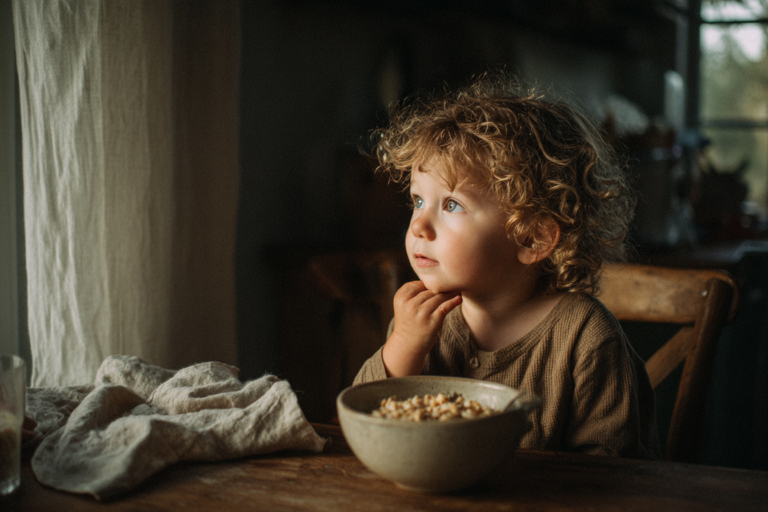
A toddler sitting in a high chair while dinner is made is not simply waiting. She is absorbing sentence rhythm. Hearing sequences unfold — first this, then that, now the other thing. She is learning how questions differ from statements, how a voice shifts when something is hot versus when something is ready, how anticipation sounds different from instruction.
None of this requires a lesson. It requires proximity.
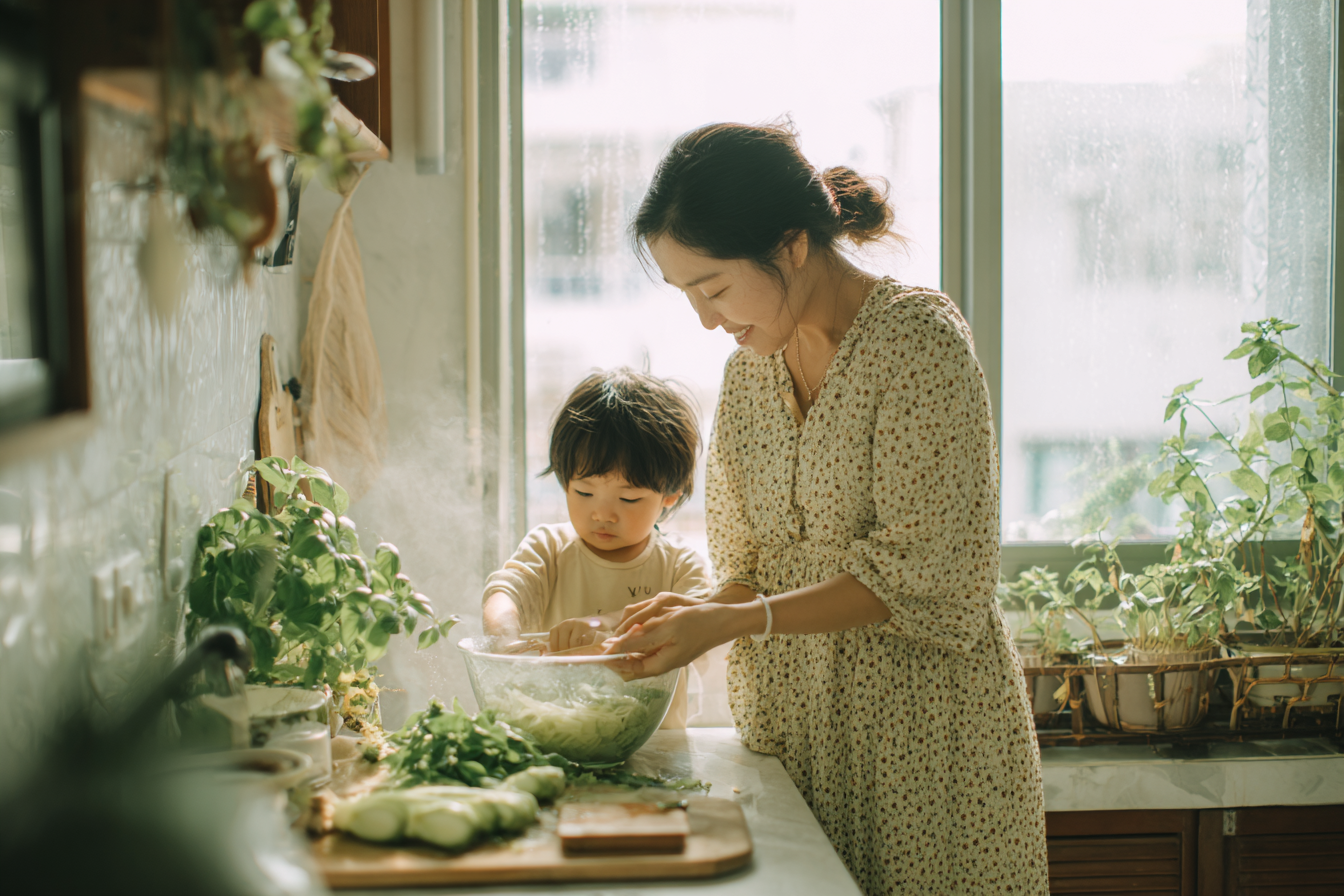
A toddler watching dinner being made absorbs far more language than most structured activities would deliver.
Children learn the language of their household by being part of it. Not performing in it. Not sitting at a table being taught. Being included — in the ordinary work, the waiting, the explaining, the small narrations of daily life that a parent offers almost without thinking.
The bath that happens every evening at the same time, with the same sequence of words — arms up, now the back, nearly done, your turn — is not boring to a toddler. It’s deeply familiar, and that familiarity is exactly where language takes root. Children predict what’s coming. They begin to say the words before they’re spoken. That’s language in the making.
While you’re looking for your keys, she’s learning that frustrated search sounds different from ordinary looking.
While you’re explaining why coats are needed today, she’s storing the logic of because — the connection between cause and effect.
While you’re saying goodbye the same way you always say goodbye, she’s learning that rituals have language, and language has rhythm, and rhythm makes the world feel safe enough to leave.
All before 8:30am. Without a single toy.
The ordinary moments that do the most
There’s no formula here. But there are certain moments in a family’s day where language tends to happen most naturally — and paying a little more attention to those moments is usually all that’s needed.
While things are being unpacked, folded, prepared
Laundry is one of the quietest and most reliable language moments in a home. Not because it’s educational. Because it’s repeated, physical, slow, and full of opportunity to name things — colours, textures, sizes, whose socks are whose.
A child who folds alongside a parent for years will absorb dozens of descriptive words without anyone intending to teach them. The learning happens in the doing-together.
- Naming what comes next before it happens: now we match the socks.
- Describing what you’re holding: this one’s soft. It’s been washed a lot.
- Including your child in the logic: these are yours. Where do they go?
Not a script. Not a lesson. Just narrate what you’re doing as it happens — the way you might if you were explaining to someone on the phone.
I’m putting the plates on the shelf. These ones go up here. The big ones first, then the small ones.
That’s it. Once. Your child is listening even if they don’t look like they are.
During the waiting — the car, the queue, the walk
The moments parents often feel most restless about — waiting at the crossing, sitting in a car park, the long walk to the bus — are some of the most generous language opportunities in a child’s day.
There’s no hurry. There’s nothing to unpack. There’s just the world in front of you, and a small person noticing it alongside you.
- Following what your child looks at and naming it back.
- Commenting on things you’d normally walk past: that’s a very old door.
- Leaving space after you name something — not prompting, just pausing.
- Asking questions you’re genuinely curious about: I wonder where that dog is going.
The pause matters as much as the naming. Children need time to process, to reach for a word, to attempt something. A conversation that allows silence teaches a child that their contributions are worth waiting for.
Instead of filling a quiet walk with questions your child needs to answer, try pointing at something and saying what you notice. That tree has lost all its leaves. And then being quiet.
You’re not waiting for a response. You’re showing your child what shared observation looks like. In time, they’ll do it back to you.
Bedtime — the same words, every night
There is something about bedtime that parents sometimes feel guilty about — the fact that it’s so repetitive. The same books. The same song. The same words said in the same order as the light goes off.
This is not something to fix.
Bedtime routines are one of the most linguistically rich structures in a toddler’s day, precisely because they’re predictable. The child knows what’s coming. They can participate. They can say the words before you do, which is one of the most satisfying language experiences a young child can have.
- Reading the same book until it’s completely memorised — by both of you.
- Using the same closing phrases each night so they become an anchor.
- Naming the day simply: today we went to the park. You found a big stick.
- Leaving room for your child to add something. Not prompting — listening.
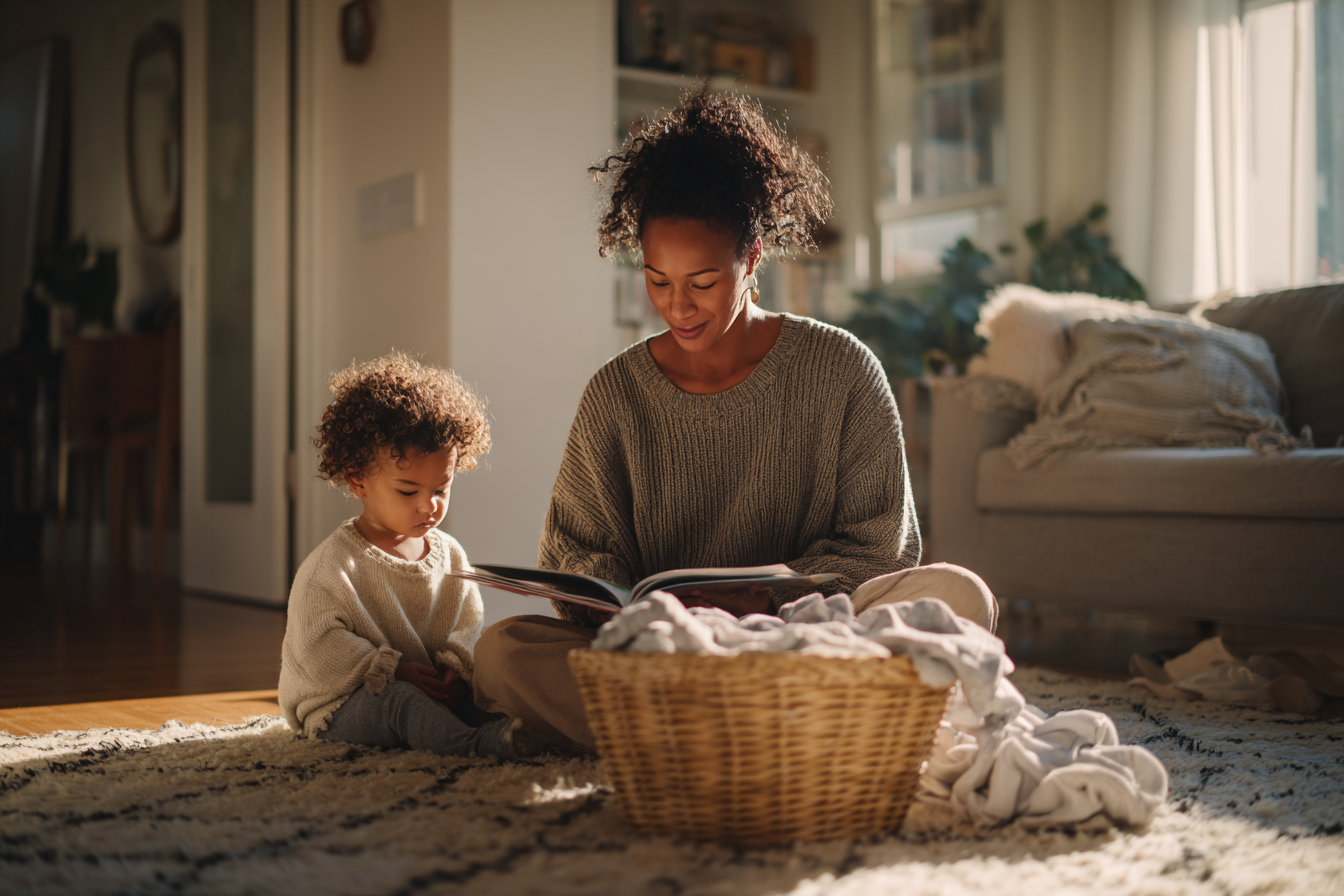
Repetition isn’t boring to a toddler — it’s where the language finally settles in.
What a language-rich environment actually feels like
It doesn’t feel educational. That’s the thing.
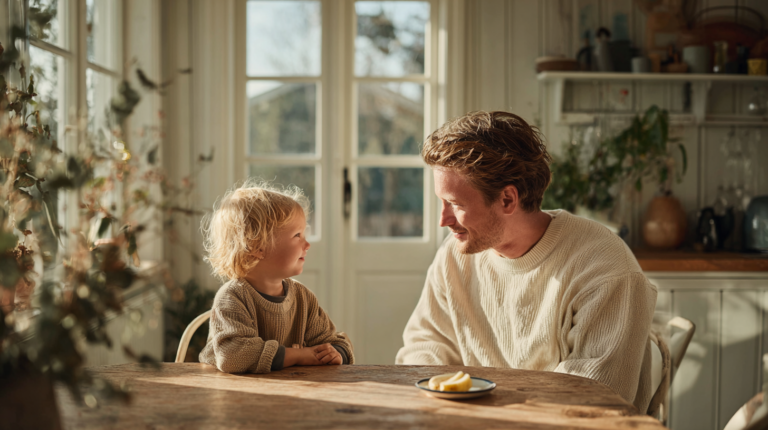
It feels like a home where a child is spoken to with some frequency and warmth. Where their attempts at communication are taken seriously. Where the adults say what they’re doing, notice things out loud, and occasionally stop to wonder about something together.
It feels like emotional safety, mostly. Because language expands fastest when a child feels secure enough to try, to fail, to mispronounce the same word seventeen times in a row without anyone making a face about it.
- Narrating while cooking, tidying, or getting ready.
- Naming what you notice on a walk, without requiring a response.
- Repeating the same bedtime phrases until your child says them with you.
- Following your toddler’s point and naming what they’re looking at.
- Leaving pause after you speak — real pause, long enough for them to consider entering.
The toys aren’t the problem
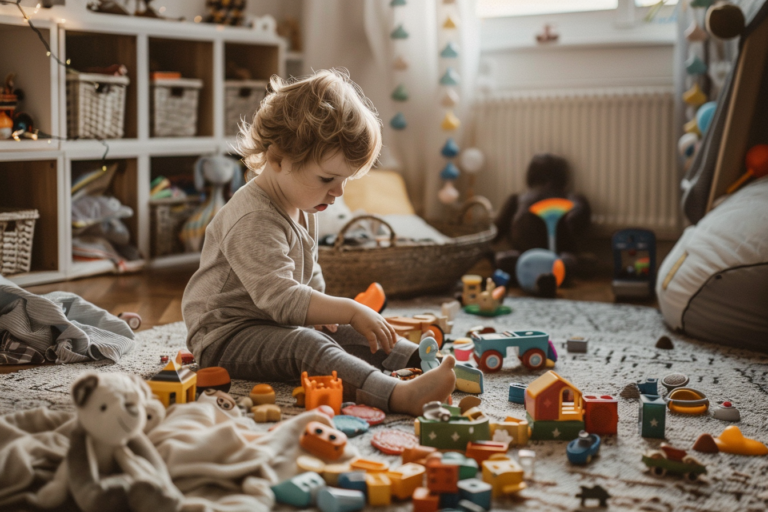
To be clear: this isn’t an argument against toys, or books, or the wooden animal sets that live on the shelf. They have their place.
The problem is the belief that those are the things that build language — that without the right materials, the right setup, the right investment, something important is being missed.
Language doesn’t grow from toys. It grows from being in relationship with someone who speaks. From being spoken to, spoken with, responded to. From a home where words have weight and attention is available and questions are answered even when the adult is tired.
The richest language environment your child can have is simply a home where they feel heard.Some parents read advice like this and immediately feel the pressure to talk more. To explain every action. To turn every moment into a language opportunity.
That’s not what this is asking.
Silence is also part of a language-rich home. A child who watches you work quietly is still absorbing. A walk without commentary is still valuable. You are allowed to just exist alongside your child without performing the role of language teacher.
The goal is presence, not performance.
When language feels slow
Some children take longer. Some are watching and absorbing for months before they’re ready to produce. The quiet child who listens carefully to everything is not behind. She’s working. Differently, but deeply.
The home environment matters here in a particular way: not by adding more input, but by remaining patient. By not asking questions the child doesn’t yet have words for. By creating enough ease in the atmosphere that attempting language feels safe rather than stressful.
A toddler who points at something and waits for you to name it is already doing something quite sophisticated. She has learned that objects have names. That you know them. That asking — even wordlessly — gets a response. That’s a full conversation. It just doesn’t sound like one yet.
Language development and emotional security are not separate things. A toddler who feels connected to the adults in her life — who is responded to, included, noticed — is in the best possible conditions for language to grow.
Which means the most language-building thing you can do most days is simply stay in relationship. Answer the point. Follow the gaze. Say I see it too when something catches their eye.
Not as a technique. Just as someone who is paying attention.
Just one thing you notice. The water is warm today. Your hair is very long now. This towel is old — it’s been with us since you were tiny.
Not to teach. Not to elicit a response. Just to say something true about the ordinary moment you’re both inside.
That’s enough. That’s already the work.
A small set of gentle prompts for mealtimes, play, walks, and bedtime. Made for real homes — not a curriculum. Just a few words to keep nearby for the moments that are already happening.
Get the free prompts →Forty prompts for the conversations that already happen at your table, in your hallway, and on your morning walk. Not a script — a quiet support for the moments that are already there.
See it on Etsy →The home you already have
The groceries will need unpacking again next week. There will be another bath, another bedtime, another slow walk somewhere. Another moment when something catches your child’s eye and she looks at you to see if you’ve seen it too.
These moments don’t need to be improved. They don’t need toys added to them, or scripts prepared for them, or educational intention brought to bear on them.
They just need someone to be present inside them.
Language-rich homes are not built from shelves. They’re built from attention — the quiet, ordinary, repeated attention of someone who speaks to their child the way they’d speak to anyone they love. Honestly. Gently. With some curiosity about what they notice.
Most parents are already doing this. They just don’t have a name for it.
Now they do.
Language grows in the same place everything else grows in early childhood — inside ordinary days, held gently by the people who are already there.
Chichiberry Parenting · Language Development