
Why Your Toddler Repeats The Same Word Over And Over
It isn’t stuck. It isn’t a phase to redirect. What’s happening is something quieter — and more deliberate — than it looks.
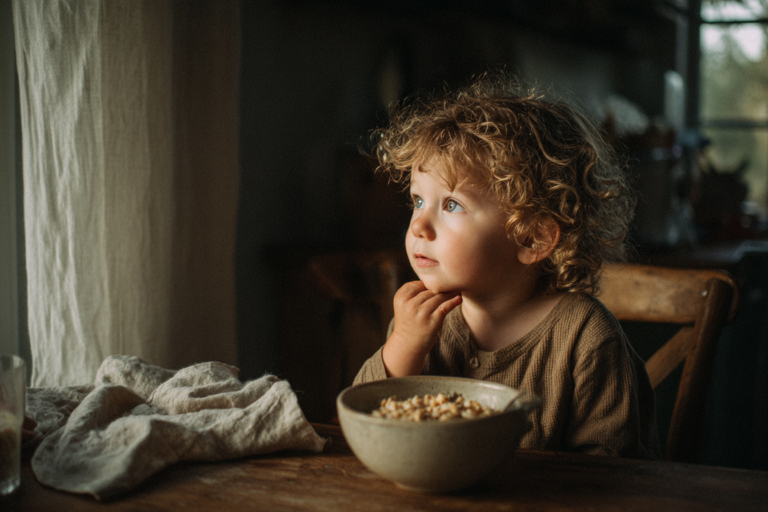
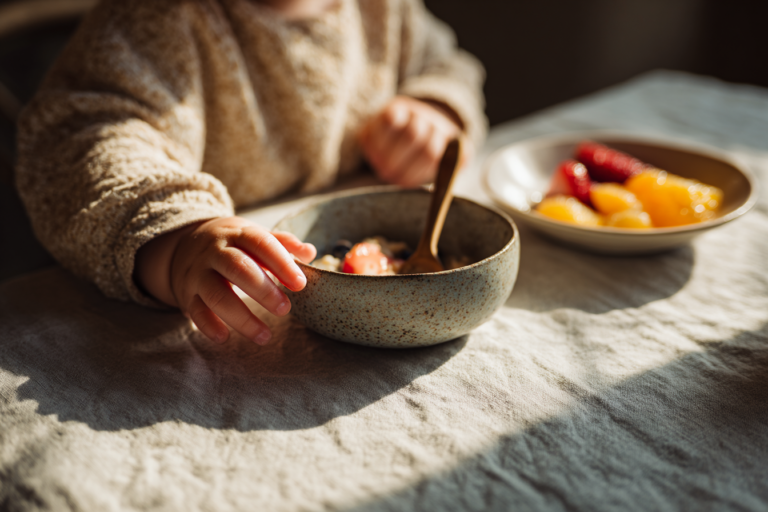
She said moon while pointing at the window. Then at the rim of her cereal bowl, where the morning light had caught the glaze in a particular way. Then at a balloon caught in the neighbour’s tree, barely visible from where she was standing. She had been saying it for four days. She said it thirty, forty times in a single afternoon — each time with the same quality of attention, the same slight pause after, as if she were listening to herself.
I tried, on the third day, to offer her something new. “Yes — moon. And look, that’s a lamp.” She studied the lamp for a moment. Looked back at me with perfect patience. “Moon,” she said.
I didn’t understand what she was doing. I thought she was stuck on a word she liked. I was slightly wrong about both things.
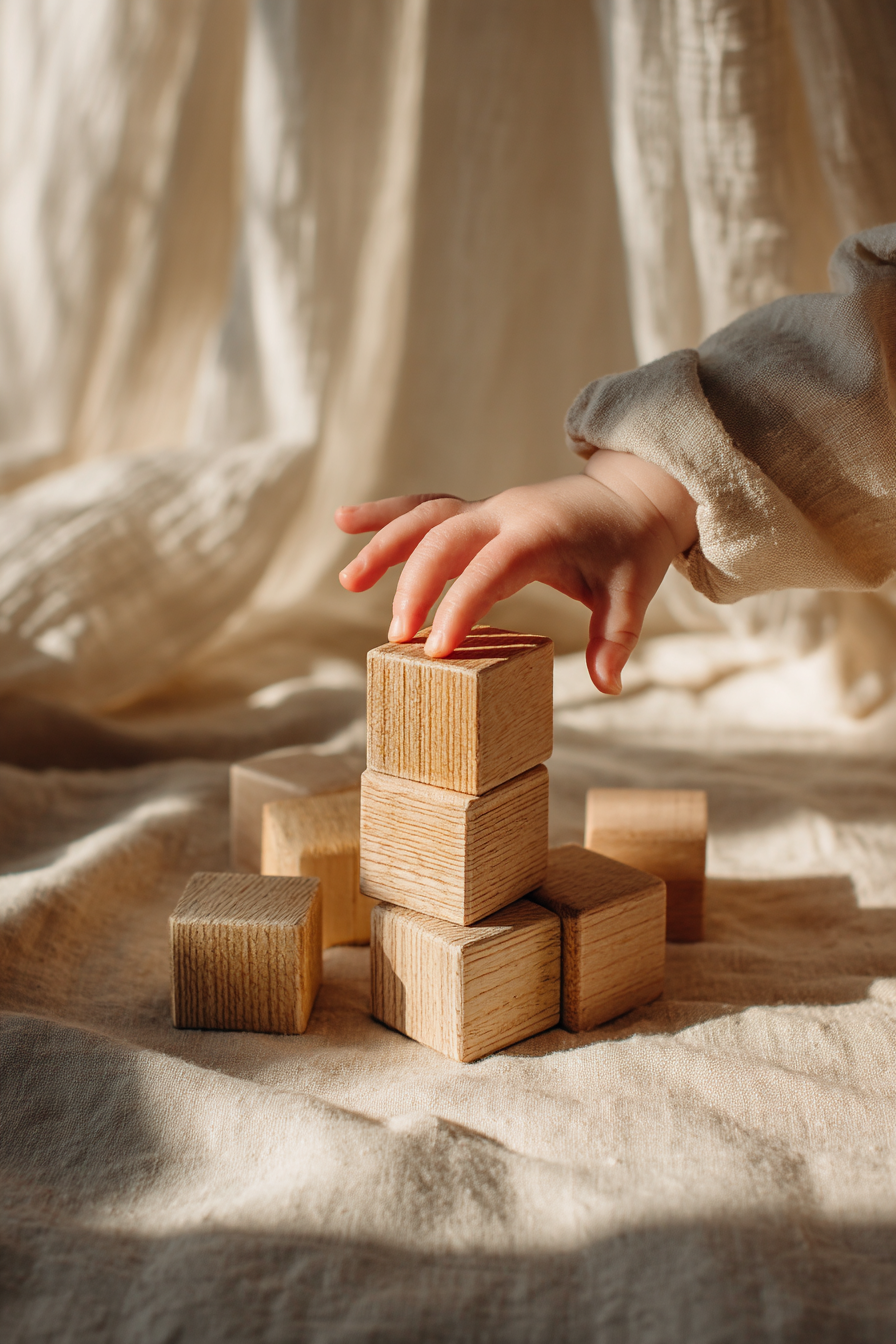
What she was doing has a name in developmental research — semantic mapping. When a toddler repeats a word across different objects, different moments, different contexts, they’re not rehearsing it. They’re testing its edges. They’re asking, in the only way available to them: how far does this word reach?
The moon applied to round things that glowed. Or that seemed to glow. Or that had something of that quality she was still learning to name. She wasn’t confused. She was building a concept — which happens to look, from the outside, exactly like being confused.
And sometimes a toddler repeats a word not to test its edges but simply because they like what it feels like to hold it. Because it’s new and still surprising in their mouth, and saying it again is its own kind of pleasure. Both things can be true at once. The word is doing more than one kind of work.
A word repeated forty times isn’t a word stuck. It’s a word being built — tested against everything it might mean, until it finally belongs to them.
The reason this is worth knowing isn’t that it makes the fortieth repetition less tiring. It doesn’t. But it changes the quality of what you do next. When you think a child is stuck, you try to move them. When you understand they’re in the middle of something, you stay with them instead. Those two responses look almost identical from the outside. They feel completely different to the child.
Found something in this? Save it for the next time the word count reaches double digits.
Save to PinterestThe repetition is a question, not a mistake
When a toddler says “dog” at a labrador, then at a cat, then at a pigeon on the fence — they’re not confused. They’re running an experiment. How far does this word reach? Does it cover this shape? Does it hold for this one too?
You don’t need to correct it. You can simply answer the experiment — by receiving the word as if it landed. “Dog, yes.” Or: “That one’s a cat. Different sound.” The correction is incidental. What matters is that you engaged with the reaching, not that you redirected it.
To them, each repetition is a different word
This is the part that genuinely changed how I listened. When she said “ball” looking at the red one on the floor and then “ball” looking at the orange one in the basket — those were two separate attempts. Two different instances of testing whether the word held. They sounded identical to me. They didn’t feel identical to her.
When you respond to each one — not exhaustively, not with a full narration, but with a small acknowledgement that registers something — you’re telling the child: I noticed that you noticed. Which is a significant thing to communicate to someone who is one and a half years old and working very hard.
What they want from you isn’t new information
This one surprised me. A toddler mid-mapping doesn’t need you to expand their vocabulary. They need something simpler, and harder to name: they need you to receive the word. To say it back in a way that tells them — yes, that sound was real, it landed somewhere, someone heard it.
This is why a plain, unhurried repetition — “truck, yes, big truck” — often does more than a careful explanation. The information wasn’t the point. The exchange was. The word moved between two people, and that movement is what language is actually for.
When the repetition is carrying a feeling, not a question
There’s a second kind that looks identical. When a toddler repeats a word not to test its edges but to stay near something — to hold onto an experience while the language to describe it doesn’t exist yet — the word is doing something closer to emotional work than cognitive work.
She said “gone” for three days after the neighbour’s dog moved away. Not asking where it went. Not confused about the word. Just naming a feeling she couldn’t name any other way. It looked like repetition. It was closer to processing.
With this kind, the most useful thing you can offer isn’t an explanation. It’s a quiet acknowledgement. Not “it’s okay, we’ll see him again” — but simply: “Gone. Yes. You miss him.” That’s usually enough to let the word rest.
A small set of prompts for the moments that are already happening
Seven phrases for meals, transitions, and the ordinary in-between. Print it, keep it nearby, use it when you remember. No lesson plan.
Send me the free cardThis phase ends when it’s ready to — not when it’s hurried
The question I hear most often isn’t “is this normal?” It’s a quieter one: should I be doing something to help it along? The answer, nearly always, is that the something is already happening. The mapping completes itself. The word stops being interesting to test when the child has learned what it means — which is the only definition of “done” that matters.
What extends the phase is usually interruption. A child who is regularly redirected mid-mapping — whose word-testing is met with new vocabulary before the original question is answered — tends to return to that word more, not less. Not because they’re stuck. Because the process didn’t get to finish.
The most effective thing you can do, in most cases, is let the word run its course. Answer it simply when you can. Move past it when you need to. The child will move on when the concept is complete — and that completion is invisible from the outside, which means you often won’t know it happened until you realise they stopped saying it.
Language is not built in lessons. It’s built in accumulation — hundreds of small exchanges, most of them unremarkable, that together create something that looks, from the outside, like a child who suddenly has words.
We contribute to that accumulation without realising it. The “yes, moon” said from the kitchen while making dinner. The glance that registers what the child is pointing at. The pause before redirecting — the small decision to stay with them for one more moment before moving on.
None of it needs to be perfect. Very little of it will be remembered. But it compounds, the way quiet things do — and one day you will notice that the word they used to say forty times in a morning has been replaced by five new words you don’t remember them learning.
There’s a full set of 40 language prompts organised by moment — meals, transitions, play, and the in-between. No script, no system. Just words that fit the day you’re already living.