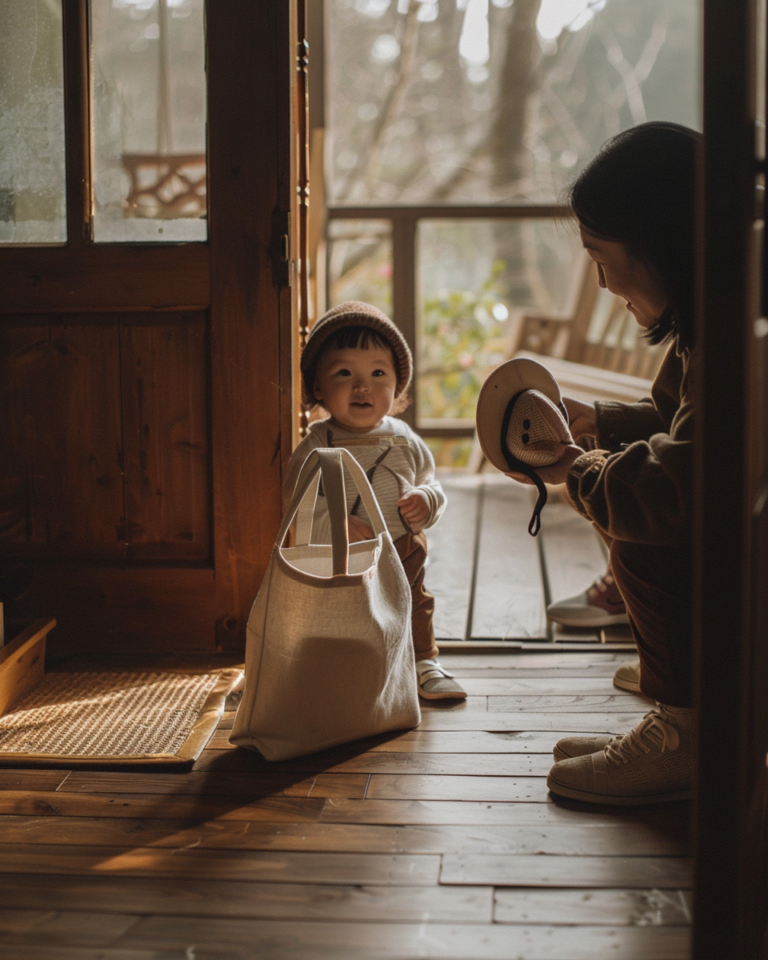

Does “Woof”
Count As A Word?
What speech-language professionals actually count — and why most parents are significantly underestimating how much their toddler already knows.
The Question Almost Every Parent Asks
It happened the way it usually does. Sitting in a paediatrician’s waiting room, a mother pulled out her phone. The article was titled something like “18-Month Milestones: Is Your Child On Track?” She scrolled the list. She started counting.
“He says woof when he sees a dog. He does uh-oh when something falls. He says baa for sheep. He has da for his dad and sometimes something that sounds like more. But I don’t know — do those count? Does woof actually count as a word?”
She wasn’t anxious in a clinical sense. She was just paying attention, the way parents do. And somewhere between the waiting room chair and the doctor’s clipboard, she had absorbed an idea that is widespread and worth examining: that a word only counts if it sounds like the word in a dictionary.
Most milestone lists don’t say this out loud. But the implication is there. When a list says “your child should have 10–20 words,” the image it conjures is adult-shaped words. Clear ones. Words you’d recognise without context. Which means that when a toddler says “woof” for dog, a parent starts mentally filing it in a grey area, not quite sure whether to count it.
Here is what speech-language professionals actually say: animal sounds, sound effects, approximations, consistent labels, and meaningful gestures can all count as words when they are used intentionally to communicate something specific. The threshold is not pronunciation. The threshold is meaning.
“Parents compare their child to milestone lists. Speech therapists compare their child to who they were last month.”
The mother in the waiting room was not undercounting because she wasn’t watching. She was undercounting because she didn’t know the rules. This article is about the rules.
What Speech Experts Actually Mean By “Word”
The definition is simpler — and more generous — than most parents realise.
In speech-language pathology, the working definition of a toddler word is not about sound quality. It is about function. A word, at this stage of development, is any sound or gesture that:
That first column is doing a lot of quiet work. Notice what it centres: intent, consistency, meaning, relationship. Not accuracy. Not adult-shaped phonology. The toddler brain is building communication, and communication is not the same as pronunciation.
This is why, when a toddler says “nana” every time they see or want a banana — specifically, reliably, with intent — that is a word. When they say “baba” for their bottle, consistently, reaching toward the cupboard: word. When they throw their hands up and say “uh-oh” the moment something falls off the table: word.

Here is what that looks like in practice. These are all real, countable words by professional standards:
The invented word point is particularly important. A toddler who calls their blanket “bubu” consistently, who brings it to you when you say “where’s your bubu?” — that toddler has a word. The word is “bubu.” It doesn’t need to align with any language in any dictionary. It is theirs, and it means something specific to them, and that is precisely what makes it count.
Here’s how to know.
The definition speech-language pathologists use for a toddler’s word is not the one most parents have in mind. It was built around a central finding in developmental research: in early language acquisition, the ability to communicate meaning reliably comes well before the ability to produce sounds accurately. In other words, a child can have a word long before they can say that word the way an adult would.
Three principles shape how professionals count — and they matter for how you think about your child’s vocabulary:
This is not a lowering of the bar. It is the correct bar — built around how language actually develops, not how adults expect it to sound.
8 Things That May Count As Words
The categories parents often overlook — and the reason they matter.
Speech therapists look for communication across categories, not just the clean, adult-shaped words that parents tend to track. Here are eight types of communication that frequently get left off a parent’s count:
She was pushing the pram along the pavement when the dog appeared across the street — a large, brown, ambling thing. Her son went still. Then his arm shot out. “Woof,” he said. Not “dog.” Just “woof.” He looked at her immediately to see if she had seen what he had seen. She smiled back. She did not, in that moment, register it as a word. But when she replayed the morning later — the stillness, the pointing, the eye contact, the sound — she realised: he had named the dog. He had shared it with her. He had waited for her to confirm it. That is communication. That is language.
He had eaten almost all of it. The last few pieces of banana sat at the edge of the bowl. He looked at the bowl. He looked at his mother. His fingers came together — the classic pinch of the “more” sign — and he held them there a moment, watching her face. She scooped up a piece. He opened his mouth. His mother did not think: he just asked me for food using a word. She thought: oh, he’s doing the sign. But those are the same thing. The sign was the word. The request was language. He had communicated with perfect clarity.
Why Parents Often Underestimate
The gap between what parents hear and what development sees.
There is a consistent pattern across the research and in the clinical experience of speech-language pathologists: parents undercount. Not because they aren’t paying attention, but because the mental model they are working with — a word looks and sounds like a word — is too narrow.
The table below shows how this plays out in real moments, conversation by conversation:
| What the child says or does | What a parent often thinks | What a speech therapist sees |
|---|---|---|
| “Nana” — reaching for banana | Not a real word, just a sound | Meaningful label used consistently — word |
| “Woof” — pointing at dog | That’s an animal sound, not language | Sound used as intentional referential label — word |
| Signs “more” at the table | That’s not really talking | Gestural word communicating a specific request — word |
| “Da” when dad enters the room | Babbling — coincidence | Specific person label, used selectively — word |
| “Uh-oh” when cup falls | Kind of cute, probably just imitating | Spontaneous situational word — word |
| “Bubu” for blanket, used daily | I don’t know what that means | Invented consistent label — word (families always know) |
| Points to the fridge and makes a sound | Not really a word — no sound | Protodeclarative pointing with vocalisation — communication |
| “Bye” said while waving | That doesn’t count, it’s just waving | Social word paired with gesture — counts twice |
Nobody knows where “bubu” came from. One day it was just there. She had reached toward the corner of the sofa where the blanket lived and said it — “bubu” — and her father had handed her the blanket, and after that it was simply what the blanket was called. The whole family knew. Grandparents, the childminder, the neighbour who came for tea. If someone asked “where’s your bubu?” she would find it. If she wanted it, she would say it. She had invented a word and taught it to everyone around her. And yet on a milestone count, her parents wrote nothing, because “bubu” was not in the dictionary.
I once spoke with a mother who had counted six words for her son. Then we went through his week together. By the end, we had found twenty-two. The words had been there the whole time. She had just been trained — by articles like the one she’d read in the waiting room — to not count them.
when everything counts
If you counted six words this morning and found seventeen words by tonight — nothing changed about your child. The only thing that changed was what you knew how to see. The words were already there, in the pointing and the sounds and the signs and the “woof” at the dog across the street. They were always there. You were always watching. You just needed a wider lens.
You may already know more words than you think.
This matters not just emotionally — though it matters enormously emotionally — but practically. A parent who thinks their toddler has six words may be more likely to feel anxious, to compare, to push for more talking before the child is ready. A parent who recognises they have twenty-two words may find a calmer, more connected vantage point from which to support what’s already happening.
What Matters More Than The Number
Language development is not a vocabulary exam. Here is what else to notice.
Even among speech-language professionals, vocabulary count is one measure among many. It is a useful one — but it is not the whole picture of language development at 18 months. The broader landscape includes skills that parents can observe quietly, without counting at all.
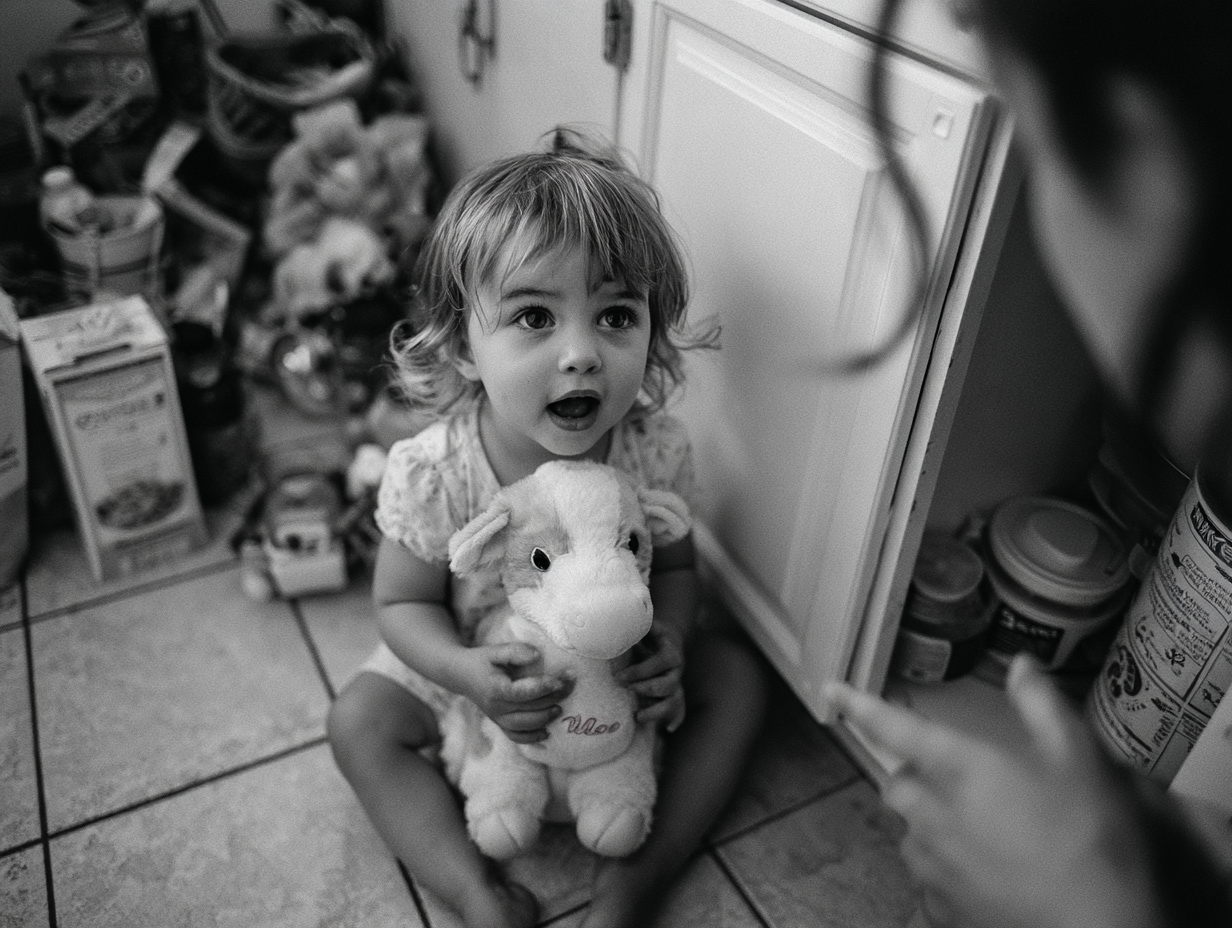
A toddler who points frequently, who imitates with delight, who turns to face you when you speak, who has good back-and-forth exchanges even without words — that toddler is building language infrastructure. The words will follow. The more important question at 18 months is not “how many words” but “how much communication.” If you want to understand how those everyday moments build language, Language Grows In Moments goes deep on exactly that.
A Day of Hidden Language
What an ordinary Tuesday actually looks like, seen through different eyes.
Let’s follow one ordinary day. This is not a child with exceptional language. This is a completely ordinary 18-month-old on a completely ordinary day. Here is what happened — and here is how a parent versus a speech-language pathologist might have recorded it.
This is not an unusual day. This is Tuesday. And the gap between the parent count and the professional count isn’t because the parent wasn’t watching. It’s because they were applying a different, narrower definition of what a word is.
Most parents, watching that Tuesday, would have counted one or two words confidently, with a few maybes. A speech-language pathologist, watching the same Tuesday, would have counted seven communicative words or acts — minimum.
Your toddler may know far more words than you think.
Animal sounds, approximations, invented words, and signs all count. You’ve been working with a narrower definition than the professionals use.
A Gentle Reminder Before You Compare
Language growth often looks smaller than it really is — because parents only count the words that sound like words.
The comparison impulse is understandable. You see another child at a playgroup speaking in sentences. You read a social media post where a parent gleefully lists forty-three words. You sit in that waiting room and count.
But the child at the playgroup may have started quietly and exploded into language last month. The forty-three-word child may have been using a fuller definition all along. And your own child may have been communicating far more than you have been recording — because no one told you the rules.
Here is what is worth comparing instead: who is your child compared to who they were three months ago? Are they communicating more? Are they using sounds, gestures, and words for a wider range of things? Are they initiating more interactions? Are they pointing more, responding more, imitating more?
Those are the comparisons that tell you something useful. The other ones mostly tell you that comparison is uncomfortable, which you already knew.
A toddler says “woof.” A parent hears a sound. A speech therapist hears a label. The child hears something else entirely: they hear that communication worked. That the world responded. That the thing they noticed was worth noticing. A word, in the beginning, is not a vocabulary item. It is proof that someone is listening.
So How Many Words Should an 18-Month-Old Have?
The honest answer: there is no single number. But there are patterns worth knowing.
The question almost always leads to a number. And a number, on its own, doesn’t tell you very much. Language development at 18 months is far more a story of patterns than of quantities. Different toddlers arrive at language from very different directions — and most of them are doing exactly what their particular kind of development calls for.
Professional guidance generally looks for around 10 meaningful words by 18 months — using the full definition, which includes everything this article has described. But the range among typically developing children is genuinely wide. Rather than thinking in numbers, consider which pattern most sounds like your child.
What all three patterns share is this: they are directional. They are going somewhere. The most useful thing to observe is not where your child is today, but whether they are moving — whether communication is growing in any direction, through any channel, by any measure. Growth across any of those dimensions is language development doing its work.
When To Talk With a Professional
Support is always available, and seeking it early is never a wrong decision.
Nothing in this article should be read as suggesting that professional evaluation is something to avoid or delay. Early support, when it is needed, is one of the most valuable things a family can access. The earlier, the better, and there is never a wrong time to ask for an opinion. For a fuller look at the specific signs professionals look for across this age range, 7 Signs Your Toddler’s Language Is On Track covers each one in plain, non-clinical language.
That said, here are the specific markers that professionals typically name as reasons to seek evaluation — not as a list to create anxiety, but as a list to help parents recognise a meaningful signal when they see one:
- No words of any kind — including animal sounds, approximations, and signs — at or near 18 months
- No pointing to show or share something (not just to request) by 14 months
- Does not respond to their name when called in a natural, conversational voice
- Loss of words or communication skills that were previously present
- No back-and-forth exchange or imitation — even non-verbally
- You have a persistent feeling that something is off, even if you can’t name it
- Using animal sounds, approximations, or invented words instead of conventional words
- Having fewer words than a friend’s child of the same age
- Some words clearer than others; pronunciation varies day to day
- More interested in understanding than producing
- A few weeks behind a milestone list that doesn’t use the full professional definition
- Quiet but communicative — pointing, gesturing, making eye contact, imitating
If in doubt, ask. A speech-language pathologist would rather meet a child who is developing well than miss one who would benefit from support. The point of professional evaluation is not to confirm that something is wrong. It is to get a clearer picture — whichever direction that picture points.
Save This Observation Instead
A three-day practice that almost always surprises the parents who try it.
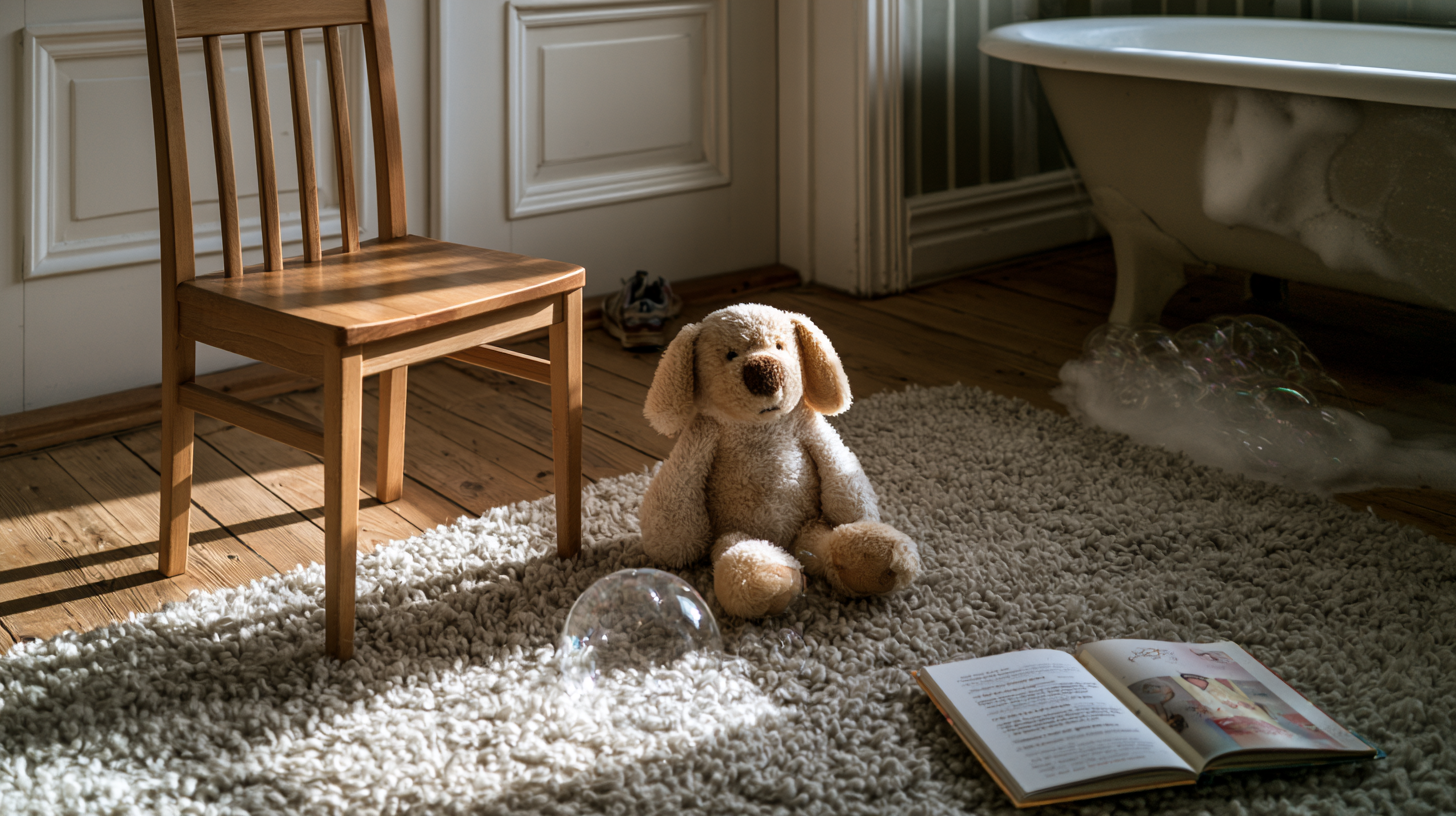
Instead of counting against a list, try this. For three days — not forever, just three days — write down every single communicative act your child makes. Every sound. Every gesture. Every approximation. Every animal noise. Every sign. Every invented word. Every point. Every imitation. Every social word.
Do not judge any of it. Do not decide whether it counts. Just write it down.
At the end of three days, count everything.
Almost every parent who does this is surprised. Not always reassured — sometimes the count genuinely is lower than expected, and that is useful information — but almost always surprised. The words that were there all along, uncounted, begin to come into focus.
Write down everything your toddler says, signs, or sounds for three days.
Don’t filter. Don’t edit. Don’t decide what counts. Just collect it all. Most parents discover their child knows far more than they realised.
A word is not a sound.
A word is a child discovering that another person can understand their mind.
The most important language milestone is not how many words your child says. It is whether they are trying to share their world with someone else.
Discover How Many Words Your Toddler Really Knows
Most parents underestimate vocabulary because they aren’t counting everything that counts. This journal helps you notice what is already there — before you start worrying about what isn’t.
Tomorrow, when your toddler says “woof” at a dog across the street — pause before you correct them. They are not practising pronunciation. They are practising communication. They are pointing at something real, and sharing it with you, and waiting to see if you heard what they heard. That is where language begins. Not in the dictionary. Here, in this ordinary moment, which was never quite as ordinary as it looked.