

Learning Goals For 4 Year Olds: What Growth Often Looks Like In Everyday Life
 Age Learning Goals · Four Years
Learning Goals For 4 Year Olds: What Growth Often Looks Like In Everyday Life
Something shifts at four.
It is not dramatic, and it often does not look the way parents expect. A four-year-old rarely announces what they are learning. They do not sit down with worksheets and emerge with measurable results. Instead, growth at this age tends to arrive quietly — in a question asked during a car ride, in the way a child sets up an imaginary restaurant with precise attention to detail, in a moment at the park when they notice the same bird has been coming to the same branch every morning.
Many parents searching for learning goals for 4 year olds are really asking a gentler, more anxious question: Is my child okay? Are they where they should be?
The honest answer is that meaningful development at four does not arrange itself neatly against a checklist. It appears in the questions a child cannot stop asking, in the stories they invent when no one is directing them, in the way they start connecting one experience to another — noticing that the puddle on the path behaves differently than the puddle in the garden, that grandma uses a different word for the same thing, that the moon was round last week and is different tonight.
This article is an observation guide, not an assessment tool. It is written for the parent who wants to understand what is already happening in their child’s day — not to measure it, but to recognise it.
Learning goals for a four-year-old are not a list of things to teach. They are signs that a child is connecting ideas, expressing thoughts, and becoming increasingly capable in everyday life.
What Changes Around Age Four
The toddler years have their own particular logic. At two, a child explores everything — touch, taste, proximity, repetition. At three, wonder deepens: the world becomes interesting beyond its immediate sensory properties. Questions start. Comparisons begin.
Four brings something different.
Connection is the hallmark of four. Not just emotional connection — though that deepens too — but cognitive connection. A four-year-old begins to stitch experiences together: they remember what happened last Tuesday, they link it to something from a book, they wonder aloud whether the same thing might happen again. They are building a mental map of how the world works, and they are doing it through conversation, play, observation, and participation in ordinary life.
This is not academic learning. It is the substrate from which everything else — including academic readiness — eventually grows.
Development at four is not uniform. Some children arrive at four already speaking in long, elaborate sentences. Others arrive quieter, more physical, more internal. Both are growing. The domains described below are observations, not expectations.
Why Four Can Feel Wonderful And Exhausting At The Same Time
There is something worth naming before we go further, because it belongs in any honest description of this age.
Four can be a genuinely lovely stage of childhood. Children at this age are often funny, observant, unexpectedly tender, and capable of real conversation. They ask questions that stop you mid-step. They notice things you walk past every day. They remember exactly what you said three weeks ago and bring it up at a moment you did not expect.
Four can also be a lot.
The same cognitive development that produces the questions, the connections, the rich imaginary worlds — it also produces the relentless negotiation, the strong opinions about which spoon to use, the detailed explanation of why the plan you just made is actually not going to work for them. A four-year-old who is developing well is often a four-year-old who is exhausting to be around for stretches of the day. These two things are not in tension. They are the same thing.
The goal of age four is not to know more. It is to connect more — and connection, at four, includes connecting your child’s own preferences, reasoning, and will to every situation they encounter.
The endless questions are not interruptions to learning. They are learning. The negotiation is not manipulation — it is a child testing their own reasoning against reality, which is exactly what minds are supposed to do. The strong opinions are the early form of the confidence you are hoping to grow in them.
None of this makes it easier on a Thursday afternoon when you have asked the same thing four times and received four counter-proposals in response. But it may help to know that the traits most likely to wear a parent out at four are often the same traits most associated with healthy development.
A child who argues, questions, and insists is a child who believes their voice matters. That belief did not arrive from nowhere. It came from years of being listened to. It is a good sign, even when it is a tiring one.
The 10 Learning Domains At Age Four
The following sections describe ten areas of development that often become visible at this age. Each one represents a strand of growth — not a subject to be taught, but a capacity that tends to emerge, deepen, and become more distinct in a four-year-old’s everyday experience.

The child who asks “what happens if”
At two and three, exploration tends to be sensory — touching, carrying, filling, emptying. By four, something more deliberate begins to emerge. A child who once tipped a cup of water to watch it spill may now tip a cup, watch it spill, notice the shape of the puddle, wonder how long it takes to dry, and return the next morning to check.
This is investigation: exploration with a thread of intention running through it. The child is not just encountering the world. They are testing it, building theories about it, and quietly accumulating evidence.
They return to the same project — a sandpit construction, a collection of stones — across several days, adding to it rather than starting fresh.
“What happens if I put the heavy one on top?” “I want to see if it still floats when I add the small ones.”
Kitchen experiments, collecting objects on walks, testing the garden hose in different configurations, mixing colours in paint water.
Scientific thinking does not begin with textbooks. It begins with a child who cannot stop wondering what happens next.
Children who investigate “too much” or make messes while exploring are often doing exactly the right kind of thinking. The urge to contain and redirect this is understandable. But investigation is how four-year-olds build their understanding of cause and effect — which is one of the deepest kinds of readiness there is.
Questions are not interruptions to learning. For a four-year-old, they are learning. Every “why” and “what happens if” is a mind actively building its own map of the world.
The child who spots what changed
A younger child notices things: the red truck, the dog, the wet grass. A four-year-old begins to notice things across time — the dog is usually on the left side of the path, the light in the kitchen is different in the morning than it is at lunch, the same neighbour passes the window at the same time most days.
This is the beginning of pattern recognition — not in the mathematical sense, but in the richest, most foundational sense. The child is learning that the world is not entirely random, that observation over time reveals structure, that paying attention is worthwhile.
They point out something that has changed in an environment without being prompted — furniture moved, a painting gone, something different on the shelf.
“That tree had flowers before.” “This soup is a different colour today.” “The clouds are doing the same thing as yesterday.”
Morning routines, walks to familiar places, repeated meals, seasonal changes in the garden.
A child who notices patterns across time is building one of the most powerful cognitive skills available to a young mind.
The child who makes their own systems
Sorting at two or three is often physical — putting the red ones here, the big ones there. At four, organising becomes more intentional and more personal. A child may develop their own systems that would not occur to an adult: all the things that are “for sleeping,” all the things that “could become something else,” all the things that belong to the category they have privately named “outside but not garden.”
These internal categorisation systems are how children make the world legible to themselves. They are not always visible to adults, but they are genuinely present — and they represent a significant step in logical thinking.
They have strong feelings about where things belong, even when their reasoning is not immediately obvious.
“This one goes with these because they’re both smooth.” “That’s not the same because this one is for real and that one is pretend.”
Tidying toys, setting the table, helping with groceries, arranging their collections.
A child who can sort by function, category, and their own criteria is demonstrating abstract thinking — not just physical matching.
Resist the urge to correct a child’s organisational system simply because it is not the adult system. Asking “why did you put those together?” is often more revealing than any formal activity could be.
The child who uses numbers to mean something
Number sense at four is not about counting to twenty or knowing which numeral is which. It is about the way a child begins to use numbers meaningfully in conversation — “I need four more,” “there are only two left,” “this pile has more than that one.” The counting is accurate more often now, and when a four-year-old counts a row of objects, they are often genuinely tracking quantity, not just reciting a sequence.
The deeper development here is the understanding that numbers refer to real amounts — that five is more than three, that if you take two away from five you will have fewer, that adding one more changes the total. This understanding does not come from flashcards. It comes from pouring, distributing, sharing, and counting real things in real moments.
They use number comparisons spontaneously: “You have more than me.” “Now we both have the same.”
“I counted mine and I have six.” “If you give me one more I’ll have as many as you.” “There are too many — it won’t fit.”
Setting the table, dividing snacks, counting steps, distributing objects in play.
Number sense built in real contexts is more durable than number knowledge learned abstractly. This is the right foundation.
The child who tells you the whole story
Language at four often becomes noticeably richer — not just longer sentences, but more structured ones. A four-year-old begins to explain rather than just describe. They add cause and consequence: “I fell because the floor was wet and then I cried because it hurt.” They use past and future tense more consistently. They tell you not just what happened but why, and sometimes what they think should happen next.
Vocabulary grows rapidly during this period, often through the child picking up a new word and using it in multiple contexts to test whether they have it right. Watching a four-year-old deploy a new word — sometimes correctly, sometimes charmingly wrong — is one of the most quietly remarkable things about this age.
They retell events in sequence — not perfectly, but with a beginning, middle, and something that functions as an ending.
“First we went to the park and then the dog came and then I got tired so we came home.” Or the immediate: “I’m not happy about that and I need to tell you why.”
Mealtime conversation, bedtime recaps, explaining themselves when something goes wrong, narrating their own play.
The ability to explain — to sequence events and assign cause — is one of the most important cognitive developments of early childhood.
The child who links one thing to another
This is, in many ways, the defining development of four. Connection — the ability to take two separate pieces of experience and recognise what they share — is the engine behind so much of what this age makes possible. A child who connects a book they read last month to something that happened this morning is demonstrating memory, abstract thinking, and the beginning of genuine analogy.
You will see it in the way a four-year-old links a story to real life: “That’s like what happened to us.” You will see it in the way they connect experiences across time: “Remember when we did this before? I think the same thing will happen.” You will see it in their social awareness: “She looks sad. That’s how I look when I miss someone.”
Connection is the hallmark of four. The child who links books to life, yesterday to today, their own feelings to someone else’s — that child is not just learning. They are building the architecture of understanding itself.
They spontaneously reference previous experiences while in a new one. “This is like when we went to the other beach.”
“That’s what happened in the book.” “Is this the same kind of thing as what we saw last time?” “I know what that is — it’s like a smaller version of the other one.”
Reading aloud, visiting familiar places, family conversations, noticing similarities between new and remembered experiences.
The ability to connect across contexts is the precursor to metaphorical thinking, empathy, reading comprehension, and scientific reasoning. All of it.
When a child draws a connection that seems obvious — or wrong, or strange — follow it. “Tell me more about how those feel the same to you” is one of the most powerful things a parent can say at this age.
The child who wants to be genuinely useful
At two and three, helping often means “I want to do what you are doing.” At four, something more purposeful emerges. A four-year-old begins to understand that their contribution matters — that when they set the table, the family can eat; that when they put things away, everyone can find them later; that when they help a younger sibling with their shoes, that sibling does not have to wait.
This shift from participation to contribution is significant. It is the beginning of a child understanding themselves as a member of a household with a genuine role — not just someone who is cared for, but someone who cares for things too.
They take ownership of specific tasks — always carrying their own bag, always being the one to feed the pet — rather than helping in different ways each time.
“That’s my job.” “I can do that one.” “You don’t need to help me — I know how to do it.”
Setting the table, making their own snack, caring for plants or animals, helping prepare for outings, tidying shared spaces.
A child who contributes to household life has a more secure sense of their own capability. This is identity development, not chore management.
Capability grows through participation, not performance. A four-year-old who sets the table, makes their own snack, and cares for their belongings is not just being helpful. They are becoming someone who knows how to do real things in the real world.
The child who is learning to say what they mean
Of all the developmental shifts at four, this one is often the most visible to parents — because it shows up in nearly every interaction of the day. Communication at this age expands well beyond naming feelings. A four-year-old is learning to express opinions, build arguments, advocate for preferences, and negotiate outcomes. They are, in the fullest sense, learning to use language as a tool for influencing the world around them.
The emotional dimension of this is significant. A child who has acquired feeling words is using them precisely when they are most activated, which is also the moment it is hardest to use them well. The four-year-old who says “I am so frustrated and I need you to stop” is doing something genuinely sophisticated, even when the volume is high and the moment is inconvenient.
But the opinion dimension matters equally. “I think we should do it the other way.” “But if we leave now, we’ll miss the part I wanted to show you.” “Can we try it like this instead?” These are not just requests. They are the early practice of persuasion — the attempt to take one’s own reasoning and make it legible to another person. A four-year-old who argues their case is a four-year-old building one of the most complex communication skills there is.
They name feelings before or during a difficult moment rather than only after. They hold a position across multiple exchanges rather than dropping it immediately.
“I don’t want to do that and I’m going to tell you why.” “I think we should…” “But if you listen to my idea…” “Can we talk about it?” “I feel left out — and that’s not okay.”
Transitions, meal choices, disagreements with siblings, any moment where a child has a preference that differs from the plan — which, at four, is most moments.
Emotional vocabulary, persuasion, and preference advocacy are not separate skills. They are all part of the same developing capacity: the ability to make one’s inner world understood by another person.
A four-year-old who argues back, negotiates terms, and expresses clear preferences is exercising exactly the communication skills that will serve them in classrooms, friendships, and workplaces for decades. The volume does not make it less valuable — and sometimes “no” is the most linguistically sophisticated sentence in the room.
The child whose body is becoming confident
Movement at four is often joyful in a way that is distinct from earlier stages. The physical world is more predictable now — a four-year-old knows roughly what their body can do, and they push that knowledge with genuine confidence. Hopping, skipping, balancing on one foot, climbing with intention, navigating obstacles — these are not just motor milestones. They are evidence of a child who is building a relationship with their own body.
Fine motor development also advances during this period. Cutting, drawing recognisable shapes, threading, forming early letters — these arrive not through intensive practice but because the underlying neurological development has proceeded quietly on its own schedule.
They use movement as play — not just to get somewhere, but for the pleasure of the movement itself. Spinning, hopping, balancing, hanging.
“Watch what I can do.” “I can balance longer than before.” “Let me show you the new way I can jump.”
Playgrounds, gardens, stairs, morning transitions, physical play with other children.
Physical confidence contributes to cognitive confidence. A child who trusts their body is more willing to take intellectual risks too.

The child who builds entire worlds
Imagination at four is not a supplement to learning. It is, in many ways, its most sophisticated expression.
A four-year-old’s pretend play has often acquired a narrative architecture that was not present a year earlier. There are characters with distinct personalities and consistent motivations. There are plot complications that need to be resolved. There is continuity — a game that was left yesterday can be picked up again today, because the child is holding the story in their mind between sessions. They remember what was established, what was at stake, what was still unresolved.
This is the beginning of storytelling. It is also the beginning of theory of mind — the understanding that other people have inner lives, different from your own, that can be imagined and represented. When a four-year-old gives a character in their play a different voice, a different way of moving, a different set of fears — they are doing something remarkable with other minds.
Pretend play has rules that they enforce. Characters have consistent names and personalities. The story continues across days.
“No, she’s not the one who lives there — that’s the other one.” “Wait, I need to tell you what happened before we start.” “In my story, there is a part where…”
Solo pretend play, collaborative play with other children, storytelling at bedtime, drawing, building, role play during errands.
Complex imaginative play develops empathy, narrative structure, memory, social negotiation, emotional regulation, and creative thinking simultaneously. It is not a break from learning. It is the work.
The four-year-old who spends an hour in imaginary play is not avoiding the real world. They are developing the mental tools — empathy, narrative, perspective, consequence — with which they will navigate it for the rest of their life.
A child who spends the morning pretending may be practising more cognitive skills simultaneously than any structured activity could offer. Imagination is not a break from development. At four, it is the leading edge of it.
A Day In The Life Of A Growing Four-Year-Old
Growth does not happen in dedicated learning sessions. It happens in the spaces between — in the twenty minutes before breakfast, in the walk to the park, in the quiet after lunch when no one is directing anything. The following is a realistic portrait of an ordinary day, and the development that appears within it.
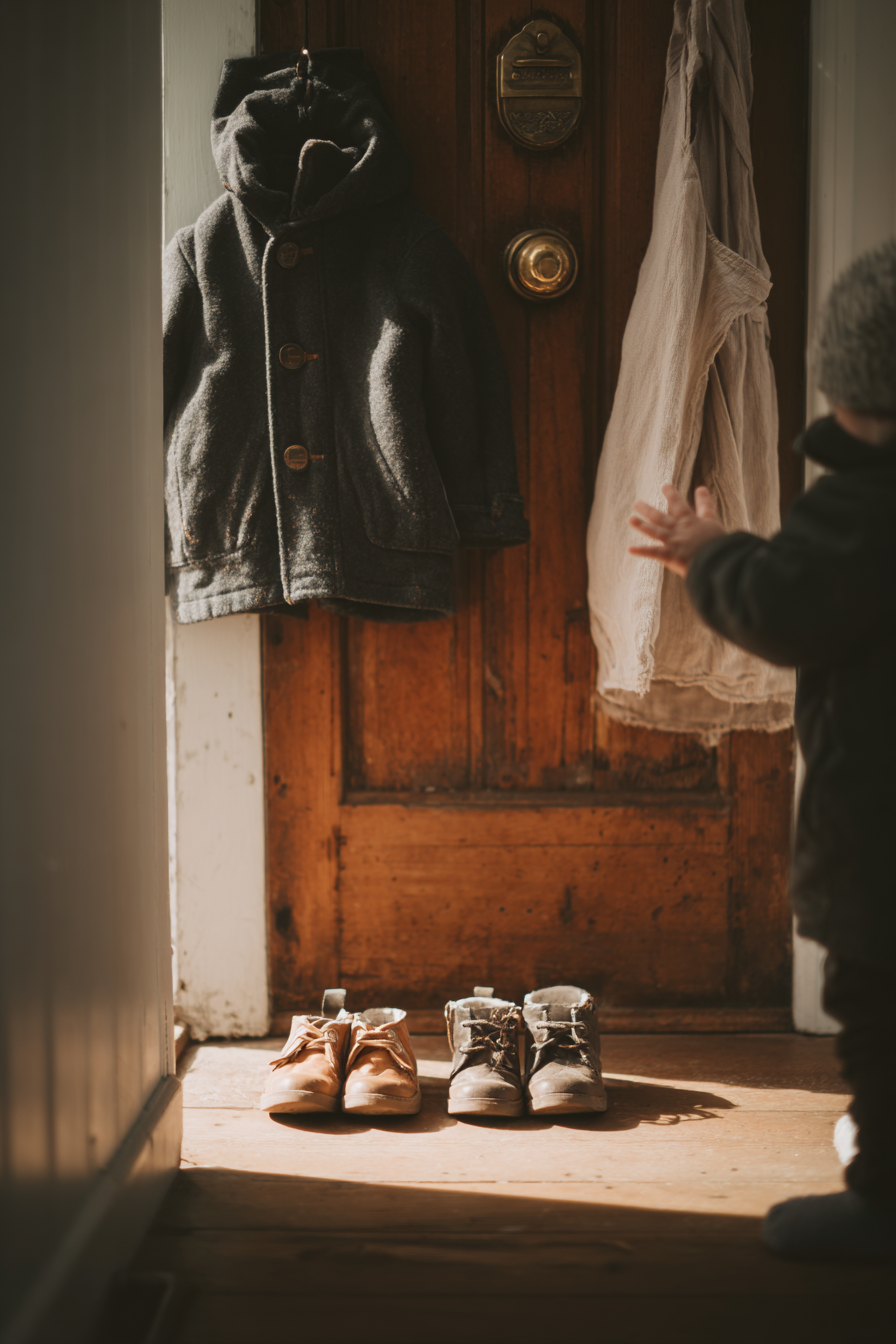
Before anyone else is fully awake, they are already organising — lining up small figures in an arrangement only they understand, placing them by some internal logic that involves colour, size, and which ones were used in yesterday’s story. They explain the system when asked, and the explanation has its own coherence.
At breakfast, they pour their own water from the small pitcher that lives at their level on the shelf. They count out the pieces of fruit — four, they say, because that is how many they decided they want. They are not reciting a number sequence. They are using it.
Outside, they find something — a beetle, a flattened seed pod, a stone with a particular mark — and bring it back to show. “This looks like the same kind as the one we found last week. Are they related?” The question is genuinely meant. They want to know.
Indoors, they begin a construction that will take most of the morning. They negotiate with a sibling about who will build which part, explain their design rationale clearly, and become upset when a section falls. The upset is real. They name it — “I’m frustrated because I worked hard on that part” — and after a few minutes, return.
They set the table, counting out the correct number of items without being asked, placing things in the arrangement they have decided is right. During the meal, they recount something from this morning with detail — sequence, cause, consequence. “And then it fell because I put the big one on top instead of the small one. So now I know which way to do it.”
They connect the new knowledge to an older one: “It’s like what happens with the sand when I pile it too high.” This is not prompted. It is simply where their mind goes.
The afternoon belongs to imaginary play. The space under the table becomes something else entirely — a place with its own geography and rules and ongoing story. Characters are assigned, motivations are established, disputes about plot logic are negotiated and resolved. They use a different voice for one of the characters. They remember, accurately, what happened in this story three days ago.
Later, they ask to draw the scene. The drawing is not representative in any adult sense, but the explanation of it is precise and full. “This is the one who is scared, and this is where they are hiding, and this part here is what they are afraid of.”
At the end of the day, there is a moment — unprompted — where they say something about someone they know: “I think she was sad today. She had that face.” The observation is quiet and accurate. Nobody taught them to notice that. It grew from the same ground that everything else grew from: attention, connection, imagination, and time.
None of this required a curriculum. None of it required a lesson. It required an ordinary day with space to explore, materials to work with, real tasks to contribute to, and people who noticed what was happening.
Five Things Parents Often Worry About At Age Four
Worry at this age is often specific. The following are the questions that come up most, and what development actually suggests about each one.
Reading at four is not a learning goal. The foundations of reading — phonological awareness, vocabulary, narrative comprehension, print awareness — are built slowly through being read to, through conversation, through hearing stories and asking questions and encountering print in real contexts. A four-year-old who is engaged with books and language is on exactly the right track, whether or not they can decode a single word.
A four-year-old who asks many questions is doing exactly what development asks of them at this stage. Questions are how children build understanding. The child who asks “but why?” nine times in a row is not being difficult. They are following a thread of genuine inquiry. You do not need to answer every question perfectly. You need only to take it seriously.
Extended imaginative play is one of the clearest signs of healthy development at four. It requires memory, language, theory of mind, narrative structure, emotional regulation, and social negotiation. There is no academic program available to four-year-olds that develops as many capacities simultaneously as sustained pretend play does. If a child is spending long stretches in imaginary worlds, something is going well.
Most four-year-olds are not neurologically ready for sustained seated attention, and the research is clear that expecting this too early produces anxiety without producing learning. Movement supports cognition at this age — children think better when they can move, and concentration that develops naturally during purposeful activity is more durable than concentration that is imposed. A child who cannot sit still at a table for twenty minutes but who spends forty minutes absorbed in block building is showing excellent capacity for focus.
Wide-ranging, shifting interest is developmentally appropriate and, in many cases, a strength. It means a child is exploring broadly before going deep — which is a healthy pattern. The child who cycles through trains, then birds, then drawing, then cooking, then space is gathering materials. Depth often comes later, and it comes more richly because of the breadth that preceded it.
Learning Goals For 4 Year Olds Before Kindergarten
Many parents arrive at this topic with a particular kind of anxiety: the school transition is approaching, and they want to know whether their child is ready. The search for preschool readiness skills and kindergarten readiness is often this anxiety in a more specific form — an attempt to find a list, check the boxes, and feel reassured.
What developmental research and experienced early childhood educators consistently find is that the capacities which actually predict a successful transition to school look very different from most parents expect. They are not academic. They are relational, communicative, and self-regulatory — and they are built, slowly, across thousands of ordinary moments rather than through any targeted preparation.
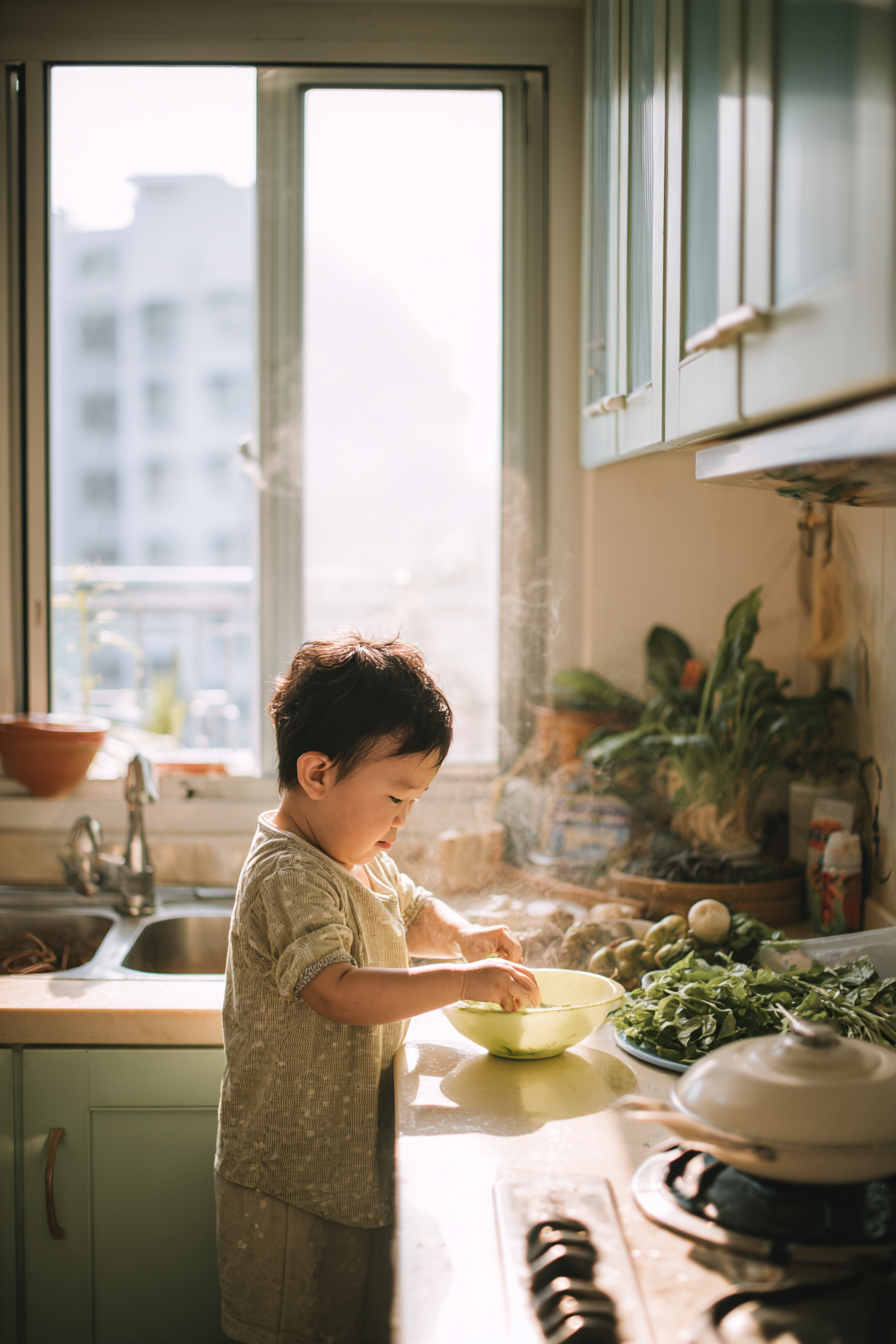
Can they express a need, describe a problem, and begin to listen to a response? The ability to communicate in a group setting — to ask for help, to tell a teacher what is wrong, to participate in a conversation — matters more before kindergarten than any academic knowledge.
Do they approach new experiences with interest rather than withdrawal? Curiosity is the engine of all future learning, and it cannot be installed from outside. A child who arrives at school genuinely interested in things will learn, regardless of what they already know.
Can they recover from disappointment, wait for something they want, and name a feeling — not perfectly, but beginning to? This predicts academic functioning more reliably than early literacy. A child who can manage frustration can stay engaged with something hard.
Do they approach unfamiliar tasks with some willingness to try? Confidence is built through repeated experience of capability — through real tasks, manageable challenges, and adults who let them figure things out rather than doing things for them.
Can they manage some of their own physical needs — dressing, feeding, tidying, using the bathroom — with reasonable independence? These self-help skills are not just practical. They are evidence of executive function developing, and they free a child to engage fully with learning rather than depending on support for basic tasks.
Can they work alongside another person, take turns in a conversation, and participate in a shared goal? The social skills of the classroom are built in homes, parks, and kitchens — not in worksheets. A child who has experienced cooperative play has been practising this for years.
At the end of today, think of one moment when your child communicated something clearly, contributed to something real, connected one idea to another, or sustained focus on something they chose. That is the learning that matters — and it was already happening.
You do not need to document it or build on it. Noticing it is enough.
A child who arrives at kindergarten curious, communicative, and capable of managing some of their own needs is well prepared. Letter recognition is a bonus, not a prerequisite. The foundations of school readiness are built in ordinary daily life — not in structured preparation.
Learning Goals Observation Journal
For 4 Year Olds
Growth at four often happens too quietly to notice in the rush of an ordinary day. This weekly journal helps you slow down and see it — curiosity, connection, imagination, expression, and contribution — in the moments you might otherwise move past.
No checklists. No milestones. Just a gentle way of paying attention.
Frequently Asked Questions
Meaningful academic readiness at four is less about specific knowledge and more about foundational capacities: the ability to hold a conversation, follow a multi-step instruction, stay engaged with a self-chosen activity, and communicate a need or feeling. Children who arrive at formal schooling with strong oral language, genuine curiosity, and some capacity for self-regulation tend to make the transition well — regardless of whether they already know the alphabet.
Reading at four is not a developmental expectation. Some children begin to decode words at this age, and that is fine. Others will not read independently until six or seven, and that is equally fine. The most research-supported approach to early literacy at four is reading aloud together, engaging in rich conversation, and providing access to books — not formal instruction. The foundations of reading are built through language, not phonics drills.
Many four-year-olds can count reliably to ten and often beyond, with genuine one-to-one correspondence — meaning they count objects rather than just reciting numbers. But the more meaningful measure is whether a child uses numbers purposefully: comparing quantities, using “more” and “less” meaningfully, and understanding that the last number counted represents the total. This kind of understanding develops through real experience with real objects, not through drilling sequences.
Realistic learning goals for preschoolers at four centre on the ten domains described in this article: investigating with curiosity, noticing patterns, organising by category and function, using numbers meaningfully, explaining experiences in sequence, connecting ideas across contexts, contributing to household life, communicating feelings and needs, moving with growing coordination, and engaging in sustained imaginative play. These are not skills to drill. They are capacities to observe and support as they naturally emerge.
The capacities that most reliably predict a successful transition to formal schooling are not academic: they are emotional regulation, communication skills, the ability to separate from a caregiver with reasonable comfort, self-help independence, and genuine curiosity. A child who arrives at kindergarten curious, communicative, and capable of managing basic daily needs is well prepared. Letter recognition is a bonus, not a prerequisite.
Signs of healthy development at four include: sustained engagement with self-chosen activities, increasingly rich language and explanation, pretend play with narrative continuity, the ability to connect past and present experiences, willingness to attempt unfamiliar tasks, growing emotional vocabulary, meaningful contribution to household life, and genuine interest in the natural and social world. These signs do not all appear on the same day, and they do not all appear equally. What matters is the direction of travel, not a complete picture at any single moment.
Not at all. Genuine interest in print typically emerges when a child has sufficient oral language experience, has been read to consistently, and has encountered print meaningfully in their environment — on signs, in books, in notes at home. Forcing letter instruction before this readiness arrives tends to produce anxiety rather than literacy. Trust the child’s own interest as a guide, and continue reading together. The interest comes.
Yes — and the premise of the question rests on a distinction that developmental research does not support at this age. Play at four is not separate from learning. It is the form that learning takes. A four-year-old engaged in sustained, purposeful, imaginative play is developing language, memory, social reasoning, emotional regulation, narrative structure, and executive function. This is not preparation for learning. It is learning.
The most effective support is environmental rather than instructional: provide time and space for uninterrupted play, read aloud together daily, involve your child in real household tasks at an appropriate level, engage in genuine conversation rather than quizzing, offer access to natural and open-ended materials, and follow your child’s interests rather than redirecting them to a prescribed curriculum. A calm, curious, attentive presence is the most valuable learning environment a four-year-old can have.
A Final Thought On Growth At Four
A four-year-old does not need to prove readiness. They need something quieter and more sustaining than that.
They need time to investigate the world without being redirected too quickly. They need access to real materials and real tasks. They need to be listened to carefully enough that their questions feel worth asking. They need the experience of contributing to something that actually matters — a meal prepared together, a space maintained, a younger child helped.
They need to be inside stories — told, read, invented, enacted. And they need adults who notice what is already happening without needing to accelerate it.
The learning goals described in this article are not things you do to a child. They are things that a child does naturally when conditions allow. They are signs of a mind making itself. They do not require a schedule or a program. They require ordinary days with enough space in them for a child to be what four genuinely is: curious, connected, beginning to understand how everything relates to everything else.
Growth at this age is often quieter and more meaningful than any checklist suggests. The four-year-old who spends the afternoon building an imaginary world, asking hard questions, and setting the table without being asked — that child is already learning everything that matters.
You do not need a curriculum to raise a curious, capable four-year-old. You need an ordinary life, attentively shared.
That is already a meaningful childhood. Nothing more is required.
Similar Posts
What To Say When Your Toddler Gets Frustrated
What To Say When Your Toddler Gets Frustrated — Chichiberry Parenting Emotional Development Language Practical Life What To Say When Your Toddler Gets Frustrated A tower fell. Or a shoe. Or a cup. Or something you cannot quite name yet — and your child is on the floor, and it feels enormous to them, and…
What To Say Instead Of “Stop Crying” When Your Toddler Is Overwhelmed
Toddler Emotions What To Say Instead Of “Stop Crying” When Your Toddler Is Overwhelmed A gentle phrase guide for crying, frustration, disappointment, and tired meltdowns — because the words that help most are not the ones that try to stop the feeling. By Chichiberry Parenting 14 min read In this article 01Why “Stop Crying” Usually…
Why toddlers repeat words — and what to say back
Why Toddlers Repeat Words — And What It Really Means | Chichiberry Parenting Toddler Language · Early Development Why Toddlers Repeat Words — And What It Really Means When a child says the same word again and again, it can look like nothing is changing. This is what is actually happening. He has been saying…
Morning Routine
Daily Routines Mornings don’t usually need a better schedule. Most of the time, they just need a few calmer words inside the rush. What children are actually responding to During busy transitions, children borrow regulation from the adults around them. The words themselves matter less than the feeling underneath them. A rushed voice creates more…
What A Toddler Should Learn Before Preschool
Preschool Readiness · Real-Life Learning What A Toddler Should Learn Before Preschool Most preschool-readiness lists focus on letters, numbers, and worksheets. But the day-to-day work of a preschool classroom asks for something broader: a child who can communicate a need, take part in a routine, separate with support, and try again after something goes wrong….
What Toddlers Learn On The Walk Home(Without Any “Teaching”)
What Toddlers Learn On The Walk Home (Without Any “Teaching”) — Chichiberry Parenting IMAGE 01: A toddler and a parent walking on a quiet neighbourhood pavement late afternoon, the toddler has stopped to crouch and examine something near the gutter — a leaf or a crack — while the parent waits patiently beside them. Documentary…



What four-year-olds learn through playing with others
Social play at four deserves its own attention, because it is one of the richest learning environments available to a child at this age — and one that is easy to underestimate.
At two and three, children play alongside each other. They are aware of peers, interested in them, occasionally delighted by them — but the play itself tends to remain parallel rather than truly shared. Four changes this. Cooperative play — with genuine shared narrative, negotiated rules, distributed roles, and ongoing story — becomes possible in a way it was not before.
This is not just a social achievement. It is a cognitive one. Cooperative play requires a four-year-old to hold their own intentions alongside another person’s, to modify a plan when it conflicts with someone else’s, to communicate what they want clearly enough that another child can join the game, and to recover — not perfectly, but enough — when things go wrong between them.
A child who can play cooperatively with another child for twenty minutes is demonstrating negotiation, perspective-taking, flexible thinking, and emotional repair. No worksheet teaches all of this at once.
They assign roles to other children and accept roles themselves. They remember the shared story across multiple play sessions. They advocate for their version of a plan while remaining in the game.
“You be the one who lives here and I’ll be the visitor.” “That’s not the rule we decided.” “Okay but what if we did it this way instead?” And, less smoothly: “I’m not playing anymore.” Followed, often, by a return.
Playgrounds, play dates, sibling play, family role play, group creative projects — any setting where another child is present and a shared goal is possible.
Conflict in cooperative play is not a sign that something is going wrong. It is the mechanism through which social reasoning, compromise, and repair are actually practised. The mess is the curriculum.
The instinct to intervene quickly when children disagree during play is natural — but pausing, when it is safe to do so, gives children the space to work through conflict themselves. The resolution they find on their own is worth more than the one an adult imposes.