
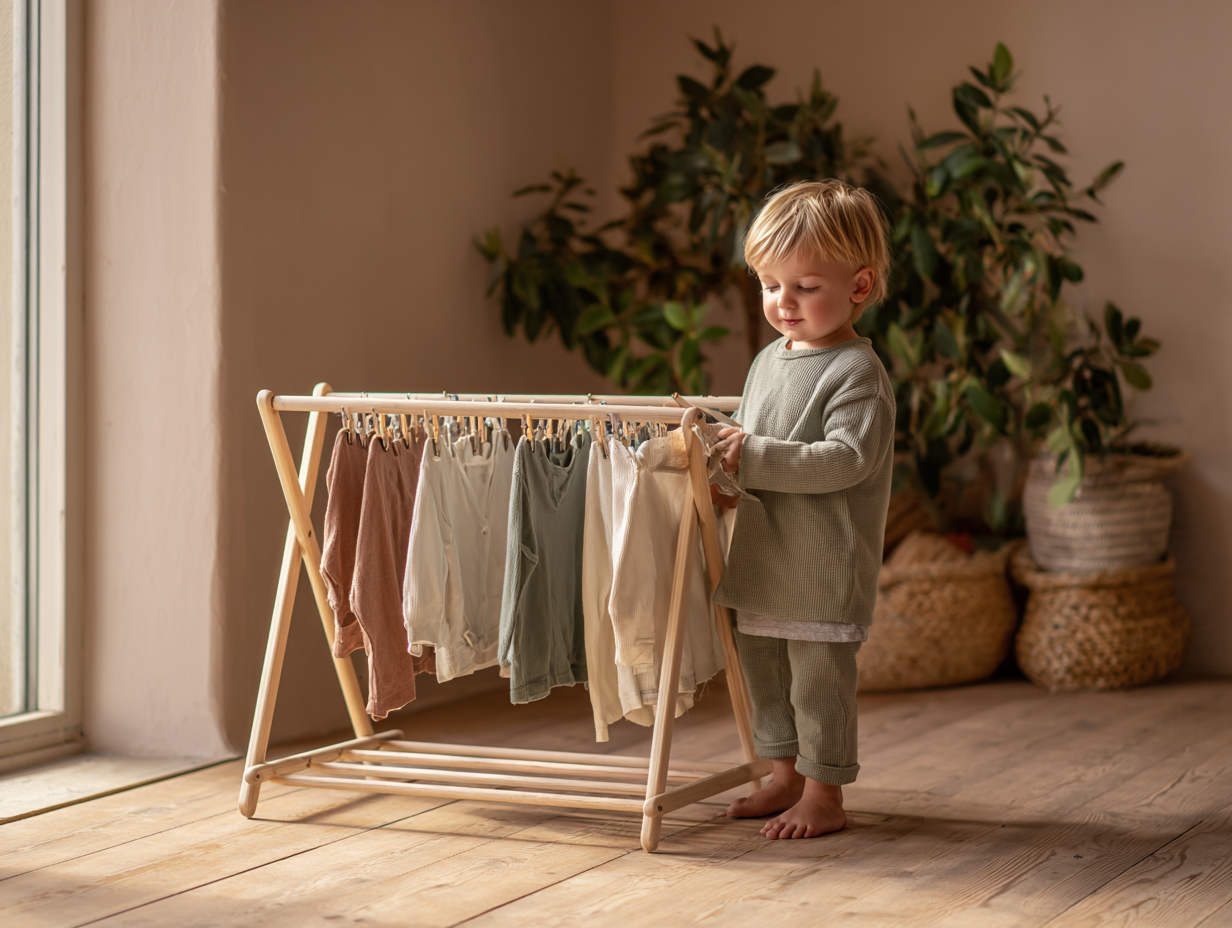
How to Help Your Toddler Become More Independent at Home (Without Expecting Them to Do It Alone)
Independence grows when a child has a real part to play—and someone nearby to help when they need it.
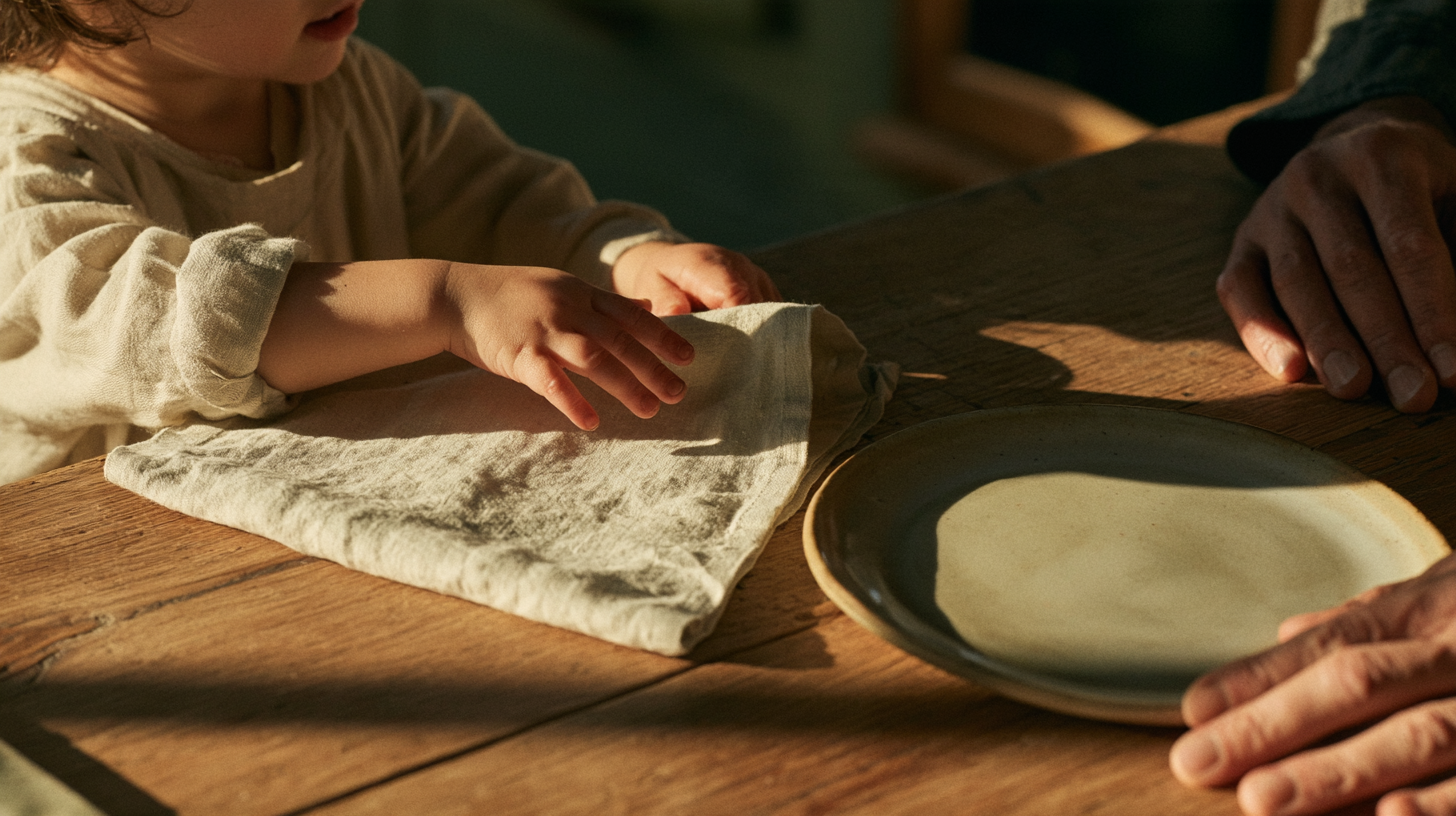
It is ten to six. The rice is almost ready, and your toddler has planted themselves at your knees because they have seen the napkins come out. They want to carry them. You could set the whole table in twenty seconds.
Instead you hand over one napkin, nod toward one chair, and stay by the counter. Small feet cross the kitchen. There is a pause to inspect the napkin, another to look back at you. Eventually it lands beside a plate—folded twice, slightly crooked, entirely theirs.
Nothing about that moment looks like a milestone. But your child just did a real job in your home, and you were close enough that they never had to wonder whether they were allowed.
Many parents feel stuck between two options that don’t quite fit: doing everything for a toddler because it is quicker, or stepping back and hoping they’ll manage alone. The first leaves little room for the child. The second often leaves everyone frustrated.
This article is about the space in between. You’ll see what independence tends to look like at this age, how to choose one small part of a routine you already have, how to adjust your help while your child tries, and what to do when the day doesn’t cooperate. By the end, you should have one small thing to try today.
Part 1What Toddler Independence Actually Looks Like
At this age, independence rarely arrives as a whole task done alone. It usually grows through three kinds of taking part, and a child can move between them in the same week—sometimes in the same morning.
- Joining
- Your toddler is inside the job while you do most of it: holding a spoon while you serve, dropping a sock into the hamper, patting the cloth after you’ve wiped.
- Doing one part with support
- Your child takes one clear piece—carrying the napkins, pushing an arm through the sleeve you hold open—while you manage the rest and steady the tricky bits.
- Doing more of it independently
- A familiar, low-risk job becomes mostly theirs: carrying an empty plate back to the counter, hanging the towel on its low hook. You are still nearby. You simply have less to do.
All three count. A child who joins is learning where a job happens and what it feels like to belong in it. A child who does one part is practicing a real movement for a real reason. Neither is a lesser version of independence.
A child doesn’t need to do it alone for it to count. They need a real part to play, and someone nearby.
It also helps to separate taking part from being responsible for the whole job. A toddler who wipes one corner of the table has made a complete contribution. The rest of the table can still be yours.
Part 2Start With One Small Part of a Real Routine
The easiest place to begin is a routine that already happens every day. This Montessori-inspired idea is often called practical life, but you don’t need a Montessori home, special trays or new furniture to use it. You need one piece of an existing job that is small enough to see, short enough to finish, and safe enough to hand over.
If a job feels too hard, make the job smaller before deciding your child isn’t ready. “Set the table” becomes “put one spoon beside each plate.”
Putting Out the Spoons
- Your toddler’s part
- Carry one spoon at a time and place it beside each plate.
- Your part
- Put the plates down, hold the rest of the spoons, and point to the next seat if they pause.
- Make it manageable
- Keep a few child-safe spoons in a small cup at their height, and start with only the two seats nearest to them.
More kitchen ideas: Kitchen Practical Life Activities For Toddlers
The Day’s Clothes Into the Hamper
- Your toddler’s part
- Carry two or three light pieces of worn clothing to the hamper and drop them in.
- Your part
- Help with undressing, hand over a small bundle, and deal with anything wet, heavy or awkward.
- Make it manageable
- Move a low, open hamper to the spot where clothes usually come off, so the walk is a few steps rather than a trip down the hall.
More laundry ideas: Laundry Practical Life Activities For Toddlers
Bringing Their Shoes
- Your toddler’s part
- Fetch their own shoes from a low basket and bring them to where you sit to put them on.
- Your part
- Loosen the straps, hold each shoe steady while they push a foot in, and do the fastening.
- Make it manageable
- Keep only their shoes in one basket or on one mat by the door, so there is nothing to search for.
Choose one. The others will still be there next week. None of them need extra space or money, and if your home is small or your energy is low, one reachable spot is enough to start.
Keep water, appliances, cleaning products, hot surfaces, knives and breakables in adult hands, and stay close whenever food or water is involved. When in doubt, make the job smaller.
If you’d like to see how these small jobs fit across a whole day, Practical Life Activities for Toddlers at Home: 25 Everyday Ways to Build Independence walks through more examples, room by room.
Part 3A Simple Progression: Together, Supported, More Independent
Once your child has a part to play, the next question is how much to help. It is useful to think of three ways of helping rather than three stages to pass. The same child might want you right beside them on Tuesday and barely at all on Wednesday; tiredness or hunger can change what a job needs.
Here is one ordinary job—wiping the table after a snack—seen three ways.
-
Together
You are actively involved; hands may overlap.
What you do
Wet and wring the cloth, show the back-and-forth motion once, then wipe alongside them.
What your child does
Holds the cloth and wipes the patch in front of their plate. That patch is the whole job for now.
-
Supported
Your child does the familiar action; you stay close by.
What you do
Get the cloth ready, then step half a pace back. Point to a missed crumb instead of wiping it yourself, and rinse the cloth afterwards.
What your child does
Wipes their own eating space, mostly by themselves, and hands the cloth back.
-
More Independent
Your child leads; you remain available.
What you do
Keep a damp cloth in the same low spot, stay in the room, and quietly finish any sticky patches later.
What your child does
Fetches the cloth, wipes, and hands it to you or puts it back.
When to Wait, and When to Step In
- Wait a few seconds when your child is concentrating, changing their grip or trying again. A short pause often gives them room to solve it.
- Step in when they look to you, when frustration is building faster than effort, or when safety is involved.
- Help with the smallest piece that lets them keep going: hold the bowl, start the zip, move the cup closer. Then hand the job back.
If They Ask for Help Again
A child who wiped the table alone yesterday may hand you the cloth today and say, “You do it.” That isn’t a step backwards. Asking for help is part of learning to take part. Move back to doing it together without comment—“Let’s do it together. You do this side”—and let the job stay pleasant. Reminders like “You did it yesterday” tend to add pressure without adding any help.
Part 4What to Say While Your Toddler Is Trying
A few short, concrete words usually help more than a running commentary. You don’t need to narrate every movement or praise each one. Four phrases cover a lot of ground:
- “Would you like to carry this one?”When you’re inviting. Offer once, and let the answer stand.
- “You can start. I’m right here.”When they hesitate at the beginning and keep looking back at you.
- “I’ll hold the bowl while you pour.”When you’re sharing the job. It names exactly which part is yours.
- “That part is tricky. Shall we try it together?”When a step is too hard right now and frustration is starting.
Some phrases come out of habit, and they’re fine. If you’d like to try something different now and then:
Instead of
Try saying
Instead of“Good job!”
Try saying“You carried it all the way to the table.”
Instead of“Here, let me do it.”
Try saying“I’ll do this part. You do that part.”
Instead of“Careful!”
Try saying“Two hands. Slow steps.”
For the moments when things tip over into tears, What To Say When Your Toddler Gets Frustrated has more language to keep close.
Part 5When Real Life Gets in the Way
Some days there is no time, the water goes everywhere, or your child simply isn’t interested. Here is a practical next move for each.
You’re Late and Need to Do It Yourself
Say so, simply, and take the lead without apologizing for it.
“We’re in a hurry, so I’m going to help with your shoes today.”
Next moveIf there is a one-second part—carrying the bag to the door—offer it and let the rest go. Keep practice for days with a little slack. One rushed morning doesn’t undo anything.
There’s a Mess, or Frustration Is Rising
Name what happened without blame, then repair it together.
“The water spilled. We can wipe it.”
Next moveGet the cloth together. Next time, make the job smaller: less water, fewer items, a tray underneath. If frustration keeps climbing, stop adding instructions, help with what they need right now, and return to the job on a calmer day.
Your Child Says No or Wanders Off
Let the no stand. Leave the door open without pushing through it.
“Okay. I’ll do it this time. You can join if you want.”
Next moveOffer the same job another day. If they leave halfway, finish it yourself and name what they did: “You carried the clothes. I’ll put the basket away.”
Participation is an invitation, not a demand.
If refusals are filling your whole day right now, What To Say When Your Toddler Says “No” All Day may help.
Part 6Try One Small Change This Week
If you’d like a place to begin, keep it to one routine and one small part.
One Small Change This Week
Five steps. One routine. Nothing to score.
- Choose one routine you already have.Snack time, getting dressed or coming home, not a new activity.
- Prepare one manageable part.Put the object within reach, use a smaller amount and give it one fixed home.
- Try it when there’s a little time.A slower afternoon works better than the busiest ten minutes of the day.
- Notice the support your child needed.Were you together, close by, or mostly watching? Which part was hard?
- Adjust next time.Make it easier, keep it the same, or add one small next step. Repeating the same job for weeks is fine.
The point isn’t to measure your child. It’s to learn what they need from you in this job, right now.
Chichiberry Parenting
Part 7When You Want a Plan You Can Return To
Everything you need to begin is already in this article and the free Checklist. Some parents find they want more than a starting point: something to reach for when a job stops working, when a routine changes, or when it feels like time for a next step.
That is what the Toddler Independence At Home Toolkit is for. It’s a paid printable guide for ages 12–36 months, meant to be used in pieces rather than read cover to cover.
Back at the Table
The napkin is on the table, a little crooked. Maybe your child went back for another. Maybe they wandered off to the blocks and you set the rest of the table yourself. Either way, something real happened. They had a part to play, and you were there while they tried it.
Tomorrow you might do more of it together, or less. For today, one small part done side by side is enough.