

What A Toddler Should Learn Before Preschool
Most preschool-readiness lists focus on letters, numbers, and worksheets. But the day-to-day work of a preschool classroom asks for something broader: a child who can communicate a need, take part in a routine, separate with support, and try again after something goes wrong. This guide looks at what actually helps — and what can wait.
- Not a test of parenting
- Not an academic race
- Not a one-size-fits-all checklist

Preschool Readiness Is Bigger Than Knowing Letters And Numbers
Picture two children on the same first day of preschool. One can name most of the alphabet and count past ten, but when her shoe comes untied, she stands frozen until someone notices. The other cannot yet write his name, but when he cannot open his snack container, he carries it straight to a teacher. When he knocks over a tower of blocks, he pauses, looks at the pieces, and starts stacking again.
Neither example tells us the whole story of a child’s readiness. One has more academic knowledge to show; the other has more practiced ways of coping with the small, constant problems that fill an actual preschool day. Both kinds of learning matter. A toddler does not need to arrive at preschool already reading, writing, sitting perfectly still, or managing every feeling alone. What matters more is the growing ability to communicate, take part, recover with support, explore, follow familiar routines, and trust another caring adult.
This is not an argument against early academics. Letters, counting, drawing, and books are genuinely valuable, and most toddlers absorb a surprising amount of this knowledge simply through everyday books, conversation, play, and routine — without flashcards or formal lessons. But academic knowledge is also the easiest kind of learning to notice, measure, and worry about, which is why it tends to dominate readiness conversations. The functional, relational, everyday capacities below are harder to put on a checklist, and they are often what carries a child through the actual hours of a preschool day.
Neither column is more “real” learning than the other — both are learning. The right column simply tends to be what a classroom actually asks a toddler to do, minute to minute, before any letter or number ever comes into play.
Want A Calm Way To Notice Preschool Readiness?
Download the free Before Preschool guide to notice communication, participation, independence, emotional recovery, and curiosity—without testing or comparing your toddler.
Includes a printable observation snapshot and questions to ask the preschool before the first day.
The Seven Things That Matter Most Before Preschool
These are not requirements or a pass/fail list. They are the capacities that tend to make the biggest difference in how settled a toddler feels once the school day begins — and every one of them is still forming, with a wide range of what “in progress” can look like.
Communicating Basic Needs
A preschool day runs on small, constant requests: help, more, finished, water, toilet, hurt, no, I do not like that, my turn, a need for comfort. A toddler does not need full sentences to communicate any of this. Communication may look like words, word approximations, gestures, signs, pointing, eye gaze, bringing an object to an adult, or leading a grown-up by the hand toward what they need. What matters is that the child is beginning to communicate a need to another trusted caregiver, even when a parent is not the one responding.

How Parents Can Support It
- Model short, usable phrases the child can borrow — “help please,” “all done,” “my turn.”
- Pause before answering for the child, giving them a beat to attempt their own request.
- Accept imperfect attempts warmly rather than correcting them mid-moment.
- Avoid turning everyday communication into constant quizzing (“what’s this called?”).
You Might Say
“You showed me the jar — that told me you needed help. Let’s open it together.”
What this does not require: complete sentences, correct grammar, or clear pronunciation. A pointed finger and a sound can carry the same message as a full request.
Following Familiar Routines
Readiness is not instant obedience, and it is not about a toddler who always complies the first time asked. It is closer to recognizing a predictable sequence and beginning to move through it with less resistance over time — shoes near the door, hands washed before eating, a cup returned to the table, a coat placed in one location, toys returned with help, a bag placed in a familiar spot.
A routine gives a toddler something memory alone cannot: a predictable path through the day.
At home, a similar rhythm can start to build the same kind of familiarity a classroom will later rely on.
A Preschool Morning In Four Small Steps
Shoes off
Bag down
Hands washed
Join the room
How Parents Can Support It
- Keep a short, repeatable sequence for arrivals and departures at home.
- Use the same few words each time, so the language becomes as familiar as the steps.
- Let the child do one step independently even if it takes longer than doing it yourself.
You Might Say
“Shoes stay here. You remembered the place.”
What this does not require: a perfect memory or a child who never needs a reminder. Routines are built through repetition, not a single successful attempt.
Participating In Small Acts Of Independence
This includes pulling clothes up or down with an adult nearby, washing and drying hands, carrying a light cup or lunch item, opening a simple container, putting belongings in one predictable place, helping with shoes or a coat, throwing rubbish into a bin, and wiping a small spill.
Independence before preschool does not mean doing everything alone. It means beginning to participate in caring for oneself and one’s surroundings.

How Parents Can Support It
- Offer real, low-stakes tasks rather than reserving “helping” for special occasions.
- Expect the result to be imperfect — a smeared spill is still a participated-in spill.
- Build in a few extra minutes so the child’s slower pace does not become a source of pressure.
You Might Say
“You noticed the spill and you fixed it. That’s you taking care of your space.”
What this does not require: full self-dressing, tidy results, or doing a task without any adult nearby.
Separating And Reconnecting With Support
Readiness does not mean never crying, walking into preschool happily every day, or separating without any support at all. For most toddlers, separation is something they learn to move through with help, not something they simply stop feeling. Readiness may look like recognizing a goodbye ritual, accepting comfort from a teacher, watching the room before joining in, gradually returning to an activity, and reconnecting with a parent at pickup.
Less Useful Question
“Does my child cry at drop-off?”
More Useful Question
“Can my child receive comfort and gradually reconnect with the room?”

How Parents Can Support It
- Use the same short goodbye phrase every time, and keep the goodbye itself brief.
- Practice short separations in low-stakes settings before the first preschool day.
- Trust the teacher’s account of how the day actually went, rather than judging only the goodbye.
You Might Say
“I’ll be back after snack and playtime. Your teacher will help you until I come back.”
What this does not require: a dry-eyed goodbye or a child who never asks for a parent during the day.
Recovering From Frustration
Emotional regulation is still developing throughout the toddler and preschool years. Before preschool, what matters is not staying calm alone, but gradually learning to return with support: seeking an adult, accepting comfort, pausing, looking again, trying a different way, using a gesture or word instead of only a cry, and returning to an activity after disappointment.
Readiness is not the absence of big feelings. It is the growing possibility of returning from them with help.

How Parents Can Support It
- Stay nearby during small frustrations instead of stepping in to fix them immediately.
- Name the feeling briefly, then offer a next step rather than a long explanation.
- Let recovery take its own time — some children need a minute of quiet before trying again.
You Might Say
“That fell down and that’s frustrating. Want to try building it again, or take a break first?”
What this does not require: staying calm during a frustration, or recovering without any adult support at all.
Curiosity, Attention And Willingness To Try
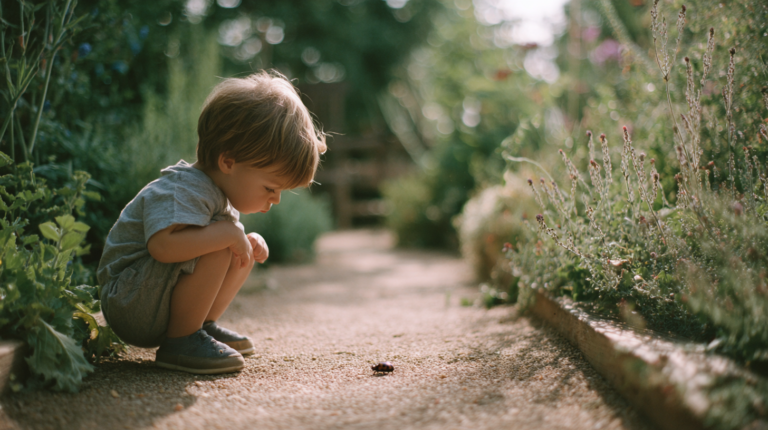
Toddler attention does not usually look like sitting still. It looks like listening to a vehicle outside, watching water move, comparing two leaves, trying to fit a lid onto a jar, returning to a puzzle after walking away, remembering a small detail from yesterday, asking a question, following a story briefly, or investigating how something works by taking it apart.
Preschool does not need a child who already knows everything. It needs a child whose curiosity is still available.

How Parents Can Support It
- Slow down for the pauses — a stopped walk to watch an ant is not a delay, it is the activity.
- Ask open questions instead of quiz questions (“what do you notice?” rather than “what color is that?”).
- Let a puzzle or task stay unfinished and be returned to later rather than rushing to complete it.
You Might Say
“You’re really looking at that. What do you notice?”
What this does not require: long attention spans, sitting still, or interest in every activity offered.
What Your Toddler Does Not Need To Master Before Preschool
It can help just as much to name what can wait. Before preschool, a toddler does not necessarily need to read, write their full name, count to a specific number, know every letter sound, color inside the lines, sit still for long periods, share willingly every time, stop crying at separation, speak with perfect pronunciation, dress completely without help, complete worksheets, or be toilet independent in every setting.
A Practical Note On School Policies
Some preschools do have entry policies that are separate from a child’s development — around toileting, clothing, nap arrangements, food containers, allergies, drop-off expectations, or comfort objects. These are worth checking directly with the school, because they are logistics, not a measure of how ready your child is. A program that requires full toilet independence, for example, is describing its own operations — not making a statement about your toddler’s overall development.
Your child does not need to arrive finished. Preschool is one of the places where these capacities continue to grow.
Everyday Experiences That Build Preschool Readiness
None of this requires new toys, curricula, or dedicated “learning time.” The ordinary moments already inside a family’s day are doing most of the work — here is what a number of them quietly build. For more on this idea, 40 Things Toddlers Learn Without Worksheets goes deeper on the same theme.
Getting Ready
Putting Shoes Near The Door
What it quietly builds: Memory, sequencing, responsibility, and transition awareness.
What the parent can say: “Shoes stay here. You remembered the place.”
Choosing Between Two Clothing Options
What it quietly builds: Decision-making and a sense of control within a small, safe choice.
What the parent can say: “Stripes or plain today? You choose.”
Getting Dressed With A Little Help
What it quietly builds: Body awareness, follow-through, and tolerance for a task that takes real effort.
What the parent can say: “Arms first, then the tricky part — I’m right here.”
Mealtime
Opening One Simple Container
What it quietly builds: Fine motor problem-solving and persistence through a small physical challenge.
What the parent can say: “That lid is tricky. Try turning it this way.”
Wiping A Small Spill
What it quietly builds: Ownership of mistakes without shame attached to them.
What the parent can say: “Spills happen. Here’s a cloth.”
Carrying A Cup Carefully
What it quietly builds: Body awareness and steady, controlled movement.
What the parent can say: “Two hands, slow steps. You’ve got it.”
Leaving And Returning
Following The Same Goodbye Phrase
What it quietly builds: Predictability that makes separation easier to anticipate.
What the parent can say: “Hug, high five, and I’ll see you after snack.”
Putting Belongings In One Predictable Place
What it quietly builds: A sense of responsibility for one’s own things, and a reliable mental map of the space.
What the parent can say: “Your bag and coat both have a spot — you found them.”
Greeting A Trusted Adult
What it quietly builds: Comfort forming a connection with someone other than a parent.
What the parent can say: “There’s your teacher — want to wave hello?”
Play
Playing Beside Another Child
What it quietly builds: Comfort sharing space without needing to share every object.
What the parent can say: “You’re both building. Different towers, same table.”
Trying A Task Again
What it quietly builds: Persistence and an early sense that effort can change an outcome.
What the parent can say: “That didn’t work yet. Want to try once more?”
Waiting During One Short Adult Action
What it quietly builds: Tolerance for brief delay, in small, manageable doses.
What the parent can say: “One more scoop, then it’s your turn.”
Conversation
Making A Choice
What it quietly builds: Confidence expressing a preference out loud.
What the parent can say: “Apple or banana? Tell me which one.”
Telling What Happened, In Words, Sounds, Or Gestures
What it quietly builds: Early narrative skills and a sense of being heard.
What the parent can say: “Tell me what happened at the park.”
Naming A Feeling Or Need With Support
What it quietly builds: A growing vocabulary for internal experience, not just external requests.
What the parent can say: “You look frustrated. Is that it?”
Readiness Looks Different At Two, Three And Four
These are broad developmental patterns, not preschool entrance requirements — and there is a wide range of what is typical at every age. A younger toddler beginning preschool and an older one starting later are both simply meeting the classroom from a different point in their own development.
Around Age Two
- Participates briefly in a shared task
- Uses gestures or emerging words
- Follows one familiar step at a time
- Plays mainly beside other children
- Needs substantial adult support
- May rely heavily on routines
Around Age Three
- Understands short sequences
- Uses more language to negotiate
- Joins short group experiences
- Begins more self-care participation
- Anticipates familiar transitions
- Begins brief imaginative play with others
Around Age Four
- Sustains more complex pretend play
- Tells simple experiences aloud
- Follows multi-step familiar routines
- Takes more responsibility for belongings
- Waits with growing flexibility
- Uses more language during conflict
- Participates in longer group moments
These are broad developmental patterns, not preschool entrance requirements.
For a closer, age-by-age look at what toddlers are naturally working on, these related guides go deeper on each stage:
A Better Before-Preschool Checklist
Instead of yes-or-no, pass-or-fail boxes, this is a short preview built on a continuum — ten representative observations drawn from the seven readiness areas above. The full version, with every area broken out in more detail, lives in the free guide further down this page.
Pause beside the description that feels closest today. This is for observation, not scoring.
Communication
Expresses a basic need in some way
- Beginning
- Growing With Support
- Becoming More Consistent
Seeks help from a trusted caregiver
- Beginning
- Growing With Support
- Becoming More Consistent
Uses words, gestures, signs, sounds, or objects to communicate
- Beginning
- Growing With Support
- Becoming More Consistent
Participation
Joins one part of a familiar routine
- Beginning
- Growing With Support
- Becoming More Consistent
Carries or returns a personal item
- Beginning
- Growing With Support
- Becoming More Consistent
Accepts help during a transition
- Beginning
- Growing With Support
- Becoming More Consistent
Social And Emotional Development
Plays near other children
- Beginning
- Growing With Support
- Becoming More Consistent
Receives comfort and gradually reconnects
- Beginning
- Growing With Support
- Becoming More Consistent
Curiosity And Learning
Tries again after difficulty
- Beginning
- Growing With Support
- Becoming More Consistent
Notices, remembers, or investigates something closely
- Beginning
- Growing With Support
- Becoming More Consistent
The goal is not to move every item into the final stage before preschool begins. The goal is to notice where growth is already happening and where support can remain available.
Free guide: “Before Preschool: What To Notice Instead Of Test” · also referenced internally as the Learning Goals By Age Quick-Reference Card.
When A Little More Support May Help
Most of what shows up before preschool is simply a wide, ordinary range of development. Occasionally, though, a parent’s steady sense that something feels different is worth following up on. It may be worth talking with a pediatrician, developmental professional, speech-language professional, or the preschool team if:
- The child has no consistent way to communicate basic needs
- The child rarely responds to familiar communication across settings
- The child cannot receive comfort from any trusted adult
- Sensory needs make most routines extremely difficult
- The child has lost skills they previously used
- A parent has an ongoing concern that is difficult to dismiss
- Communication, mobility, hearing, feeding, or participation concerns are affecting daily life
Asking for support is not the same as labeling a child, and it does not undo anything about who they are. An earlier conversation simply gives the adults around a child more information — and often more ways to adapt the environment so it fits the child better. Preschool readiness and developmental evaluation are related, but they are not the same thing: a child can be fully ready for the social experience of preschool and still benefit from extra support in one specific area, or the reverse.
Questions To Ask The Preschool Before The First Day
Some of what makes the first weeks easier has nothing to do with what a toddler has practiced — it comes from how well the environment and the adults around a child are prepared to meet them. These questions can help separate what the child needs to practice from what the environment should adapt, and what information the adults should simply share with one another.
- What happens if my child cries at drop-off?
- Can a comfort item come with them?
- What toileting support is available?
- How do teachers help children ask for food, water, or help?
- What does the daily routine look like?
- How long are group activities?
- How are rest and nap handled?
- How are conflicts supported?
- What clothes and containers are easiest for children to manage?
- How will teachers communicate about adjustment?
- Can we use the same goodbye phrase at home and school?
- What should the child recognize or practice before starting?
Frequently Asked Questions
Should my toddler know the alphabet before preschool?
Alphabet knowledge is not a universal preschool-entry requirement, and expectations vary by program. Letter recognition tends to develop naturally through picture books, name recognition, signs, and everyday conversation, and there is a wide range in when this happens. What matters more in the early weeks of preschool is a child’s ability to follow a routine, ask for help, and take part in group moments. If your toddler enjoys books and letters, keep offering them — just without pressure to perform or recite on demand.
Does my toddler need to be toilet trained before preschool?
This depends entirely on the individual preschool’s policy, not on a universal developmental standard. Some programs require toilet independence to enroll; others support children still in process, including those in diapers or early training. It is worth asking the school directly what their toileting policy and support look like, since this is a logistics question rather than a measure of your child’s overall readiness. Toilet learning has its own timeline, and being mid-process does not reflect on a toddler’s communication, social, or emotional development.
What should a three-year-old know before starting preschool?
Around age three, many toddlers are beginning to understand short sequences, use more language to negotiate, join brief group experiences, participate more in self-care, and anticipate familiar transitions. This is a broad pattern rather than a checklist — there is significant variation between three-year-olds, and most are still developing every one of these capacities rather than having mastered them. What tends to matter most is a growing, imperfect ability to communicate needs, take part in routines, and accept comfort when something goes wrong.
How can I prepare my toddler without worksheets?
Everyday life already offers most of what preschool readiness draws on. Letting a toddler carry their own bag, choose between two shirts, wipe a spill, wait briefly during a task, or tell you what happened at the park builds the same underlying skills a worksheet aims for — sequencing, communication, persistence, and independence — through real participation instead of a printed page. Consistent routines, honest conversation, and unhurried play tend to do more for readiness than structured academic prep at this age.
What if my child cries at preschool drop-off?
Crying at drop-off is common and does not necessarily mean a child is unready or unhappy once the day is underway. A more useful question than “does my child cry?” is whether they can accept comfort from a teacher and gradually reconnect with the room after you leave — many children begin to settle after the goodbye, although the timing varies from child to child. A short, consistent goodbye ritual, honesty about when you’ll return, and trusting the teacher’s report of the rest of the day can make separation easier over time.
Does my toddler need to know how to share?
Sharing is a skill that continues developing well past the toddler years, and how much a program expects of it on day one varies. What can help more before day one is beginning to tolerate brief waiting, taking short turns, or playing alongside another child without needing every object. Teachers are generally well practiced in supporting turn-taking in the moment, so this is one area where the classroom itself does a great deal of the teaching.
What matters more before preschool: academics or social-emotional skills?
Both matter, and this is not really an either-or choice — but functional communication, the ability to participate in routines, and emotional recovery with support tend to affect a child’s day-to-day experience more directly than academic knowledge in the earliest weeks of preschool. Early literacy and number sense are valuable and often develop alongside these other skills through books, conversation, and play. If a choice has to be made about where to focus energy, communication and participation tend to offer the most practical return.
How long should a toddler be able to sit and listen?
There is no fixed number that applies to every toddler, and attention at this age is naturally short and movement-based rather than still and silent. Many toddlers can attend to a short story or song for a few minutes with some wiggling, standing, or fidgeting mixed in, and many preschool classrooms are designed with this reality in mind rather than expecting long stretches of stillness, though group-time length and structure still vary by program. A child’s ability to return their attention after a distraction often matters more than the raw length of time they can sit.
Keep the guide nearby and notice one area at a time.
Get The Before Preschool Guide
A Closing Note
Before preschool, a child does not need to become less toddler-like. They do not need to stop moving, asking, spilling, hesitating, needing comfort, or needing you. They are becoming ready each time they carry something, ask for help, wait beside you, return after frustration, notice another child, or try once more.
Preschool readiness is not a finish line reached before the first day. It is a set of capacities that keeps growing after the classroom door opens.
Your child does not need to arrive complete. They only need room to keep becoming.




Being Near Other Children
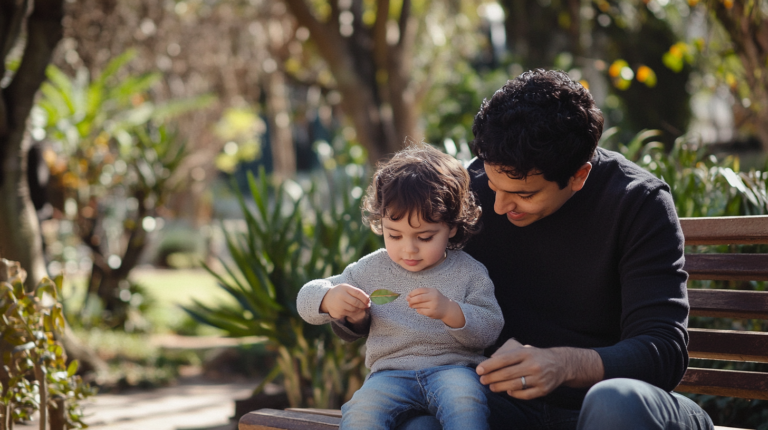
Parallel play — two children occupied with their own tasks side by side — is developmentally meaningful on its own, not a lesser stage to rush through. A toddler does not need stable cooperative play before preschool, and sharing is still very much under construction at this age. Social readiness can begin with something much smaller: watching, copying, taking a short turn, offering an object, or joining briefly before stepping back.
Examples include playing beside another child, waiting briefly, joining a song, watching before participating, accepting that another child has a different idea, and noticing when another child is upset.
How Parents Can Support It
You Might Say
“You’re both stacking. You don’t have to build the same thing.”
What this does not require: consistent sharing, cooperative pretend play, or a preference for group activities over solo play.